

Under Slab Insulation
Stop Heat Loss Before It Reaches the Ground
Reduce energy loss and improve thermal performance with Energy Shield under slab insulation. Designed for installation beneath concrete slabs, this high-performance insulation helps reduce heat transfer into the ground, making it suitable for radiant floor systems, slab-on-grade construction, and commercial foundations.
By controlling heat transfer beneath the slab, the insulation can improve energy efficiency, support more stable indoor temperatures, and enhance long-term building performance.
Request a QuoteReduce energy loss and improve thermal performance with Energy Shield® under slab insulation. Designed for installation beneath concrete slabs, this high-performance reflective insulation helps prevent heat from escaping into the ground—making it ideal for radiant floor systems, slab-on-grade construction, and commercial foundations.
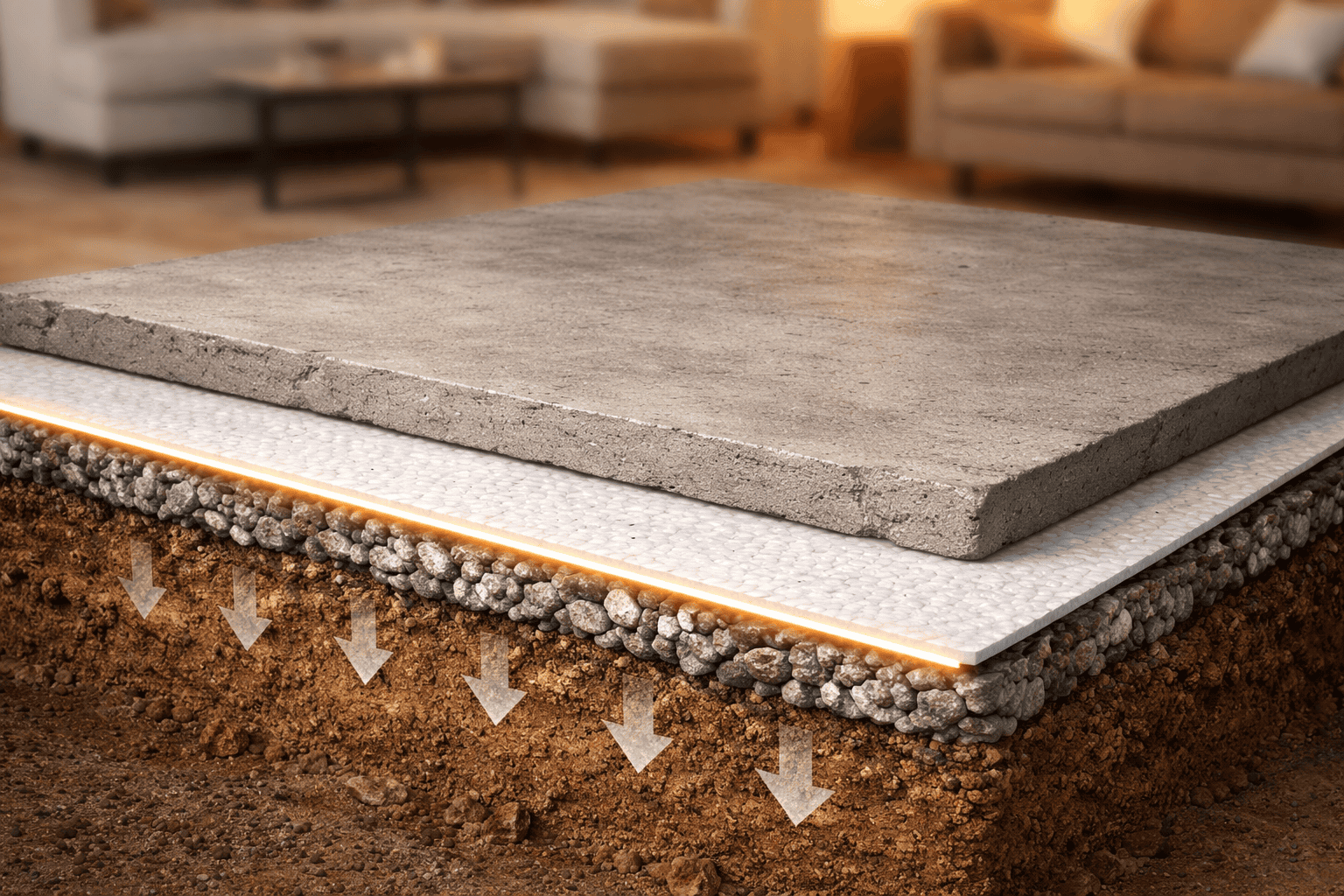
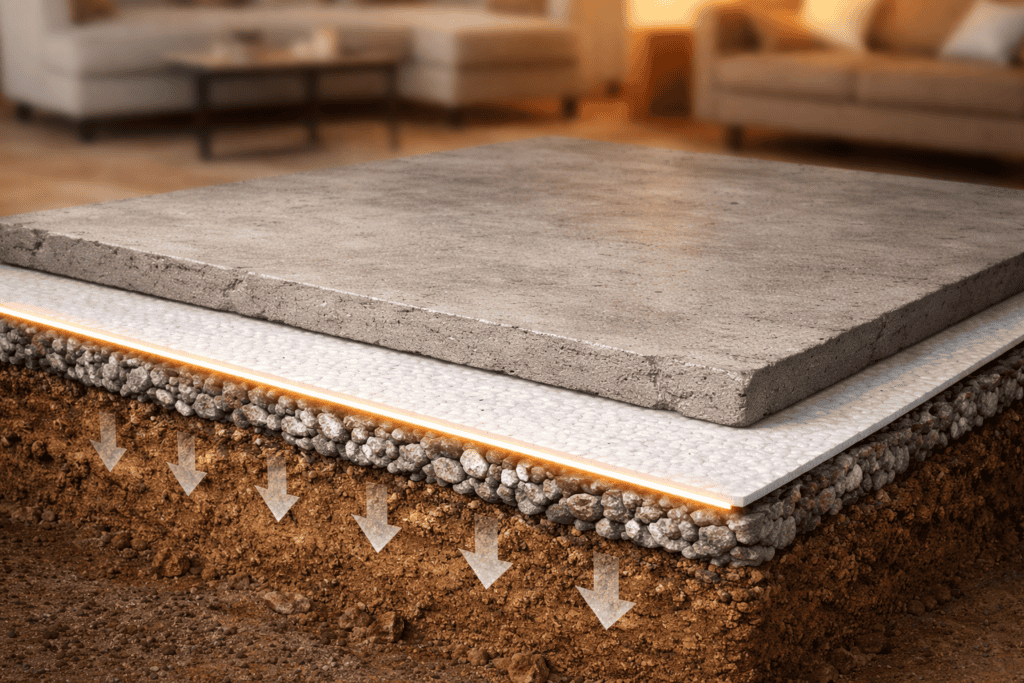
Keep Heat Where It Belongs
This insulation blocks heat transfer into the ground, helping maintain consistent indoor temperatures and reducing wasted energy—especially in heated floor applications.
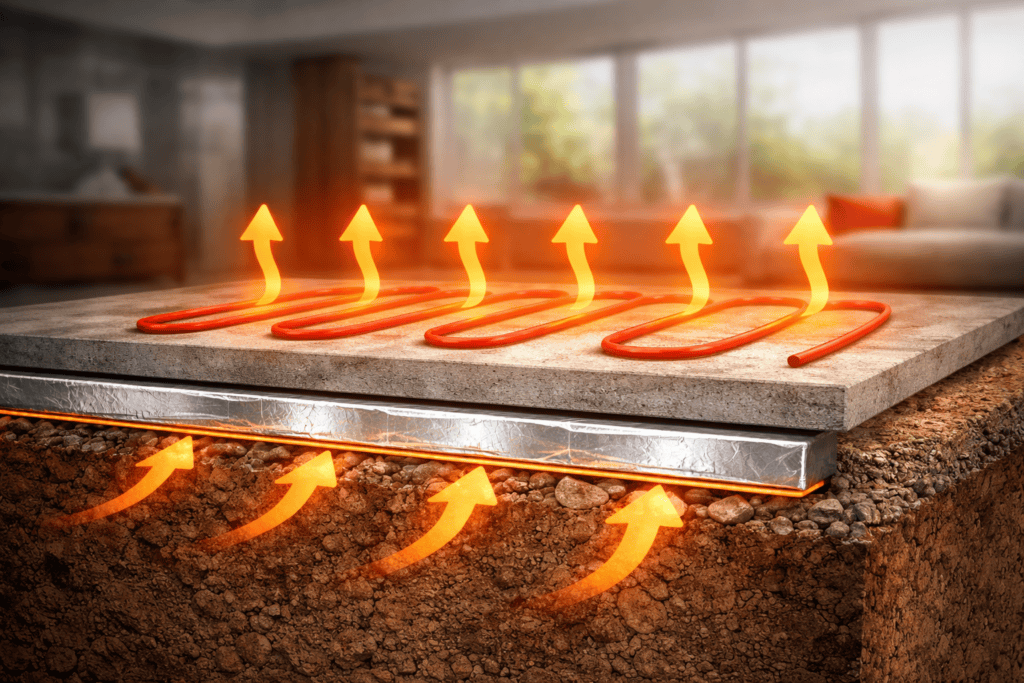
Improve Radiant Floor Efficiency
Designed for radiant systems, reflective insulation directs heat upward into the living space instead of letting it dissipate below—improving comfort and system efficiency.
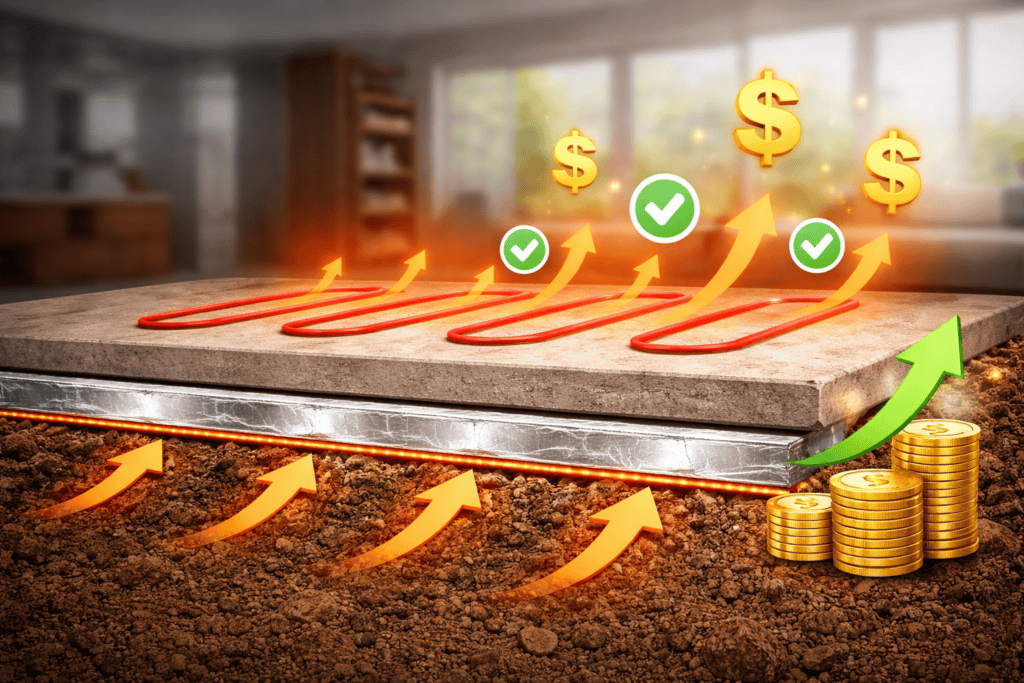
Reduce Energy Loss & Operating Costs
Uninsulated concrete acts as a massive heat sink. These insulation systems minimize thermal loss, allowing heating systems to run more efficiently and reducing long-term energy expenses.
How Under Slab Insulation Works
Reflective insulation uses a low-emissivity surface to reduce radiant heat transfer. When installed beneath the concrete layer, it helps limit heat movement into the ground while supporting consistent heat distribution above.
This helps:
- Reduce heat loss through the slab
- Improve radiant floor system performance
- Stabilize indoor temperatures
- Increase overall energy efficiency
Proper installation also helps control moisture and condensation, which can impact long-term insulation performance and durability.
Why Under Slab Insulation Matters
Under slab insulation is a critical component in energy-efficient building design, especially for radiant floor systems and slab-on-grade foundations.
Without insulation beneath the surface:
- Heat escapes directly into the ground
- Radiant floor systems lose efficiency
- Indoor temperatures become harder to maintain
- Energy costs increase over time
Energy Shield sub-slab insulation creates a thermal break between the slab and the ground, improving overall building performance.
Typical Installation System
A properly installed system beneath concrete includes key layers that work together to improve performance and durability:
- Compacted gravel base for drainage and stability
- Energy Shield reflective insulation with integrated vapor barrier
- Reinforced concrete slab
Unlike traditional systems that require separate insulation and vapor barrier layers, Energy Shield combines both functions into one product—helping reduce installation time, lower material costs, and improve jobsite efficiency.
ES® Under Slab Insulation Products
ES® Under Slab Insulation Products
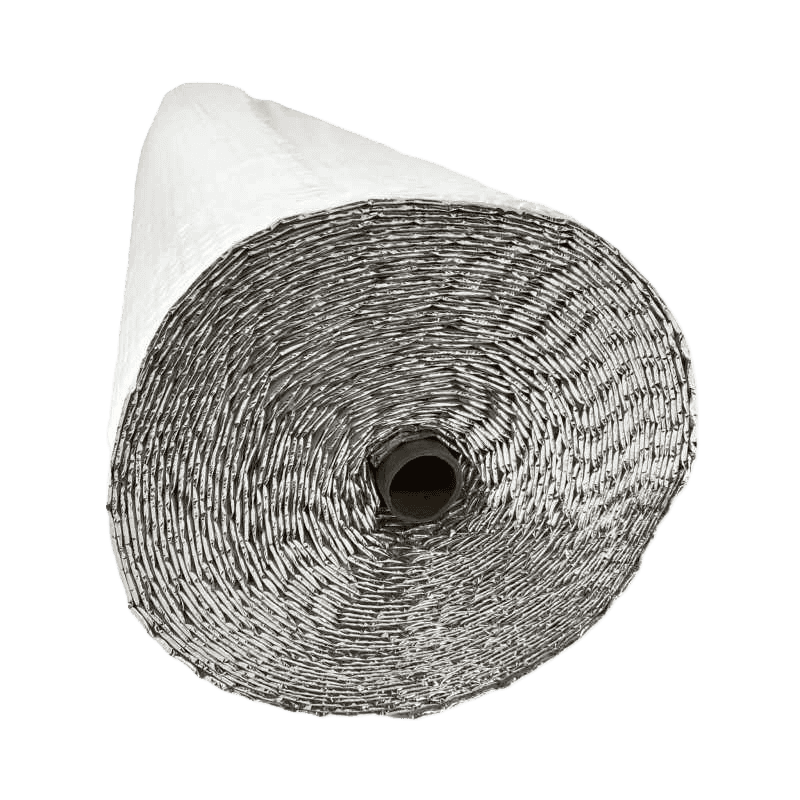
Reflective bubble insulation uses dual foil surfaces with a bubble core to reduce radiant heat transfer while helping manage condensation.
Key Features
- Lightweight reflective insulation layer
- Helps reduce heat transfer beneath slabs
- Easy to handle and install
- Suitable for light-duty applications
Reflective foam insulation features a closed-cell polyethylene core with foil on both sides, reducing radiant and conductive heat transfer. It also helps control moisture and supports long-term energy efficiency.

Key Features
- Closed-cell foam core for durability under slab loads
- Dual reflective foil surfaces
- Reduces radiant and conductive heat transfer
- Ideal for slab-on-grade and radiant systems
Installation Applications
Radiant Heated Slabs
Installed directly beneath the slab to reflect heat upward and improve system efficiency.
Slab-on-Grade Foundations
Creates a thermal barrier between the structure and ground, improving energy performance in residential and commercial buildings.
🧱Garage Floors & Workshops
Helps reduce heat loss in conditioned garages or workspaces built on concrete slabs.
Common Installation Mistakes to Avoid
Even high-quality insulation can underperform if installation is not done correctly. Common issues include:
Technical Specifications & Code Considerations
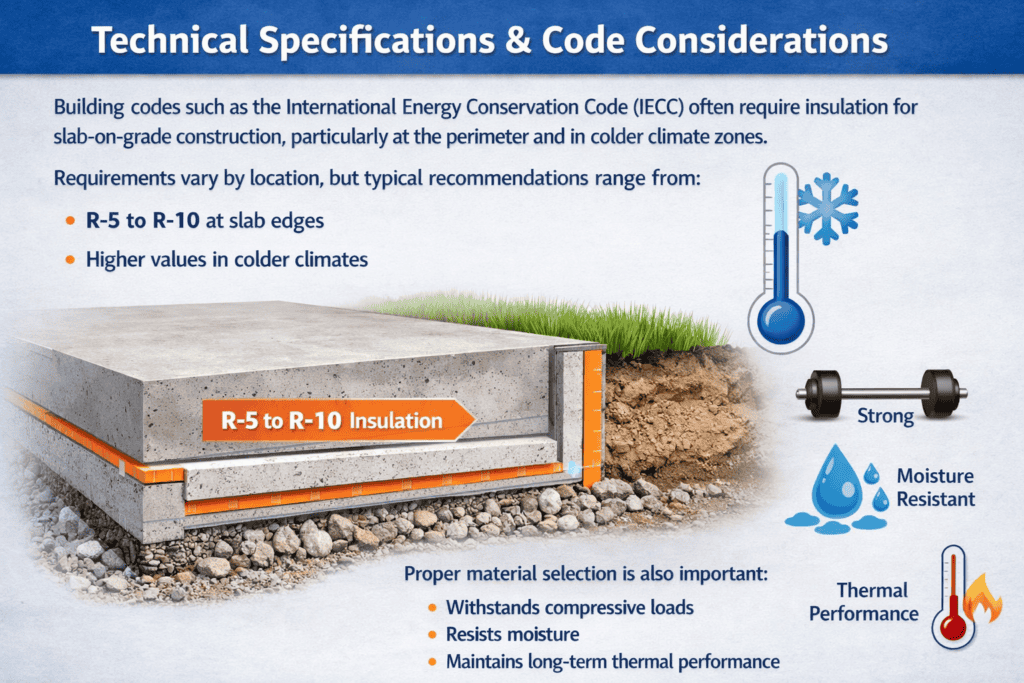
Building codes such as the International Energy Conservation Code (IECC) often require insulation for slab-on-grade construction, particularly at the perimeter and in colder climate zones. Requirements vary by climate zone, with stricter insulation standards in colder regions to prevent heat loss through the foundation. Typical recommendations range from:
- R-5 to R-10 at slab edges
- Higher values in colder climates
Proper material selection is also important. Insulation installed beneath concrete must be able to withstand compressive loads, resist moisture, and maintain long-term thermal performance.
Improve Whole-Building Efficiency
For complete building envelope performance, below-grade slab insulation should work alongside:
- Attic insulation to reduce heat gain from above
- House wrap insulation to control heat transfer through exterior walls
- Crawl space or basement insulation where applicable
Is Under Slab Insulation Right for Your Project?
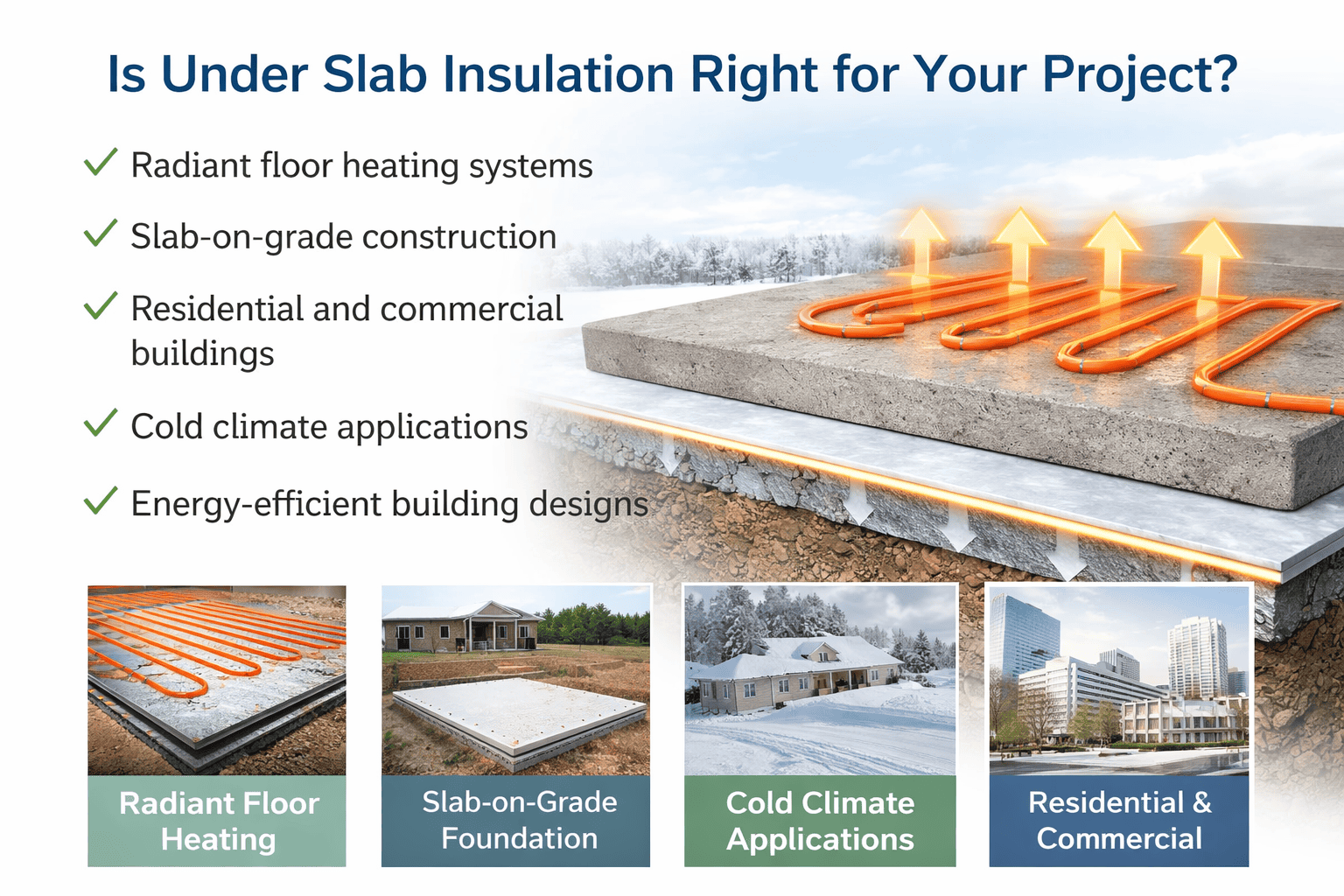
This type of insulation is ideal for:
- Radiant floor heating systems
- Slab-on-grade construction
- Residential and commercial buildings
- Cold climate applications
- Energy-efficient building designs

Why Choose Energy Shield Under Slab Insulation?
Under Slab Insulation FAQs
What is under slab insulation used for?
It is installed beneath concrete slabs to reduce heat loss into the ground, improve radiant floor efficiency, and increase overall energy performance.
Does under slab insulation improve radiant floor heating?
Yes. It reflects heat upward into the living space, making radiant floor systems more efficient and reducing energy waste.
Is under slab insulation necessary?
In many applications, yes. Without it, heat loss into the ground can significantly reduce system performance and increase energy costs.
What type of insulation is used under concrete slabs?
Closed-cell foam and reflective insulation products are commonly used due to their durability and thermal performance.
Can under slab insulation be used in commercial buildings?
Yes. It is widely used in warehouses, shops, and commercial slab-on-grade construction to improve efficiency and reduce operating costs.