

Residential Building Envelope
Improve Comfort. Save Energy. Protect Your Home.
Residential building insulation is essential for creating a complete home building envelope that improves comfort, energy efficiency, and moisture control. Energy Shield USA provides reflective insulation solutions designed to protect every part of the home—from the attic and roof to exterior walls, crawl spaces, and foundations.
By insulating the entire structure, homeowners can create a complete building envelope insulation system that improves indoor comfort, reduces energy costs, and protects the home year-round.
Request a QuoteResidential building insulation helps create a complete home building envelope that improves comfort, energy efficiency, and moisture control. Energy Shield reflective insulation protects every part of the home—from the attic and roof to exterior walls, crawl spaces, and foundations—helping reduce energy costs and maintain comfort year-round
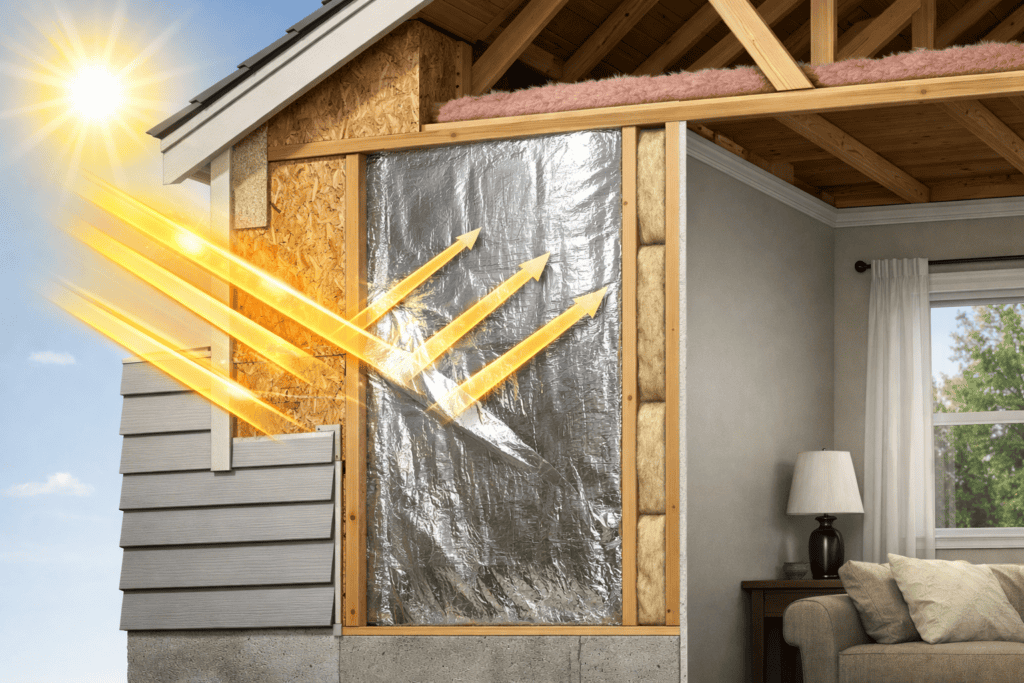
Block Radiant Heat
Reflective insulation helps prevent radiant heat from entering the home during warm weather, helping maintain cooler indoor temperatures and improving overall home energy efficiency.
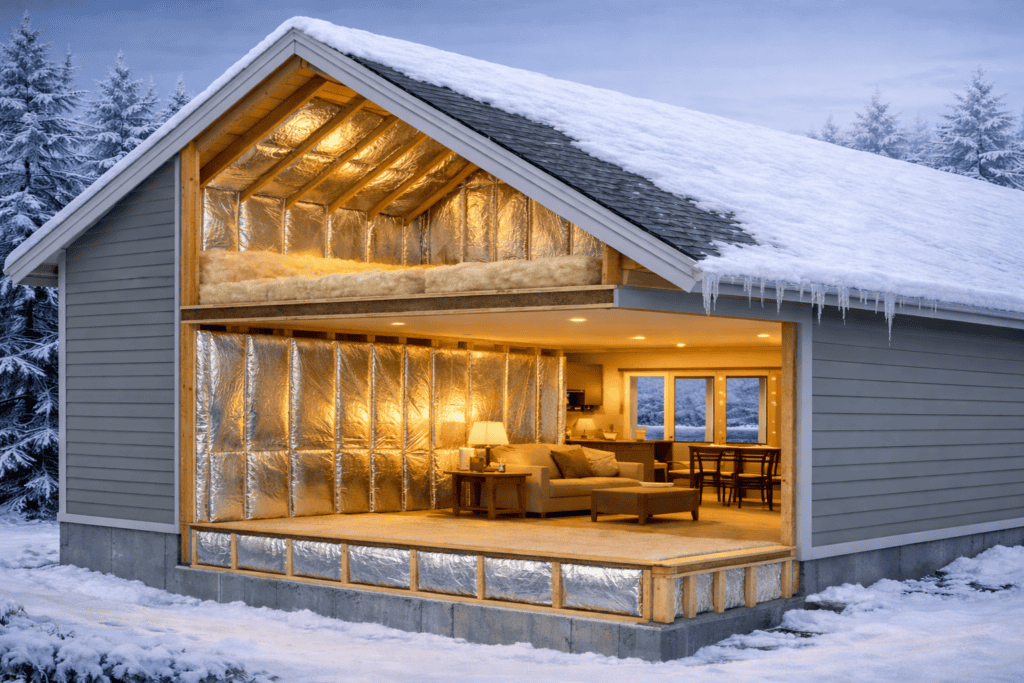
Reduce Heat Loss
During colder months, reflective insulation helps retain interior heat and reduce energy loss through walls, roofs, and attic spaces.
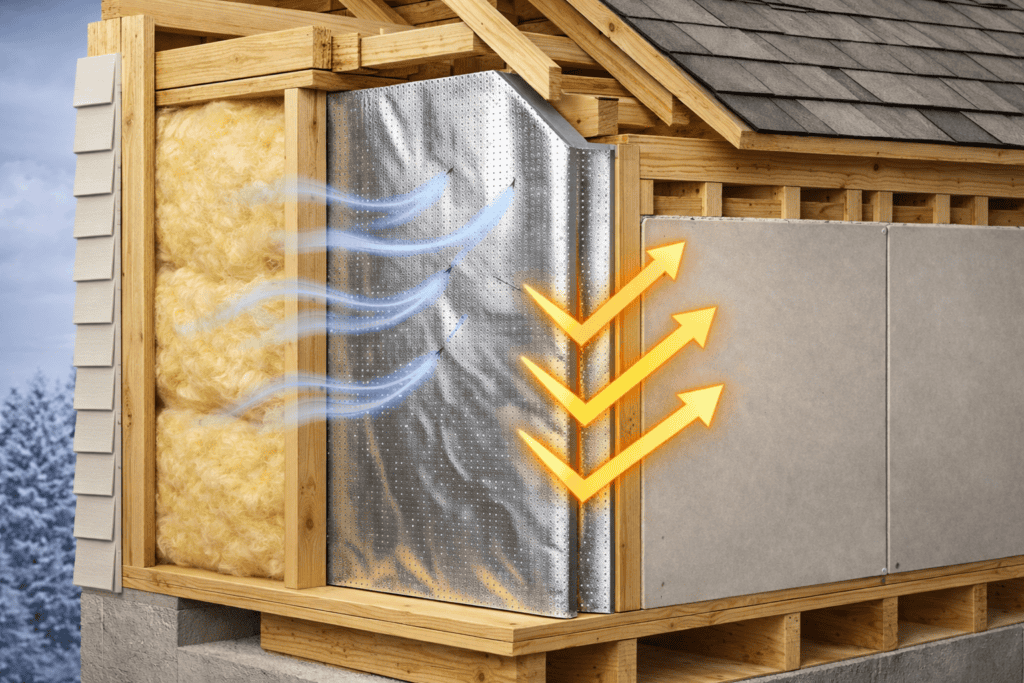
Improve Air Circulation
Perforated insulation allows controlled airflow that helps prevent trapped moisture and condensation buildup.
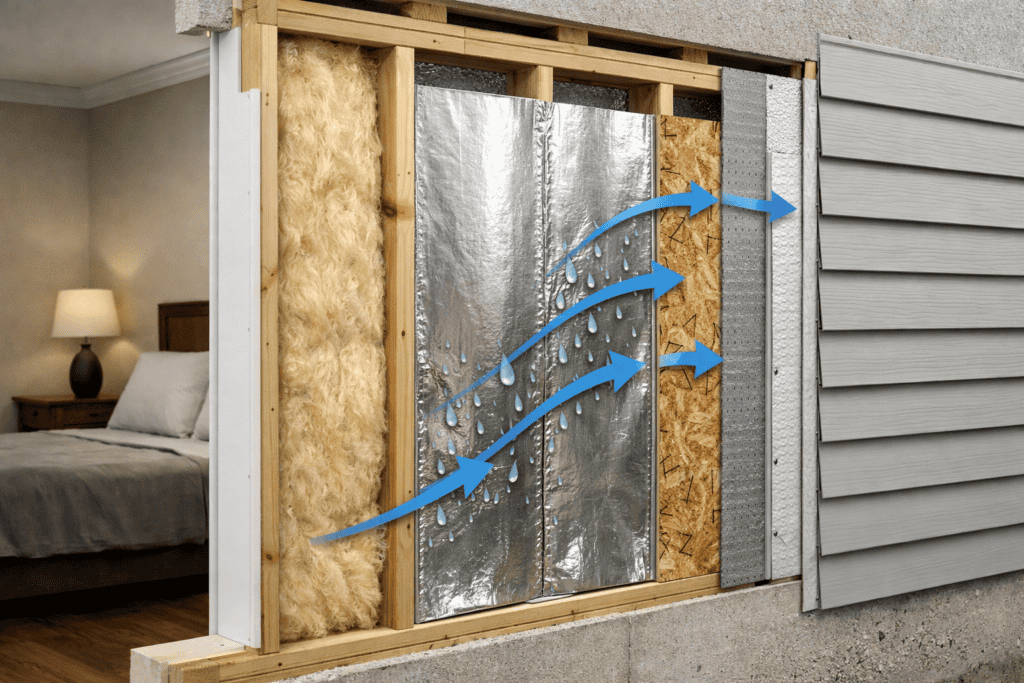
Control Moisture & Condensation
Energy Shield products can function as vapor control layers to reduce condensation and protect structural components.
What Is Residential Building Insulation?
Residential building insulation is a system of materials installed throughout a home’s building envelope—including the attic, walls, crawl space, basement, roof, and floors—to reduce heat transfer, improve energy efficiency, and control moisture. Proper insulation helps maintain indoor comfort and protects your home year-round.
Home Insulation Areas in a Residential Building Envelope
Home Insulation Areas in a Residential Building Envelope
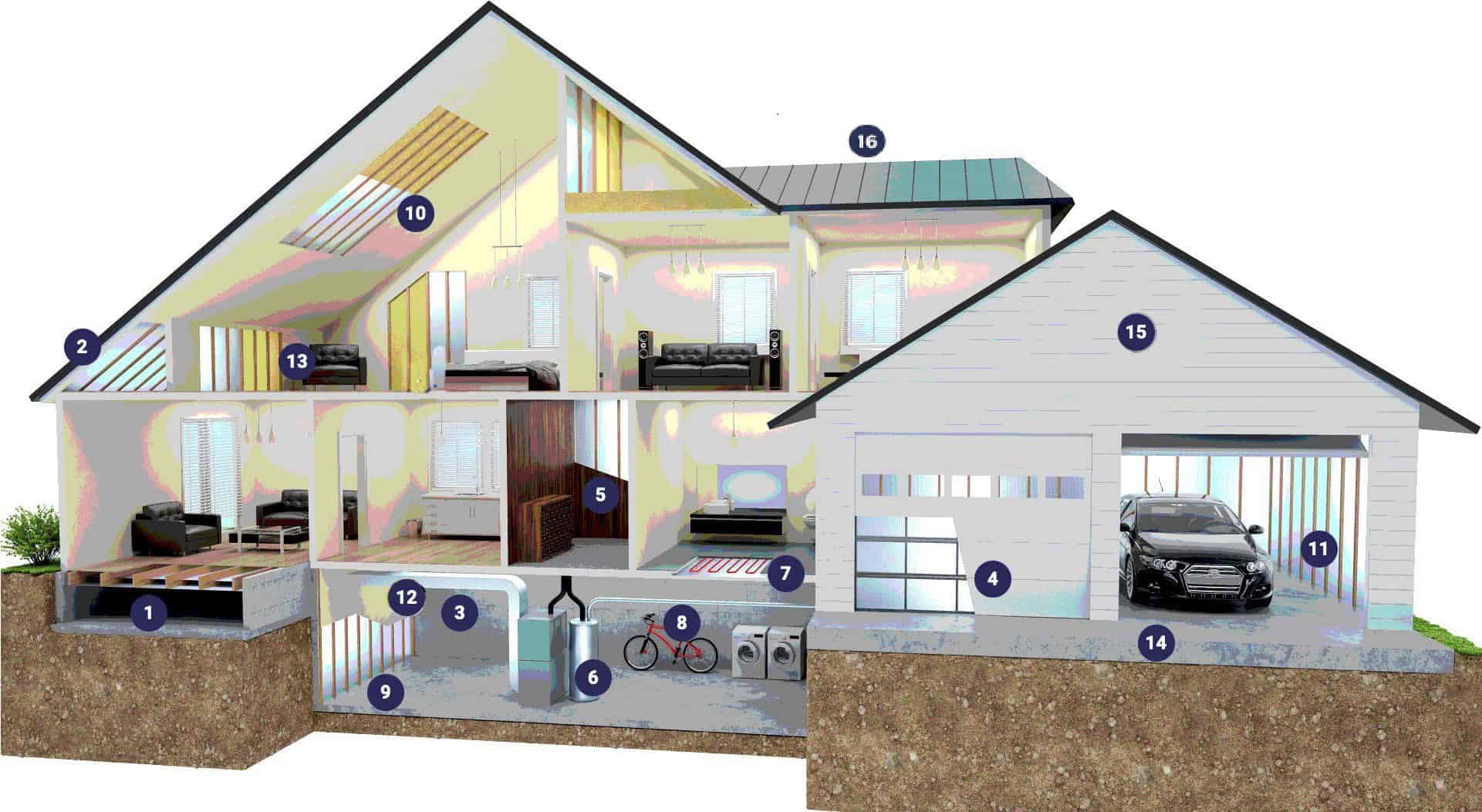
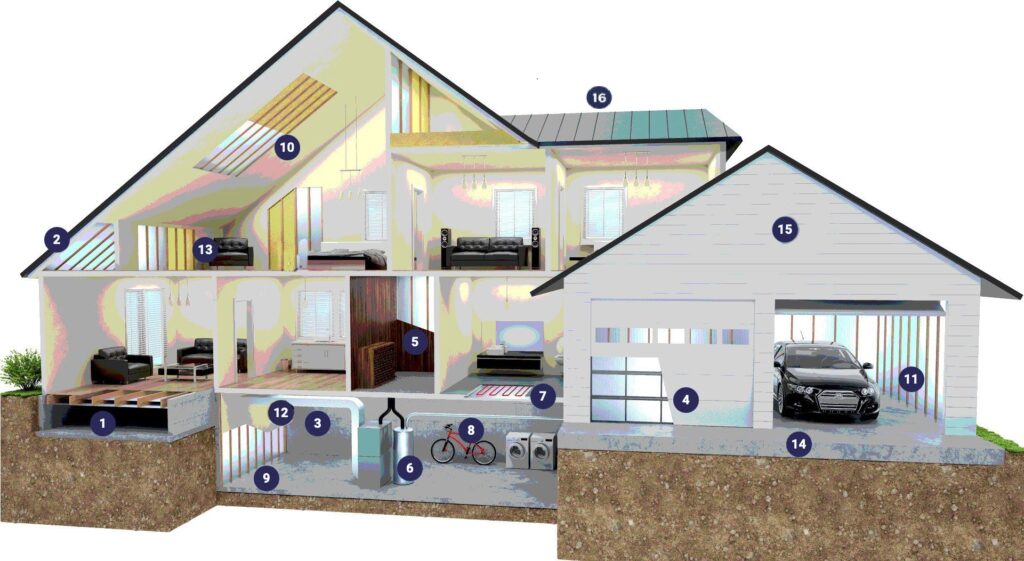
A properly insulated home includes protection in every part of the building envelope—from the roof to the foundation. Energy Shield insulation products can be installed throughout the home to improve comfort, efficiency, and moisture control.
Discover how to make your home more energy-efficient. Click on a number to see the recommended insulation for that area.
Attic Insulation
Reflect radiant heat in the attic to reduce summer heat gain and retain warmth in winter, improving overall comfort.
Crawl Space Insulation
Control moisture and improve temperature under the home to protect structural elements and enhance energy efficiency.
Ductwork Insulation
Prevent energy loss in HVAC ducts for more efficient heating and cooling and lower utility bills.
Garage Door Insulation
Improve comfort and temperature control in the garage while reducing energy loss to adjacent living spaces.
Specialty Room Insulation
Enhance comfort and energy efficiency in bonus rooms, offices, or other specialized interior spaces.
Water Heater Insulation
Reduce standby heat loss and improve water heating efficiency for lower energy bills.
Radiant Floor Insulation
Reflect heat upward into living spaces for improved radiant floor performance and consistent indoor comfort.
Pipe Wrap Insulation
Prevent heat loss from hot water pipes and protect cold water pipes from freezing to save energy and reduce damage risks.
Masonry Wall Insulation
Improve the thermal performance of block and masonry walls while reducing energy loss and enhancing comfort.
Cathedral Ceiling Insulation
Increase insulation efficiency in vaulted or cathedral ceiling spaces to reduce heat loss and improve comfort.
Exterior Wall Insulation
Reduce heat transfer and prevent air and moisture infiltration in exterior walls for year-round energy efficiency.
Basement Insulation
Enhance comfort, reduce heat loss, and control moisture below ground level for a healthier, more efficient home.
Knee Wall Insulation
Stop heat loss in small attic walls and cavities, improving comfort and reducing energy waste.
Under Slab Insulation
Improve thermal performance beneath concrete slabs and radiant floors to maximize heating efficiency.
House Wrap Insulation
Protect exterior walls from air and moisture infiltration while allowing the home to breathe and stay energy efficient.
Roofing Insulation
Reflect heat at the roof deck to reduce heat gain and improve overall energy efficiency in your home.
1
Crawl Space Insulation
Control moisture and improve temperature under the home to protect structural elements and enhance energy efficiency.
2
Attic Insulation
Reflect radiant heat in the attic to reduce summer heat gain and retain warmth in winter, improving overall comfort.
3
Ductwork Insulation
Prevent energy loss in HVAC ducts for more efficient heating and cooling and lower utility bills.
4
Garage Door Insulation
Improve comfort and temperature control in the garage while reducing energy loss to adjacent living spaces.
5
Specialty Room Insulation
Enhance comfort and energy efficiency in bonus rooms, offices, or other specialized interior spaces.
6
Water Heater Insulation
Reduce standby heat loss and improve water heating efficiency for lower energy bills.
7
Radiant Floor Insulation
Reflect heat upward into living spaces for improved radiant floor performance and consistent indoor comfort.
8
Pipe Wrap Insulation
Prevent heat loss from hot water pipes and protect cold water pipes from freezing to save energy and reduce damage risks.
9
Masonry Wall Insulation
Improve the thermal performance of block and masonry walls while reducing energy loss and enhancing comfort.
Learn More →
10
Cathedral Ceiling Insulation
Increase insulation efficiency in vaulted or cathedral ceiling spaces to reduce heat loss and improve comfort.
11
Exterior Wall Insulation
Reduce heat transfer and prevent air and moisture infiltration in exterior walls for year-round energy efficiency.
Learn More →
12
Basement Insulation
Enhance comfort, reduce heat loss, and control moisture below ground level for a healthier, more efficient home.
13
Knee Wall Insulation
Stop heat loss in small attic walls and cavities, improving comfort and reducing energy waste.
Learn More →
14
Under Slab Insulation
Improve thermal performance beneath concrete slabs and radiant floors to maximize heating efficiency.
15
House Wrap Insulation
Protect exterior walls from air and moisture infiltration while allowing the home to breathe and stay energy efficient.
16
Roofing Insulation
Reflect heat at the roof deck to reduce heat gain and improve overall energy efficiency in your home.
Why a Complete Residential Building Envelope Matters
A home performs best when insulation works together across the entire building envelope. Insulating only one area—such as the attic—can still allow heat, air, and moisture to move through other parts of the structure.
A complete residential insulation system helps:
- Improve year-round comfort
- Reduce heating and cooling costs
- Control condensation and moisture
- Improve HVAC efficiency
- Extend the life of building materials
Energy Shield reflective insulation helps create a continuous insulation system from roof to foundation.
Best Insulation for Each Area of Your Home
Best Insulation for Attics
Attics experience the greatest heat gain and heat loss, which is why reflective attic insulation plays a major role in improving home energy efficiency.
Best Insulation for Exterior Walls
Exterior walls benefit from insulation that reduces radiant heat transfer while also controlling moisture and air infiltration.
Best Insulation for Crawl Spaces
Crawl space insulation systems help control moisture and temperature fluctuations beneath the home.
Best Insulation for Basements
Basement insulation helps reduce heat loss through foundation walls while protecting against moisture intrusion.
Best Insulation for Radiant Floors
Radiant floor insulation helps reflect heat upward into living spaces, improving the efficiency of radiant heating systems.
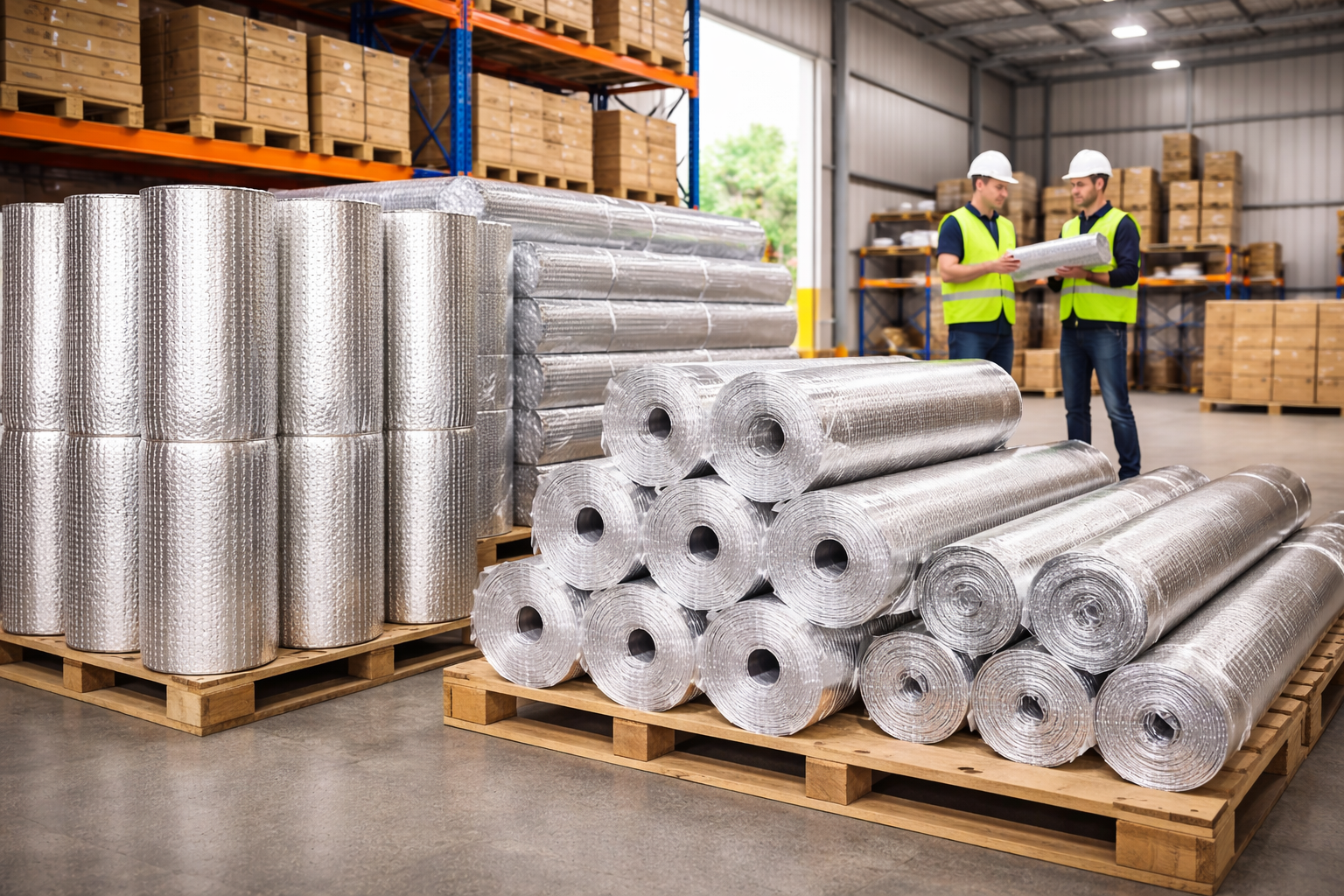
Energy Shield Residential Reflective Insulation Products
- Radiant Barrier Insulation
- Reflective Bubble Insulation
- Reflective Foam
- Reflective Fabric
- Faced Fiberglass
Why Choose Energy Shield USA Residential Building Insulation?
Energy Shield Residential Insulation Solutions
Energy Shield reflective insulation products are designed for residential construction and renovation projects. Our insulation solutions help homeowners and builders improve thermal performance while protecting against moisture and condensation.
Explore the insulation applications above to learn how Energy Shield products support a complete residential building envelope system.
Request an Insulation QuoteResidential Insulation FAQs
What areas of a home should be insulated?
Every part of a home benefits from insulation. Key areas include the attic, exterior walls, crawl spaces, basement, roof, radiant floors, ducts, pipes, and specialty rooms. Insulating the full building envelope improves energy efficiency, comfort, and moisture control year-round.
Which part of the home is most important to insulate?
The attic often experiences the greatest heat gain and heat loss, making it critical to insulate. However, a complete residential insulation system works best when all areas—including walls, basement, crawl spaces, and ducts—are properly insulated.
How does reflective insulation work in a home?
Reflective insulation blocks radiant heat from entering during hot months and reflects interior heat back during colder months. It helps maintain consistent indoor temperatures, reduces energy costs, and improves overall comfort.
How much energy can insulation save in a home?
Properly installed insulation can reduce heating and cooling energy costs by 10–30% depending on the home and climate. Insulating attics, walls, crawl spaces, and ducts helps prevent energy loss and allows HVAC systems to operate more efficiently.
Can insulation help prevent condensation and moisture problems?
Yes. Proper insulation, combined with vapor control layers, prevents moisture buildup in walls, attics, basements, and crawl spaces. This helps reduce mold, mildew, and structural damage caused by condensation.
Does radiant floor insulation improve heating efficiency?
Absolutely. Radiant floor insulation reflects heat upward into living spaces, reducing heat loss into the subfloor. This makes radiant floor heating systems more efficient and helps maintain even indoor temperatures.
Why is insulating crawl spaces important?
Crawl space insulation helps control moisture and temperature fluctuations under the home. Proper insulation reduces energy loss, prevents condensation, and improves comfort in rooms above the crawl space.
How does pipe wrap insulation save energy?
Pipe wrap insulation prevents heat loss from hot water pipes and protects cold water pipes from freezing. This reduces energy waste and can help lower utility bills.
What is the benefit of using house wrap insulation?
House wrap protects exterior walls from air and moisture infiltration while allowing the structure to breathe. Combined with wall insulation, it improves energy efficiency and helps prevent condensation issues.