
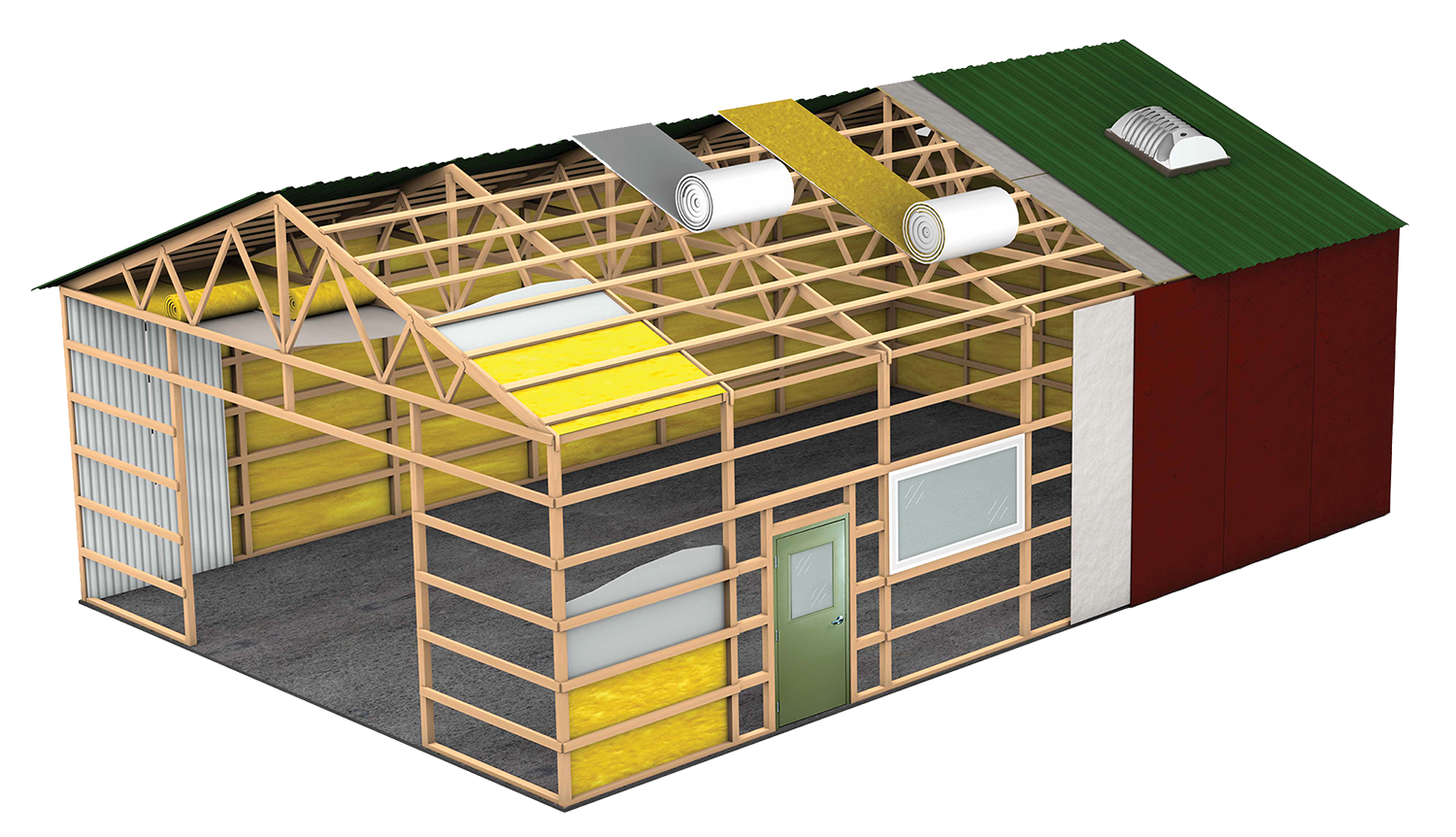
Energy Shield offers high-performance insulation products designed for post-frame buildings. Installed in the walls and roof, they help keep your pole barn cooler in the summer, warmer in the winter, and protected from condensation year-round.
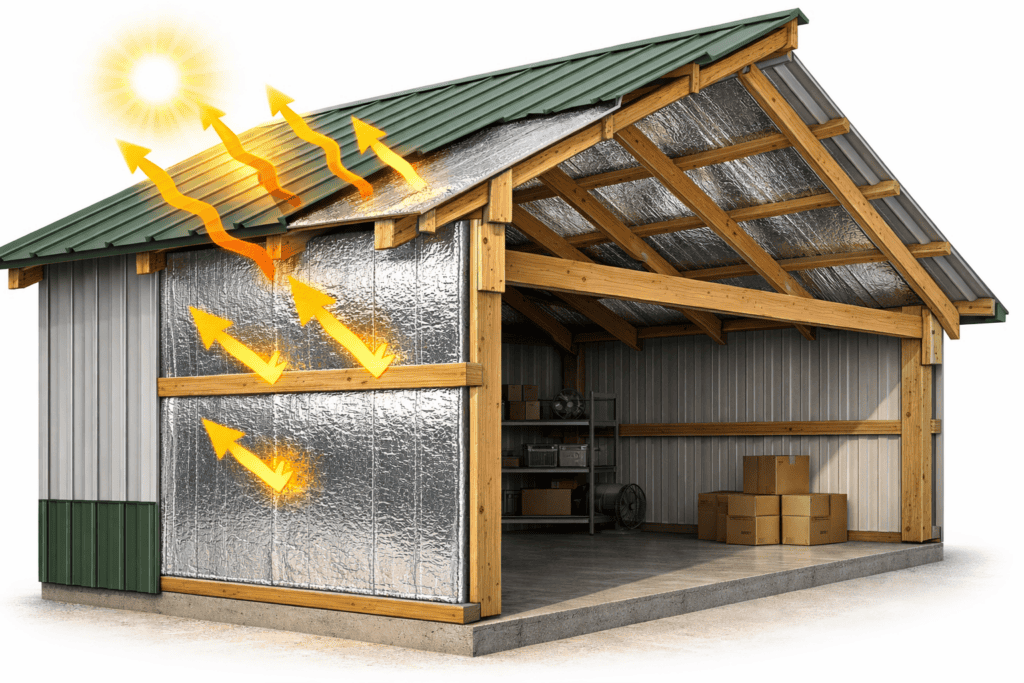
Shield Against Radiant Heat
Reflective insulation installed in post-frame building walls and roofs reflects solar heat away, keeping your building cooler in summer. This protects interior spaces from overheating and reduces HVAC demand.
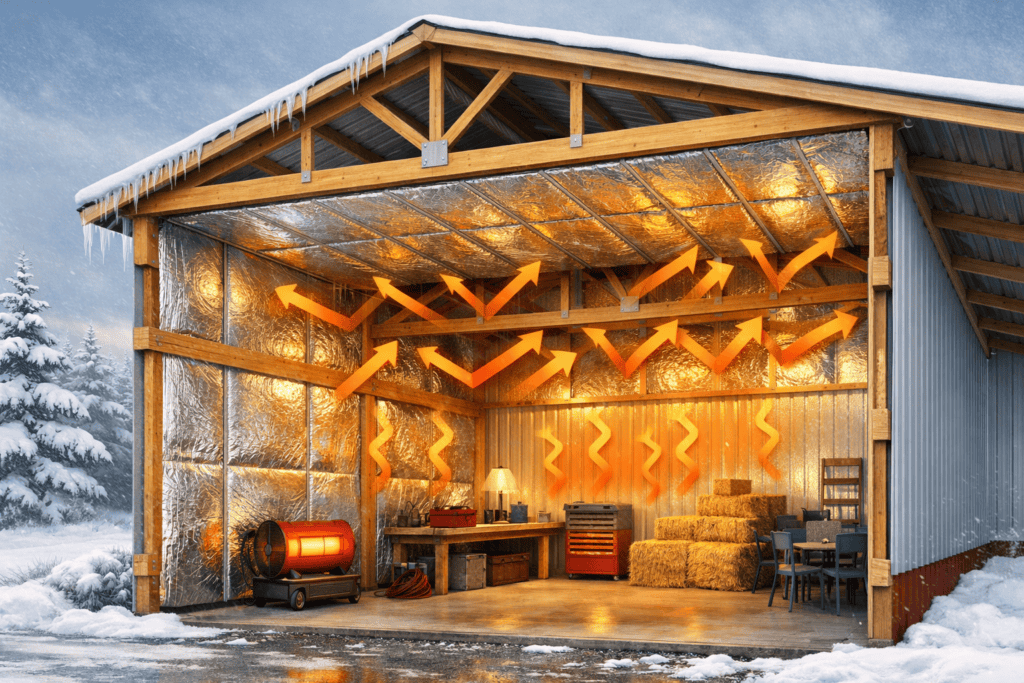
Reduce Heat Loss
During colder months, reflective insulation helps retain interior heat, keeping your pole barn warm and comfortable while lowering energy costs.
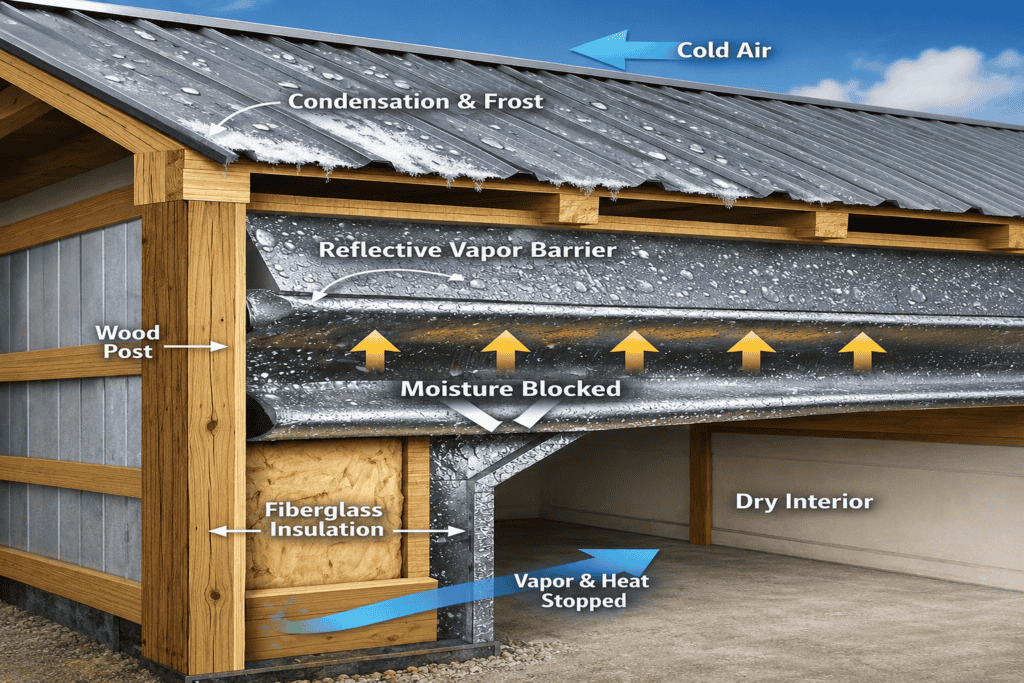
Control Moisture & Condensation
Pole barns with exposed posts and metal roofs are prone to condensation. Energy Shield insulation products act as vapor barriers to prevent frost and moisture buildup on steel panels, protecting your building and improving durability.
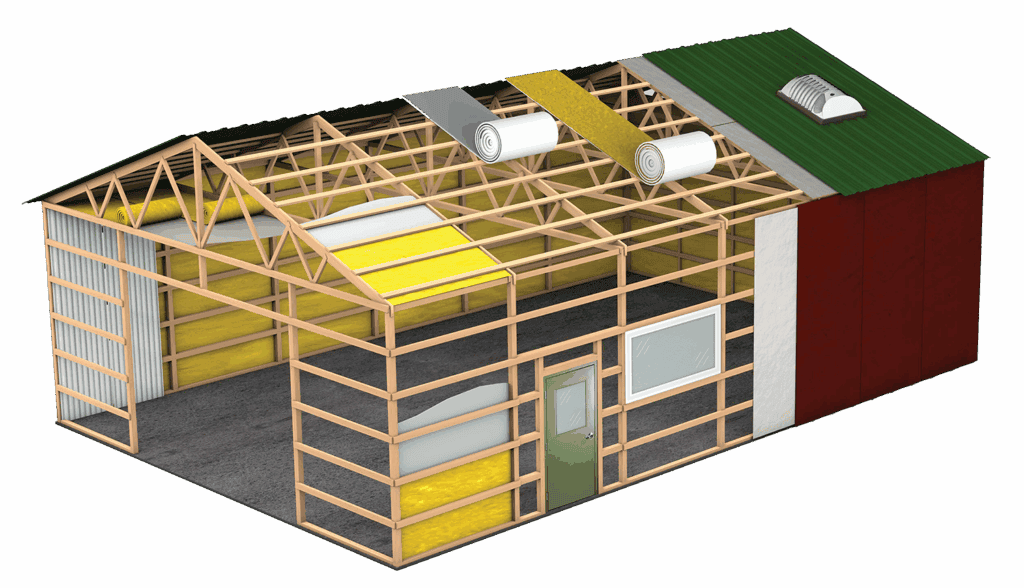
Why Proper Pole Barn Insulation Matters
Pole barns and post-frame structures have open wall bays, steel roofing, and exposed posts that conduct heat quickly. Without proper insulation, you may experience:
- High energy costs
- Excessive heat in summer
- Heat loss in winter
- Condensation on steel panels
- Moisture-related damage
Energy Shield insulation systems create a continuous thermal barrier, improving energy efficiency, comfort, and structural protection year-round.
R-Value and Insulation Performance for Pole Barns
When insulating a pole barn, both R-value and radiant heat protection play important roles in overall building efficiency. Traditional insulation materials rely on R-value to slow conductive heat transfer, while reflective insulation helps reduce radiant heat gain from metal roofs and wall panels.
Energy Shield insulation systems combine these benefits to improve temperature stability and reduce energy loss in post-frame buildings.
Typical insulation performance considerations include:
- Fiberglass insulation: provides strong R-value for walls and roof cavities
- Reflective insulation: reduces radiant heat transfer from metal panels
- Vapor barriers: help control condensation on steel roofing and siding
- Continuous insulation layers: improve overall thermal performance
By combining reflective insulation with fiberglass systems, pole barns can achieve better energy efficiency, improved comfort, and reduced condensation risk year-round.
ES® Pole Barn Insulation Products
ES® Pole Barn Insulation Products
Faced fiberglass insulation combines a resilient fiberglass blanket with an integrated vapor retarder facing to improve thermal performance and help prevent condensation.
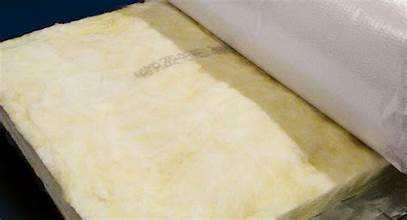
Key Features
- High-performance fiberglass blanket insulation
- Integrated vapor retarder facing
- Helps prevent condensation
- Improves interior temperature stability
- Custom laminated to building specifications
Reflective foam insulation features a closed-cell polyethylene core with reflective foil surfaces designed to reduce radiant and conductive heat transfer.
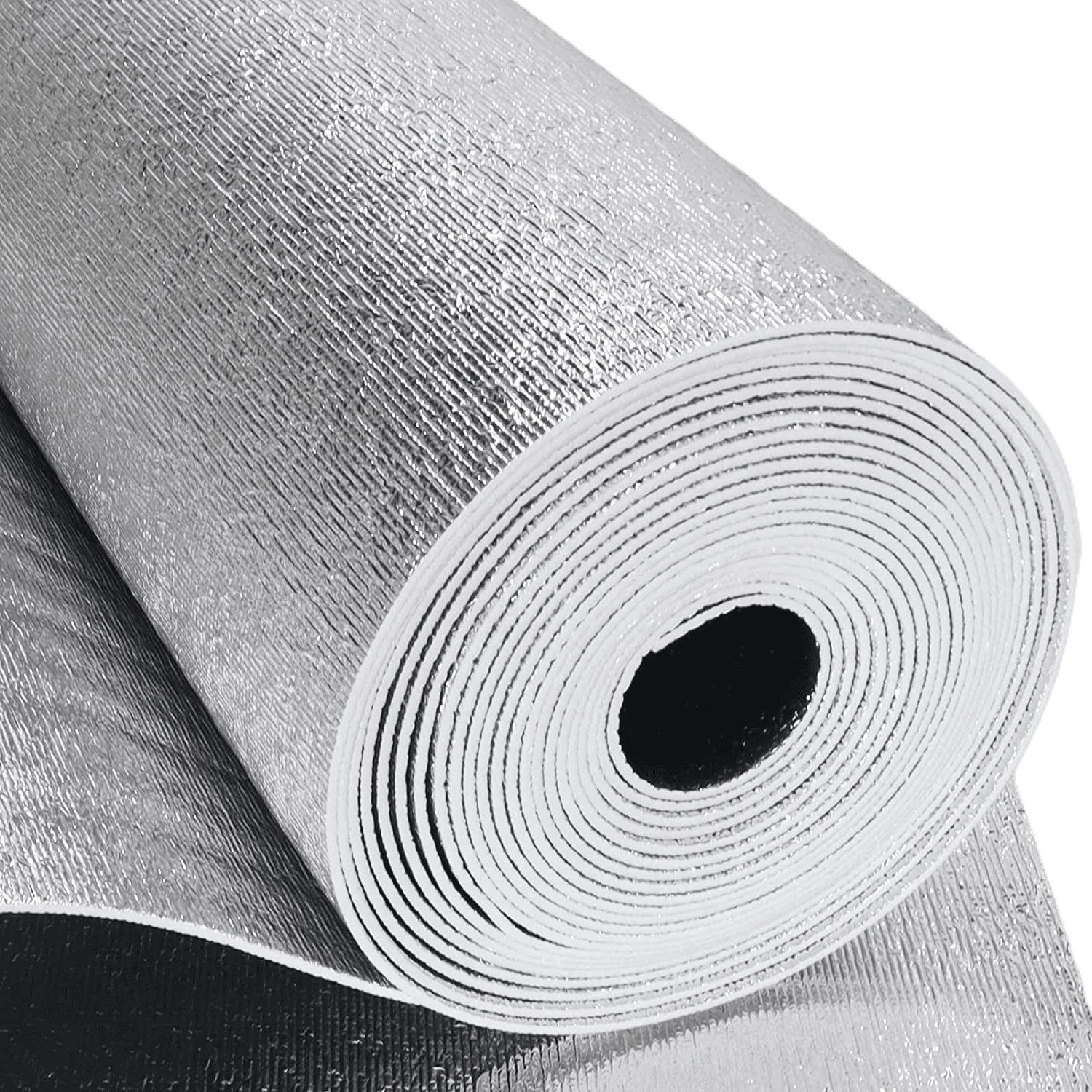
Key Features
- Closed-cell polyethylene foam core
- Dual reflective foil surfaces
- Reduces radiant and conductive heat transfer
- Control condensation and moisture
- Durable insulation for roofs and walls
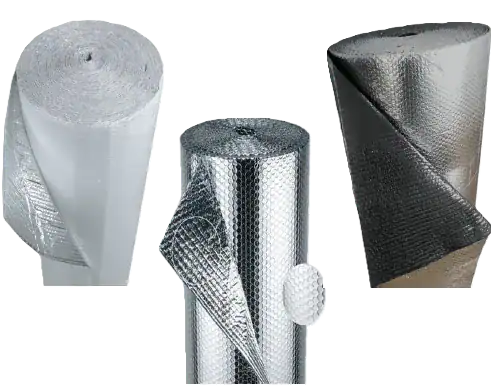
Reflective bubble insulation uses dual foil surfaces with a bubble core to reduce radiant heat transfer and help manage condensation.
Key Features
- Reflects radiant heat from roof and walls
- Dual reflective foil surfaces
- Helps reduce condensation risk
- Flexible and easy to install over or under purlins
- Available in multiple colors and widths
POLE BARN INSTALLATION METHODS
Pole barn insulation can be installed in several ways depending on the building design and insulation system used.
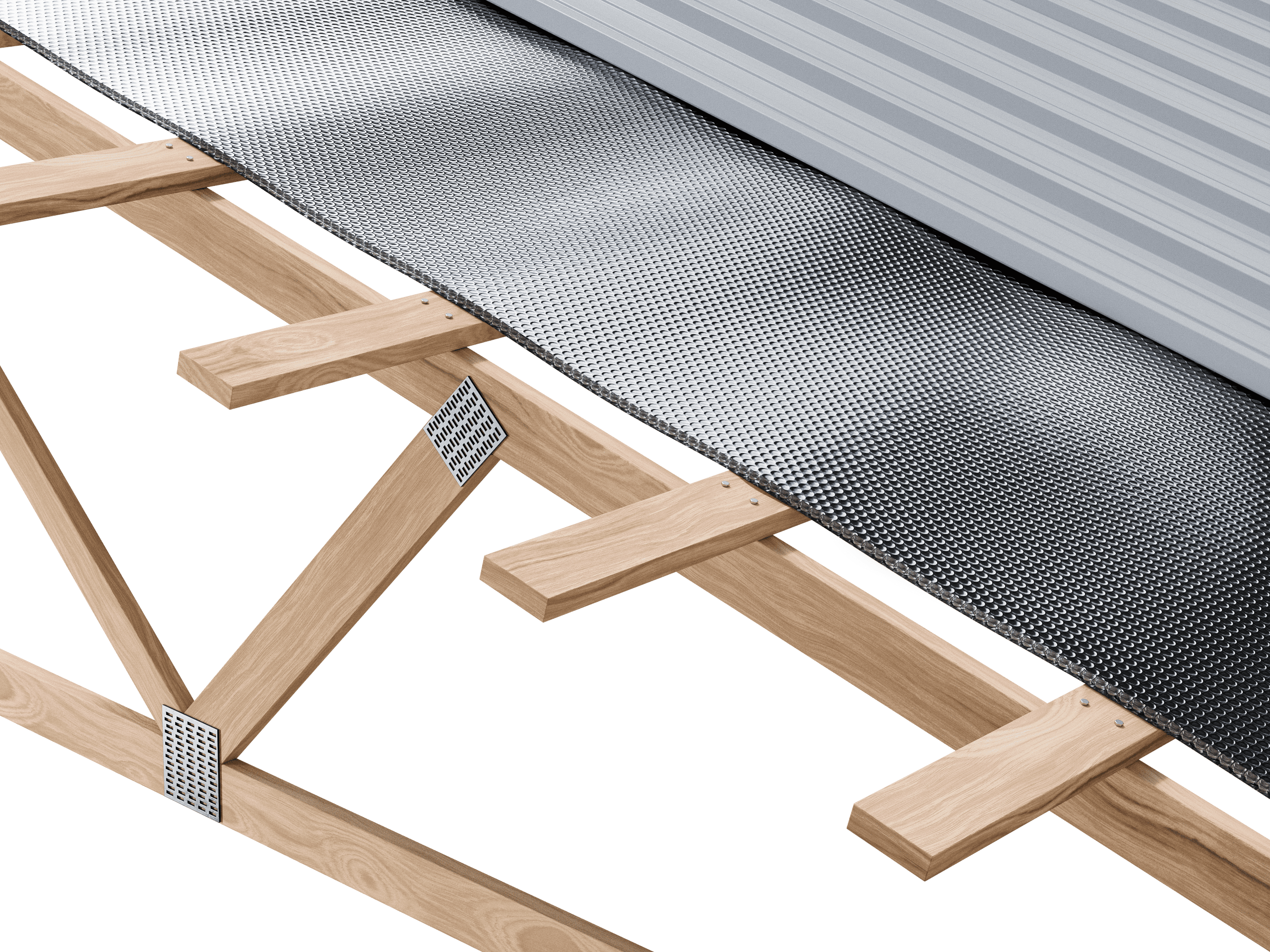
Over-Purlin Installation
Insulation above roof purlins creates a continuous thermal barrier and improves energy efficiency.
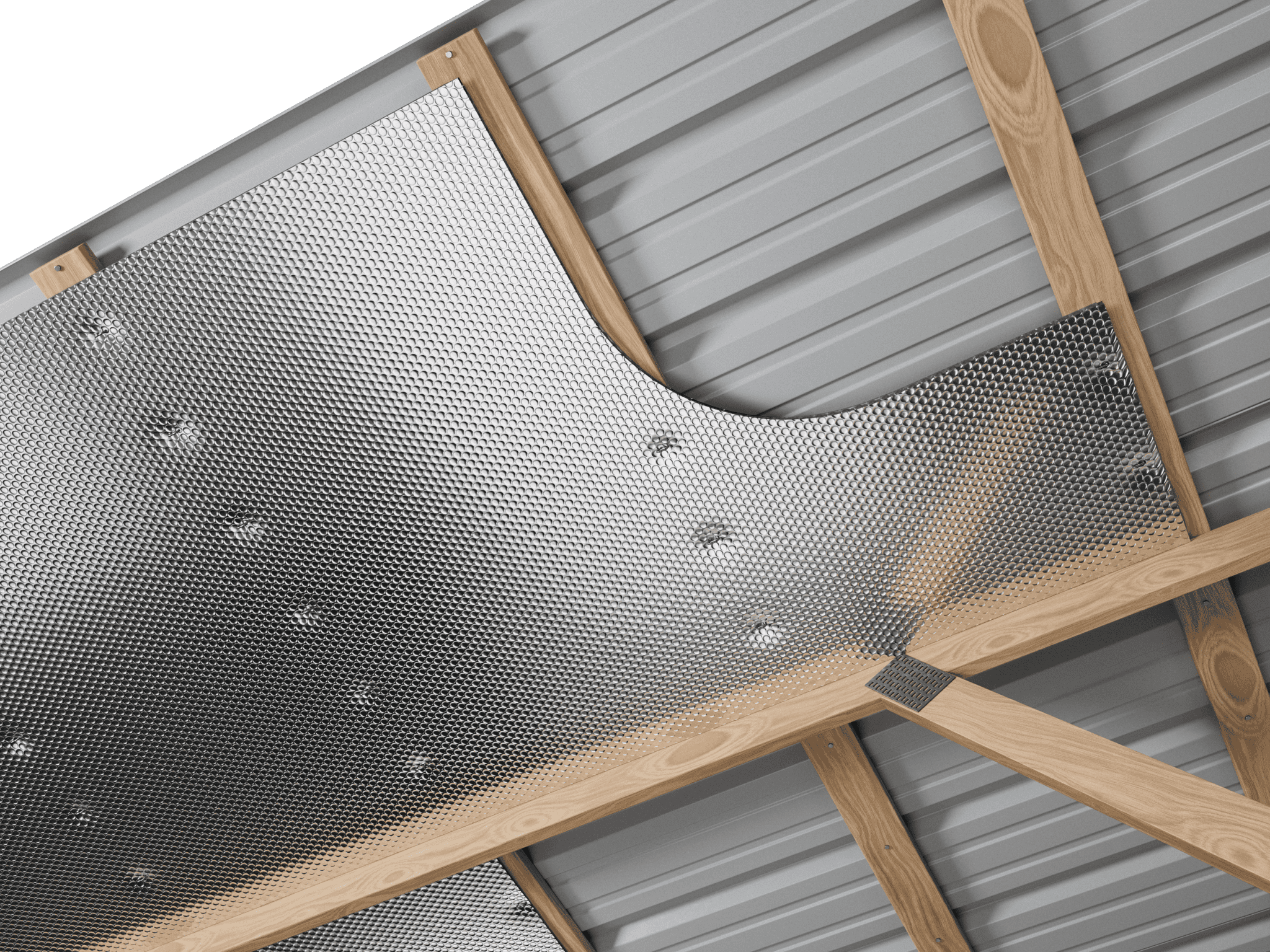
Under-Purlin Installation
Insulation installed below purlins or between structural members reduces radiant heat transfer and prevents condensation.
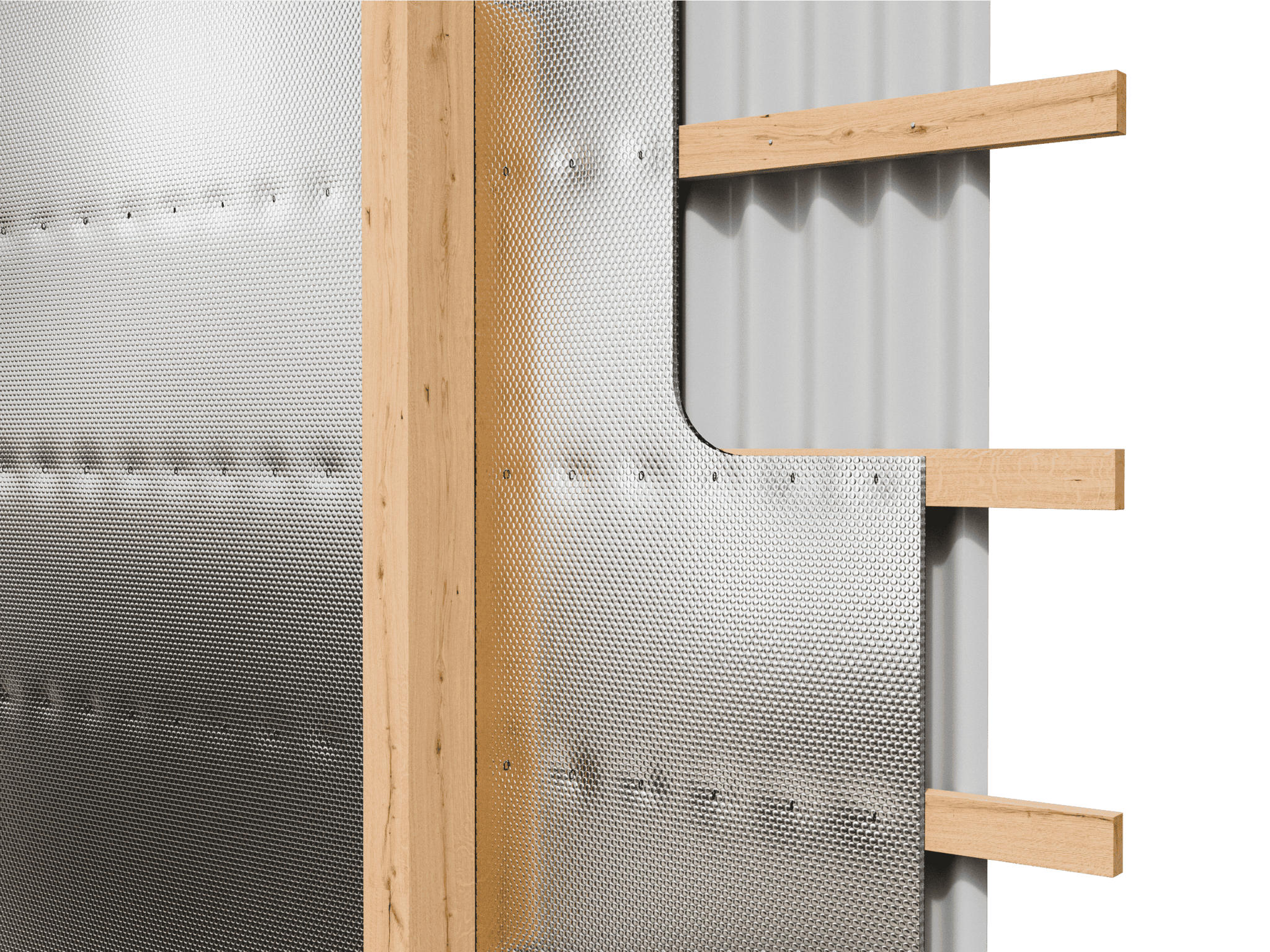
Wall Insulation Systems
Behind steel wall panels to stabilize interior temperatures and improve comfort.
APPLICATIONS / WHERE USED
Pole barn insulation is commonly used in:
Common Pole Barn Insulation Mistakes to Avoid
Properly insulating a pole barn requires more than simply adding insulation between framing members. Many buildings suffer from poor performance due to common installation mistakes. Avoiding these issues helps improve energy efficiency, prevent condensation, and protect the structure.
Ignoring Condensation Control
Condensation is another common concern in pole barns with steel panels. When warm interior air meets cold metal surfaces, moisture can form. Without insulation that includes a vapor barrier, condensation may lead to rust, mold, and structural damage.
Leaving Gaps in the Insulation Layer
Open wall bays and wide spans in pole barns can make it difficult to maintain continuous insulation. Gaps allow heat to escape in winter and enter in summer, reducing overall energy efficiency.
Using Insulation That Doesn’t Handle Radiant Heat
Metal roof and wall panels absorb significant solar heat. Traditional insulation alone may not address radiant heat transfer from steel panels. Reflective insulation helps deflect radiant heat and improve temperature stability.
Improper Installation Around Posts and Purlins
Pole barns contain exposed posts, trusses, and purlins that require insulation to fit tightly around structural members. Flexible insulation systems help maintain consistent thermal coverage throughout the building.
Not Combining Insulation Types When Needed
Many pole barns benefit from combining insulation systems, such as reflective insulation and fiberglass, to provide both radiant heat protection and strong R-value performance.
By choosing insulation designed for pole barns and installing it properly, building owners can reduce energy costs, control condensation, and maintain a more comfortable interior environment year-round.
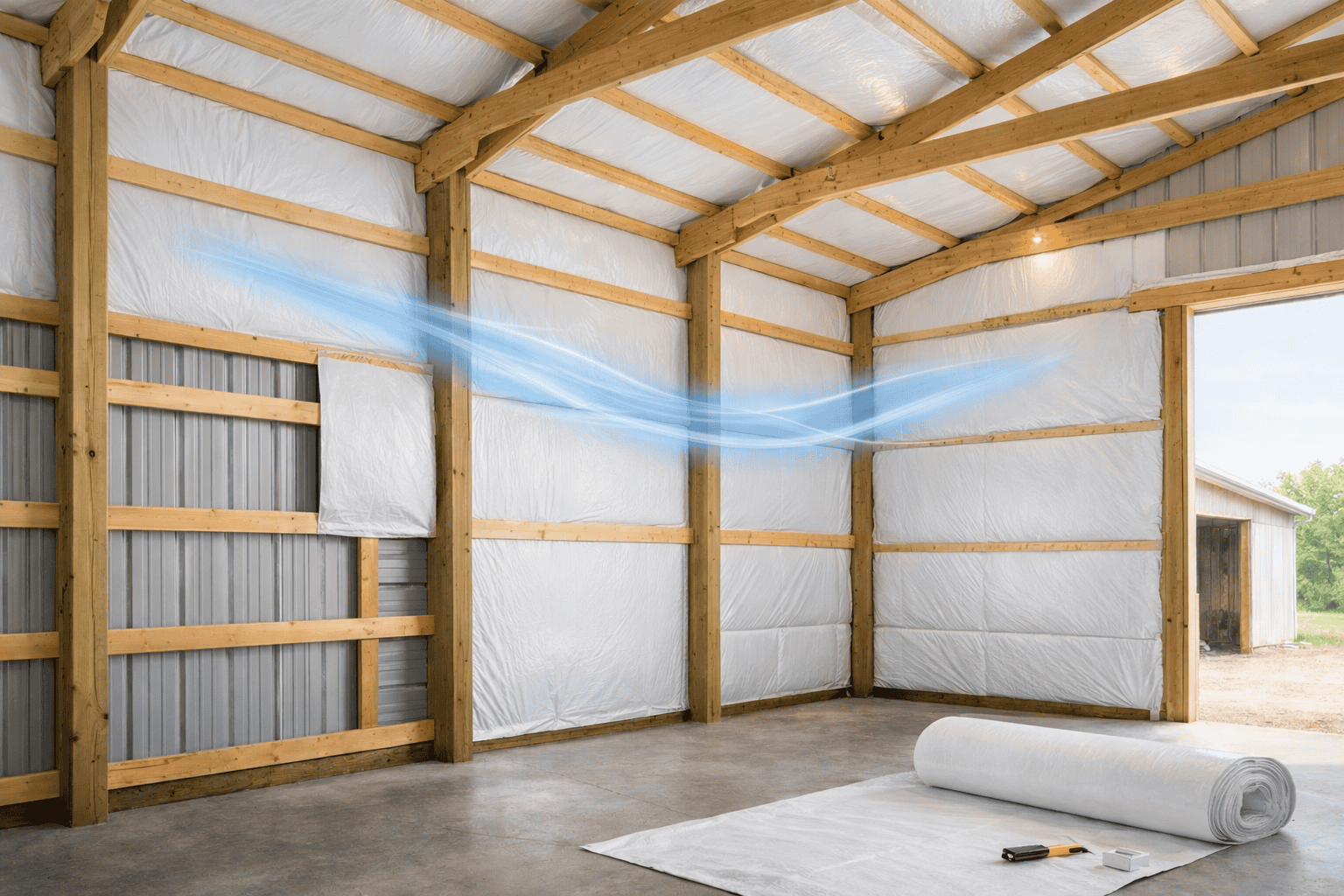
Benefits of Insulating a Pole Barn
Pole barns and post-frame buildings require insulation systems that can adapt to wide spans, exposed framing, and metal panels. Energy Shield® insulation solutions are designed for walls, roofs, and ceilings, fitting easily around posts, purlins, and structural members.
Lightweight and flexible, our insulation installs efficiently in new construction or retrofit projects, providing consistent thermal coverage while helping control condensation and improve interior comfort year-round.

Why Choose Energy Shield USA® Pole Barn Insulation?
Pole Barn Insulation FAQs
What is the best insulation for a pole barn?
Energy Shield USA offers three main types of insulation for pole barns:
- Faced Fiberglass: Fiberglass blanket with a vapor retarder facing, ideal for controlling condensation and stabilizing interior temperatures.
- Reflective Foam: Closed-cell polyethylene foam with dual reflective foil surfaces reduces radiant and conductive heat transfer.
- Reflective Bubble: Dual foil with a bubble core reflects radiant heat and prevents condensation, especially effective over purlins or under roof panels.
Can I install insulation in my pole barn myself?
Yes! Energy Shield insulation products are lightweight, flexible, and easy to cut and fit, making them perfect for DIY installation or professional use.
How do I prevent condensation in a pole barn?
Using insulation with an integrated vapor barrier—like faced fiberglass or reflective foam—prevents moisture buildup on steel panels, reducing the risk of rust, mold, and structural damage.
How much energy can I save by insulating my pole barn?
Proper insulation reduces energy costs by reflecting heat in summer and retaining warmth in winter, lowering HVAC demand, stabilizing interior temperatures, and improving year-round efficiency
How long does pole barn insulation last?
Energy Shield insulation is designed for durability. When installed correctly, our reflective, foam, and fiberglass systems can last 20–30 years or more, maintaining thermal performance and moisture control throughout the building’s lifespan.
Can insulation help reduce noise in my pole barn?
Yes. Faced fiberglass and reflective insulation can help absorb sound and reduce noise from rain, wind, or machinery, improving comfort for workshops, storage, and living spaces in post-frame buildings.
Do I need a vapor barrier with my insulation?
Yes. A vapor barrier is essential in pole barns with metal roofing or wall panels. It prevents condensation from forming on steel surfaces, protecting your building from corrosion, mold, and moisture damage while enhancing thermal performance.