

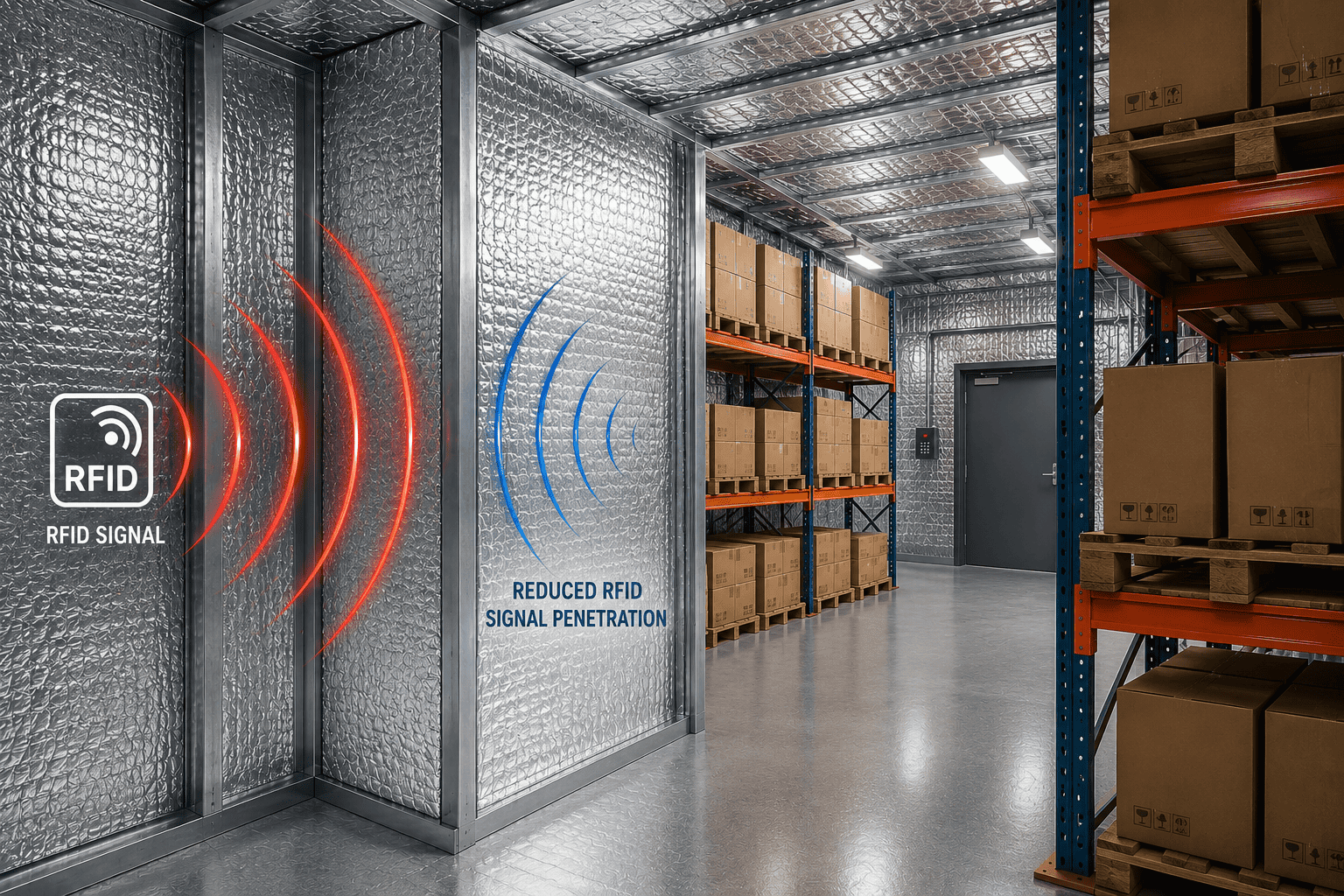
RFID Shielding Insulation, RFID Attenuation & Signal Control Solutions
Reduce RFID Signal Transmission. Improve Security. Protect Sensitive Assets.
Energy Shield USA manufactures reflective insulation products that help reduce RFID signal transmission while providing thermal performance benefits. Conductive foil and metallized surfaces interact with radio-frequency energy, helping attenuate RFID signals used in inventory tracking, access-control systems, asset management, and other wireless identification technologies.
Our RFID shielding products—including radiant barriers, reflective bubble insulation, and reflective foam insulation—help reduce unwanted RFID signal penetration while supporting energy efficiency and moisture control. Applications include retail stores, warehouses, distribution centers, secure storage facilities, data centers, government buildings, and other signal-sensitive environments.
Request a QuoteEnergy Shield USA manufactures reflective insulation products that help reduce RFID signal transmission while providing thermal performance benefits. Conductive foil and metallized surfaces interact with radio frequency energy, helping attenuate RFID signals used in inventory tracking, access control systems, asset management, and other wireless identification technologies. Common applications include retail stores, warehouses, distribution centers, secure storage facilities, data centers, government buildings, and other environments where RFID attenuation, inventory security, and thermal performance are important.
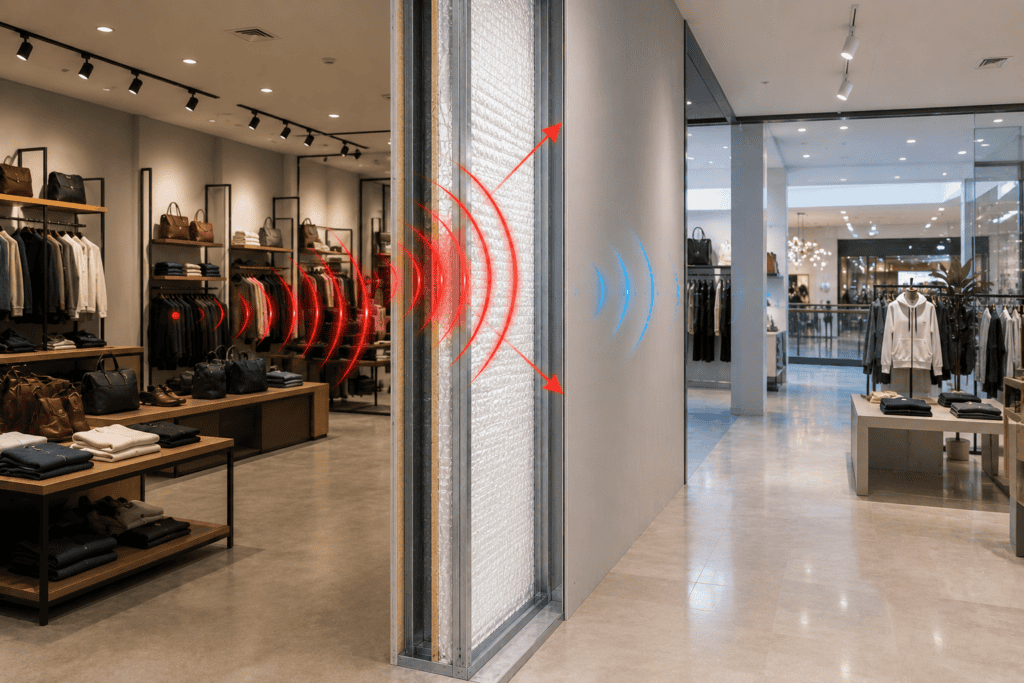
Improve Security
Reduce unwanted RFID signal transmission through walls, ceilings, and building assemblies.
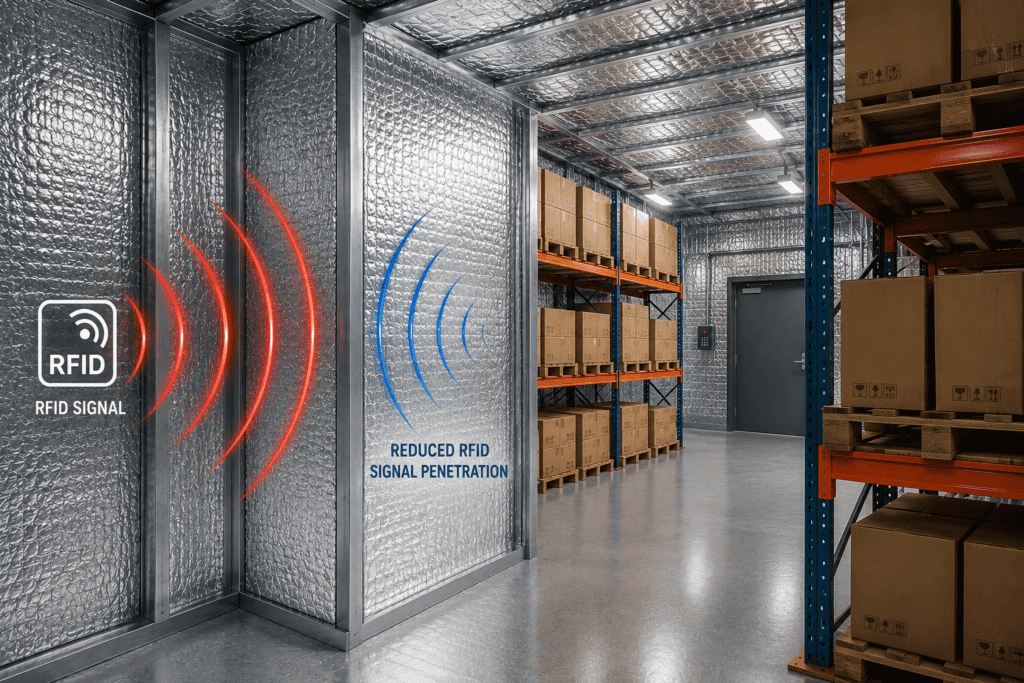
Reduce RFID Signal Leakage
Conductive foil and metallized surfaces help attenuate RFID signals by reflecting and reducing radio frequency energy.

Improve Efficiency & Performance
Delivers dual-purpose performance by combining RFID attenuation with thermal protection.
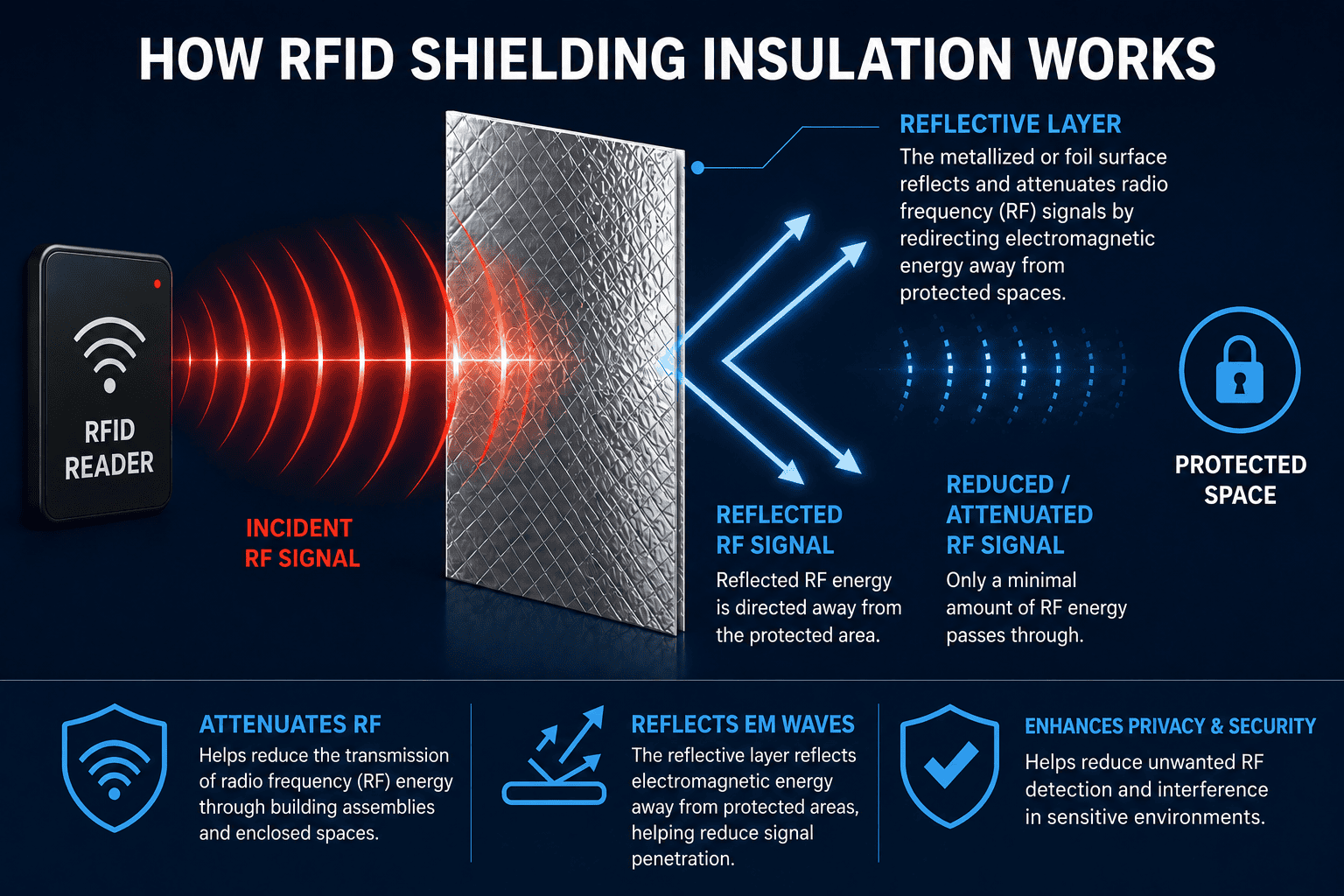
What Is RFID Shielding Insulation?
RFID shielding insulation is a reflective building material designed to help reduce RFID signal transmission while providing thermal performance benefits. Conductive foil and metallized surfaces interact with radio frequency energy, helping attenuate RFID signals used for inventory tracking, access control, asset management, and other wireless identification technologies.
These materials are commonly used in:
- Retail stores
- Warehouses
- Distribution centers
- Secure storage facilities
- Government buildings
- Other environments where reducing RFID signal leakage is important
By combining RFID attenuation and thermal performance in a single product, reflective insulation can help improve security, energy efficiency, and overall building performance.
Does Radiant Barrier Insulation Block RFID Signals?
Yes. Conductive foil and metallized reflective insulation products can help reduce RFID signal transmission by reflecting and attenuating radio frequency energy. The level of RFID attenuation depends on factors such as material construction, installation quality, coverage continuity, and signal frequency.
Products including radiant barriers, reflective bubble insulation, and reflective foam insulation are commonly used in retail, warehouse, and secure facility applications where reducing RFID signal leakage is desirable.
ES® RFID Shielding Insulation Products
ES® RFID Shielding Insulation Products
Designed for applications requiring maximum RFID attenuation with minimal weight and thickness.
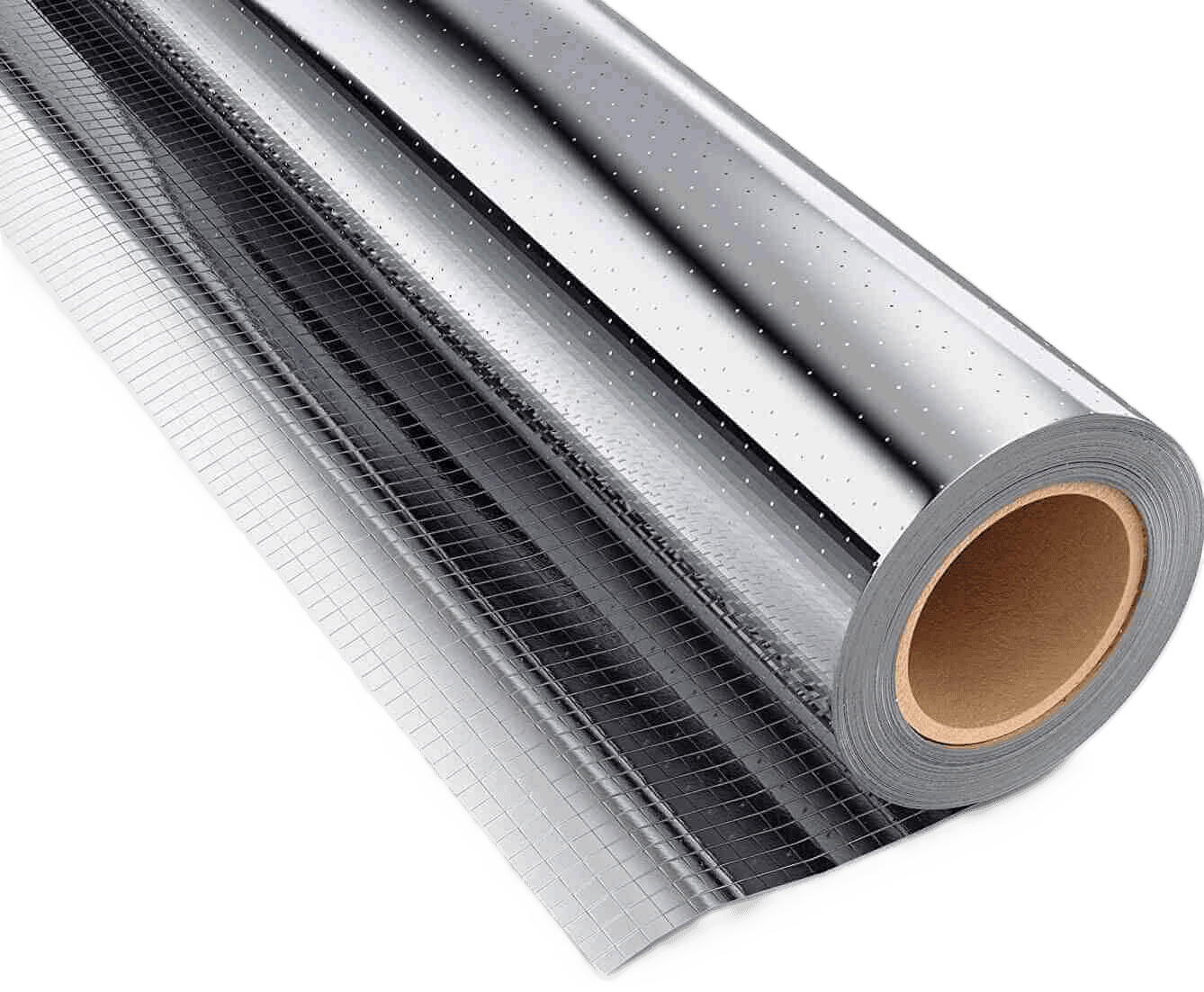
Key Features
- High reflectivity foil surface
- Helps reduce radiant heat transfer
- Supports RFID signal attenuation applications
Combines conductive foil surfaces with a bubble core to provide RFID attenuation and condensation control.
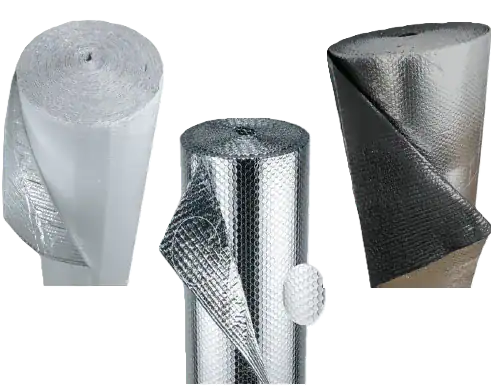
Key Features
- Dual reflective layers
- Helps control condensation
- Supports RFID signal attenuation
Combines conductive foil surfaces with a closed-cell foam core to provide RFID attenuation and enhanced thermal performance.
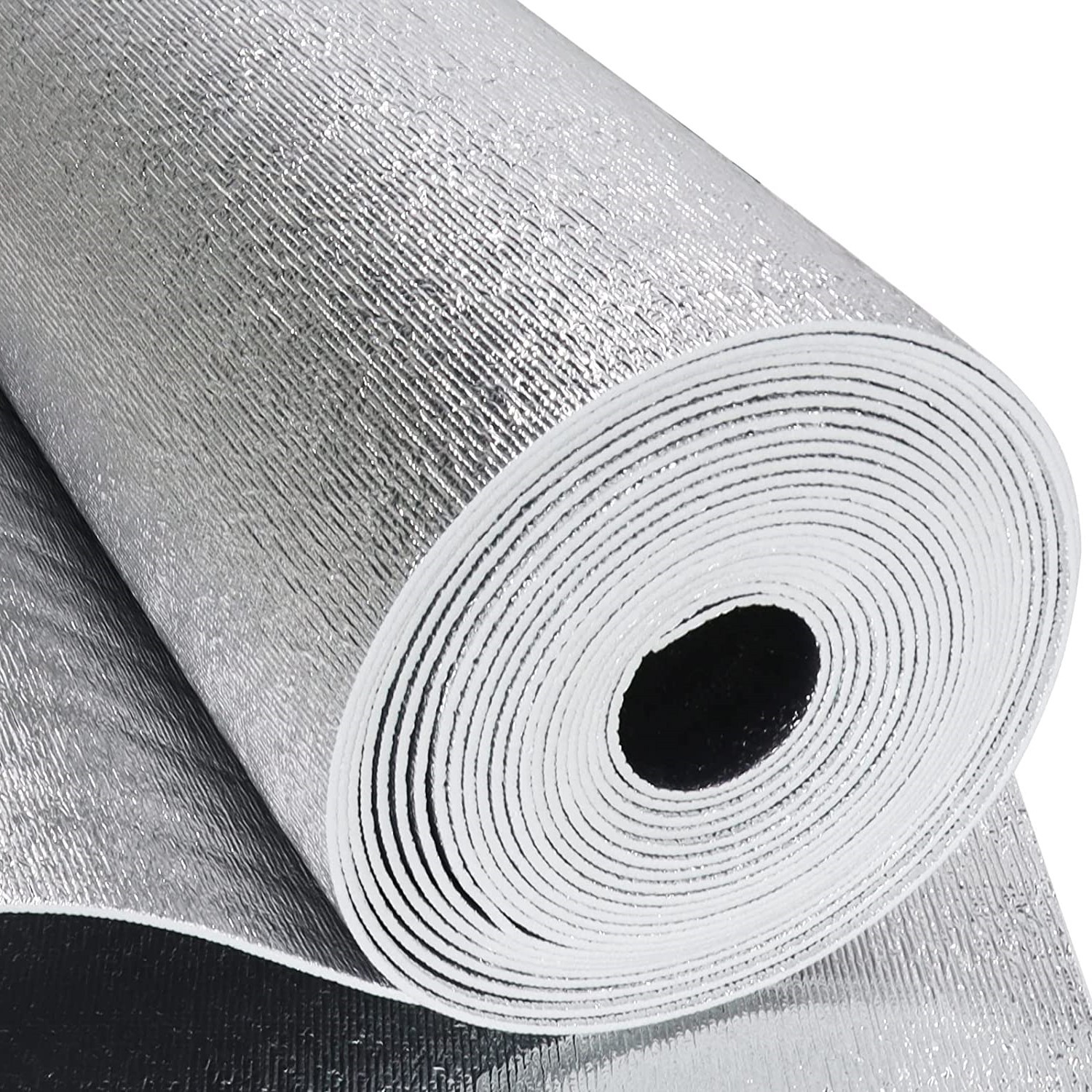
Key Features
- Increased R-value
- Closed-cell foam core
- Supports RFID attenuation applications
Applications for RFID Shielding Insulation
🏬Retail Stores & Shopping Centers
• Reduce RFID signal transmission between adjacent tenant spaces
• Help protect inventory tracking systems
• Support retail security and asset management
📦Warehouses & Distribution Centers
• Improve control of RFID-enabled inventory systems
• Reduce unwanted signal overlap between storage zones
• Support asset tracking and inventory accuracy
🔒Secure Storage Facilities
• Help reduce RFID signal leakage into adjacent rooms
• Protect sensitive inventory and controlled-access areas
• Support facility security objectives
🏢Corporate & Government Buildings
• Assist with RFID attenuation in secure areas
• Help reduce signal penetration through walls and ceilings
• Support security-conscious building designs
🏭Manufacturing & Logistics Facilities
• Manage RFID signal coverage within production environments
• Reduce interference between RFID-enabled processes
• Improve operational efficiency and asset visibility
🧪Specialty & Controlled Environments
• Laboratories
• Research facilities
• Data centers
• Access-controlled environments
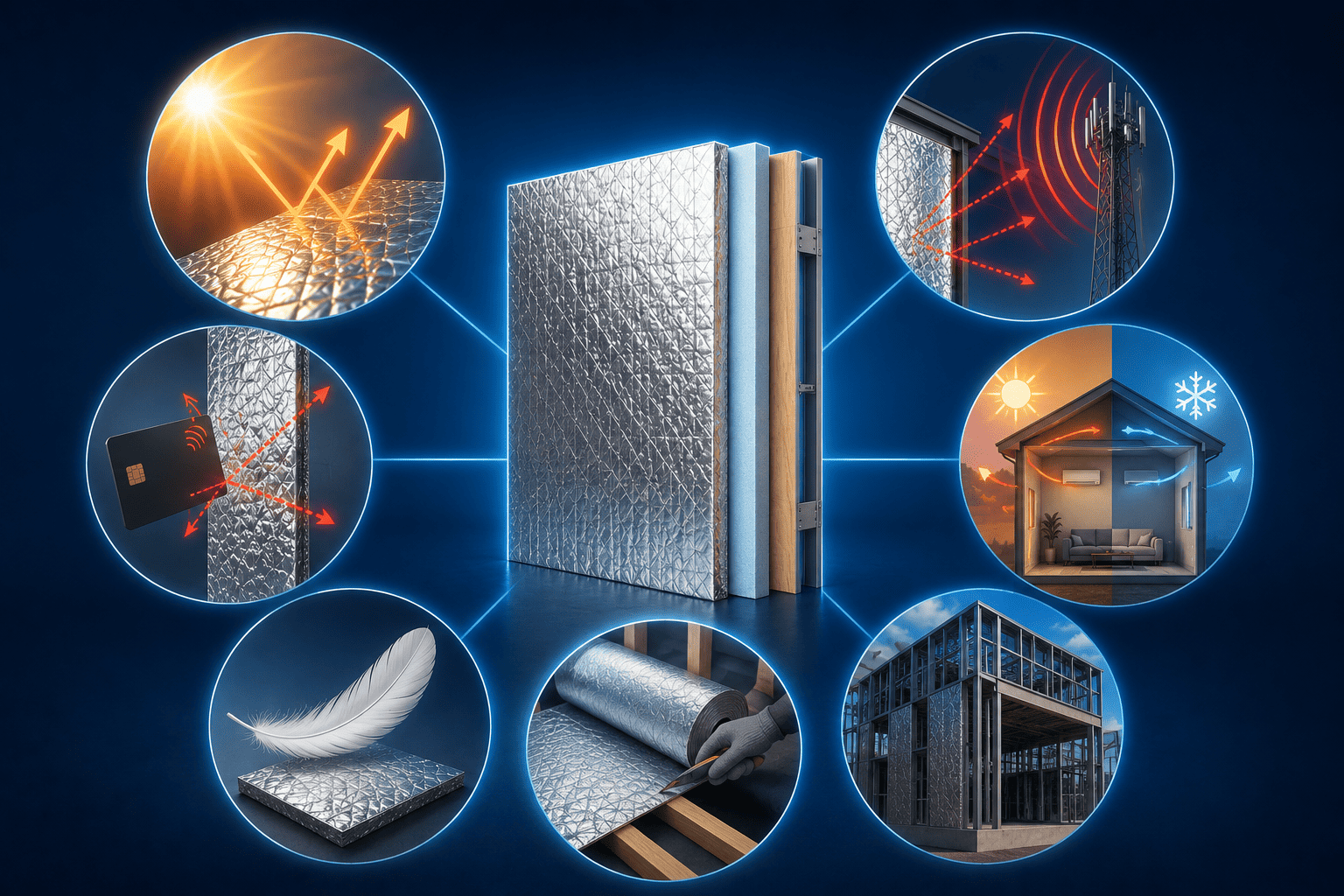
Key Benefits of RFID Shielding & Reflective Insulation
- Reflects up to 97% of radiant heat
- Helps improve inventory security and asset control
- Supports RFID attenuation applications
- Helps reduce RFID signal transmission
- Improves energy efficiency and indoor comfort
- Lightweight, durable, and easy to install
- Suitable for retrofit and new construction projects

Why Choose Energy Shield USA?
We help you find the right balance between efficiency and RF control.
RFID Shielding Insulation FAQs
Does radiant barrier insulation block RFID signals?
Yes. Conductive foil and metallized reflective insulation products can help reduce RFID signal transmission by reflecting and attenuating radio frequency energy. The level of RFID attenuation depends on factors such as material construction, installation quality, coverage continuity, and signal frequency.
Will Radiant Barrier Insulation Affect Wi-Fi or Cell Signals?
In most residential and commercial applications, Wi-Fi and cellular signals continue to function normally. While reflective insulation contains conductive foil or metallized surfaces that interact with radio frequency energy, typical building assemblies are not designed to create a fully enclosed RF-shielded environment.
Where is RFID shielding insulation commonly used?
RFID shielding insulation is commonly used in retail stores, shopping centers, warehouses, distribution centers, secure storage facilities, government buildings, and other environments where reducing RFID signal leakage is important. It can help improve inventory security while also providing thermal performance benefits.
What factors affect RFID shielding performance?
Several factors influence RFID attenuation performance, including material construction, foil continuity, installation quality, coverage area, signal frequency, and building assembly design. For maximum effectiveness, reflective insulation should be installed with continuous coverage and properly sealed seams to minimize signal leakage paths.
Reflective insulation can significantly reduce RF signal transmission, but complete blocking may require fully enclosed or specialized systems.
What is the difference between RFID shielding and radiant barrier insulation?
Radiant barrier insulation is designed to reflect heat, while RFID shielding insulation reduces the transmission of radio frequency signals used by RFID systems.. Although these functions are different, many ES® reflective insulation products can perform both roles.
Can Reflective Insulation Help Reduce RFID Interference Between Retail Stores?
Yes. Reflective insulation with conductive foil or metallized surfaces can help reduce RFID signal transmission between adjacent retail spaces by reflecting and attenuating radio frequency energy. This can be beneficial in shopping centers, malls, and multi-tenant commercial buildings where RFID-enabled inventory systems, asset tracking devices, or security technologies operate in close proximity.
Will Radiant Barrier Insulation Affect Wi-Fi or Cell Signals?
No—your Wi-Fi and cell signals should continue to work normally in most homes.
While reflective insulation contains metalized layers that can interact with radio frequencies, typical installations:
- Do not fully enclose the structure
- Allow signals to pass through openings and materials
- Reflect signals internally rather than blocking them
Result: No meaningful impact on everyday connectivity.
Signal reduction typically only occurs in:
- Fully enclosed metal buildings
- RF-shielded or secure environments
- Structures designed for signal containment
👉 In standard residential applications, you get energy efficiency without losing connectivity.