


Data Center Insulation & Reflective Thermal Solutions
Reduce Heat Gain. Improve Thermal Efficiency. Protect Critical Infrastructure.
Energy Shield USA provides reflective data center insulation solutions for server facilities, telecommunications buildings, and other mission-critical environments. Our reflective foam, reflective bubble, and radiant barrier products combine highly reflective surfaces with lightweight, flexible constructions designed to reduce radiant heat transfer and provide additional thermal protection throughout the building envelope.
Request a QuoteEnergy Shield USA provides reflective data center insulation solutions for server facilities, telecommunications buildings, and other mission-critical environments. Our reflective foam, reflective bubble, and radiant barrier products combine highly reflective surfaces with lightweight, flexible constructions designed to reduce radiant heat transfer and provide additional thermal protection throughout the building envelope.

Reflect Radiant Heat
Highly reflective surfaces help reduce radiant heat transfer through building and equipment-area assemblies.

Provide a Thermal Break
Flexible foam and bubble cores provide additional thermal separation between surfaces.

Support Thermal Efficiency
Reducing unwanted heat transfer through appropriate building assemblies supports an efficiently designed facility environment.
Why Data Center Insulation Matters for Thermal Performance
Data centers operate around the clock and generate substantial internal heat from servers, networking equipment, power distribution systems, and other critical infrastructure. Managing that heat requires sophisticated cooling systems and carefully controlled operating environments.
But internal equipment is not the only source of thermal load. Heat can also enter through roofs, walls, ceilings, and other parts of the building envelope.
Energy Shield reflective insulation products help reduce radiant heat transfer through these assemblies, limiting unwanted heat gain and providing an additional layer of thermal protection for data center facilities.
How Reflective Insulation Reduces Radiant Heat Transfer
Heat moves through building assemblies by conduction, convection, and radiation.
Traditional mass insulation is primarily used to resist conductive heat flow. Reflective insulation addresses radiant heat transfer by using a low-emittance reflective surface to reduce the amount of radiant energy transferred across an adjacent air space.
When properly incorporated into a data center roof, wall, ceiling, or other appropriate assembly, reflective insulation can complement the facility’s overall thermal-control strategy. By reducing unwanted radiant heat gain through the building envelope, Energy Shield reflective insulation can help support thermal efficiency and reduce the additional load placed on data center cooling systems.
ES® Data Center Insulation Products
ES® Data Center Insulation Products
Reflective foam insulation features a closed-cell polyethylene core with reflective foil surfaces designed to reduce radiant and conductive heat transfer in data center applications.

Key Features
- Reflects up to 97% of radiant heat
- Provides a thermal break for critical facility applications
- Moisture-resistant closed-cell foam construction
- Flexible and easy to fabricate for specialized installations
Reflective bubble insulation features a lightweight air-cell core with reflective surfaces designed to reduce radiant heat transfer and provide thermal separation in data center applications.
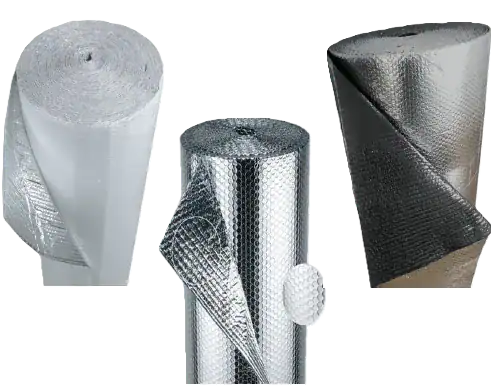
Key Features
- Reflects up to 97% of radiant heat
- Provides thermal separation in roof and wall assemblies
- Helps manage condensation in controlled environments
- Lightweight for large-area data center installations
Radiant barrier features a reinforced core with reflective aluminum surfaces designed to reduce radiant heat transfer through data center roof, wall, and ceiling assemblies.
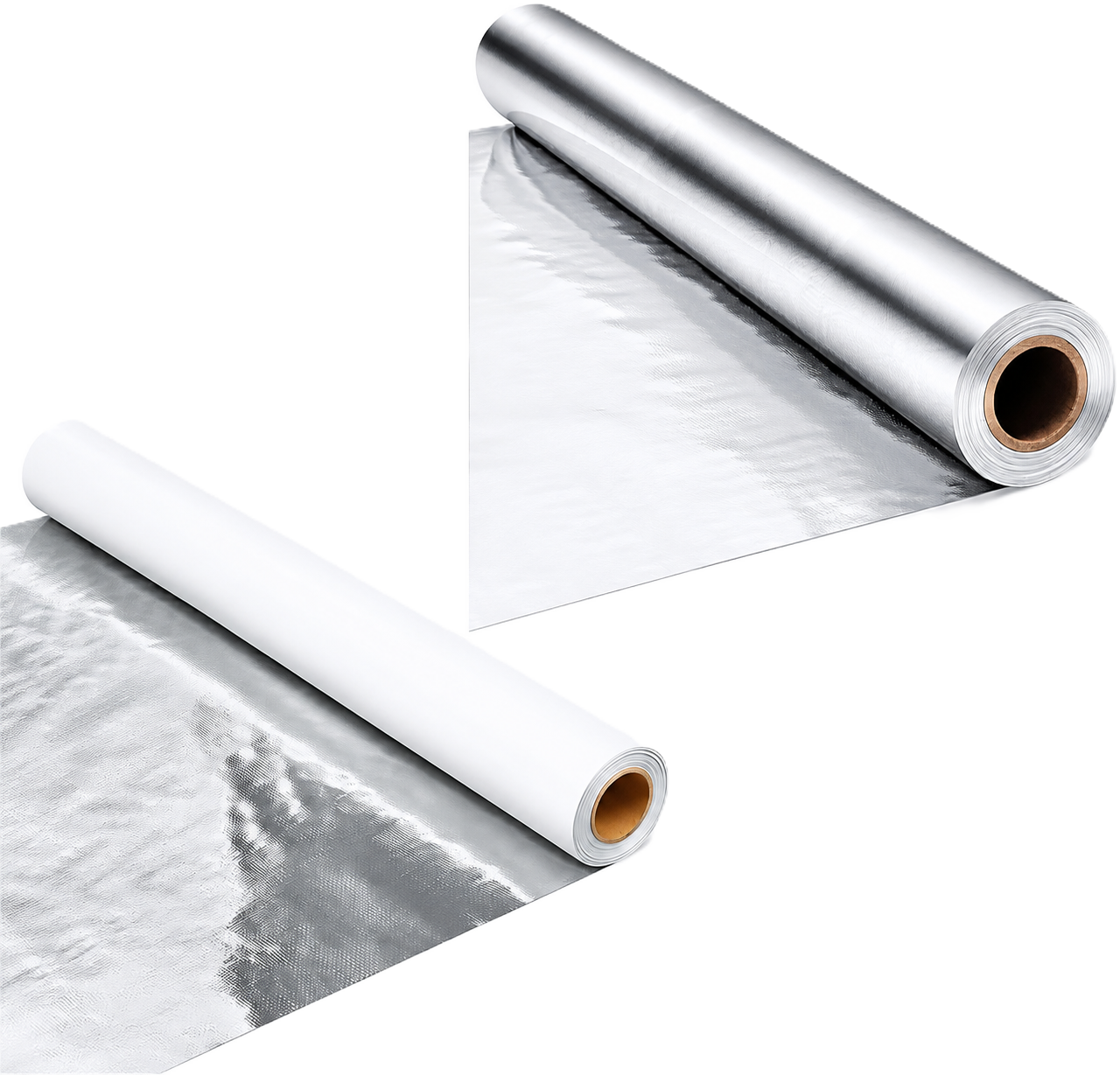
Key Features
- Reflects up to 97% of radiant heat
- Reduces radiant heat transfer through data center radiant barrier assemblies
- Lightweight for large roof, wall, and ceiling applications
- Provides additional RF attenuation for sensitive environments
Solutions for Data Centers & Critical Infrastructure
Data centers vary significantly in size, design, computing density, and thermal requirements. Energy Shield reflective insulation can be incorporated into appropriate building-envelope and specialty applications across a wide range of data center and critical infrastructure facilities.
Hyperscale Data Centers
Large-scale computing facilities requiring carefully engineered thermal and building-envelope systems.
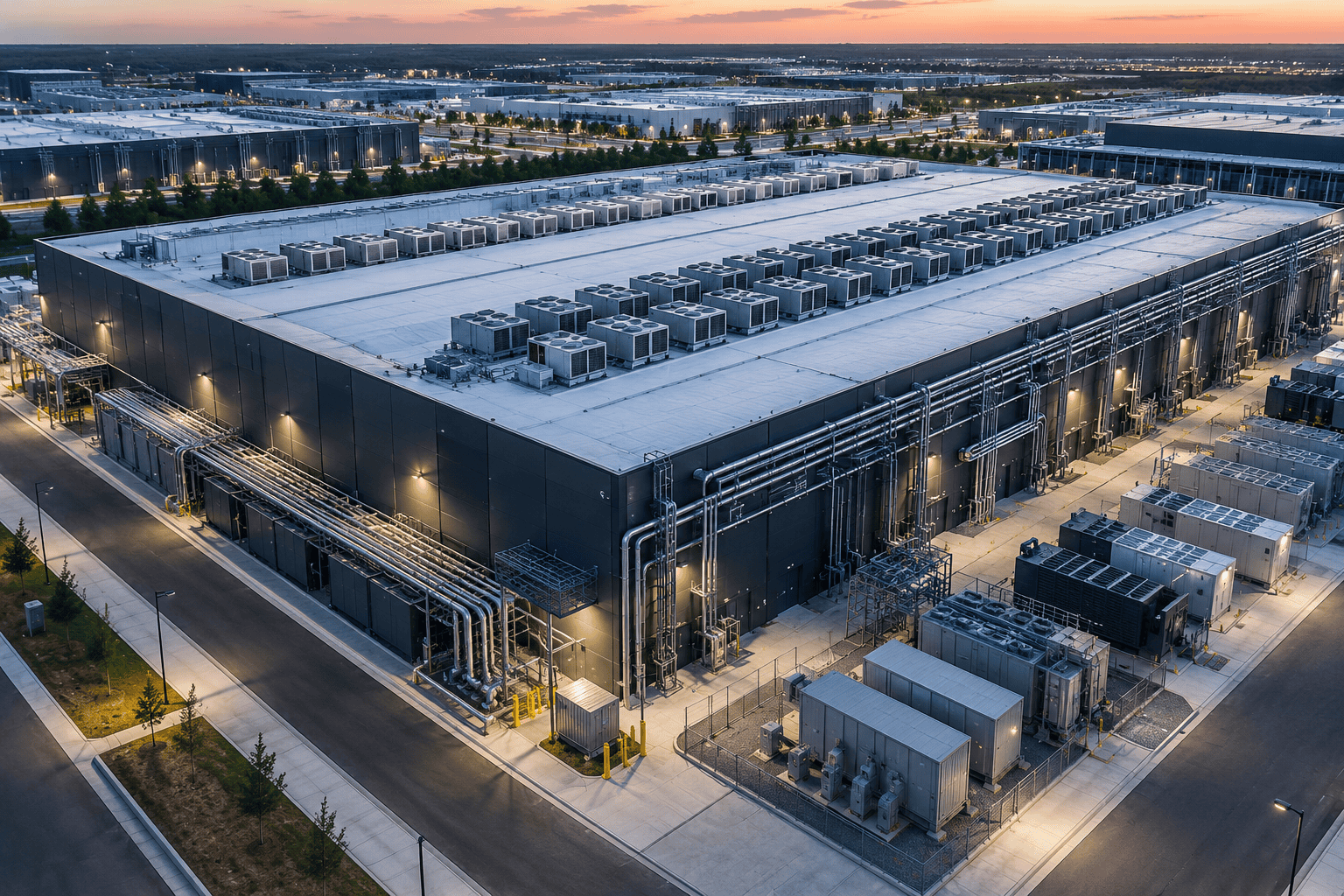
AI & High-Density Data Centers
Facilities supporting high-density computing environments with demanding thermal-management requirements.

Enterprise Data Centers
Dedicated facilities supporting critical corporate IT and network infrastructure.

Colocation Data Centers
Multi-tenant facilities designed for reliable, continuously controlled operating environments.

Edge Data Centers
Smaller distributed facilities where efficient use of space and thermal management are important.
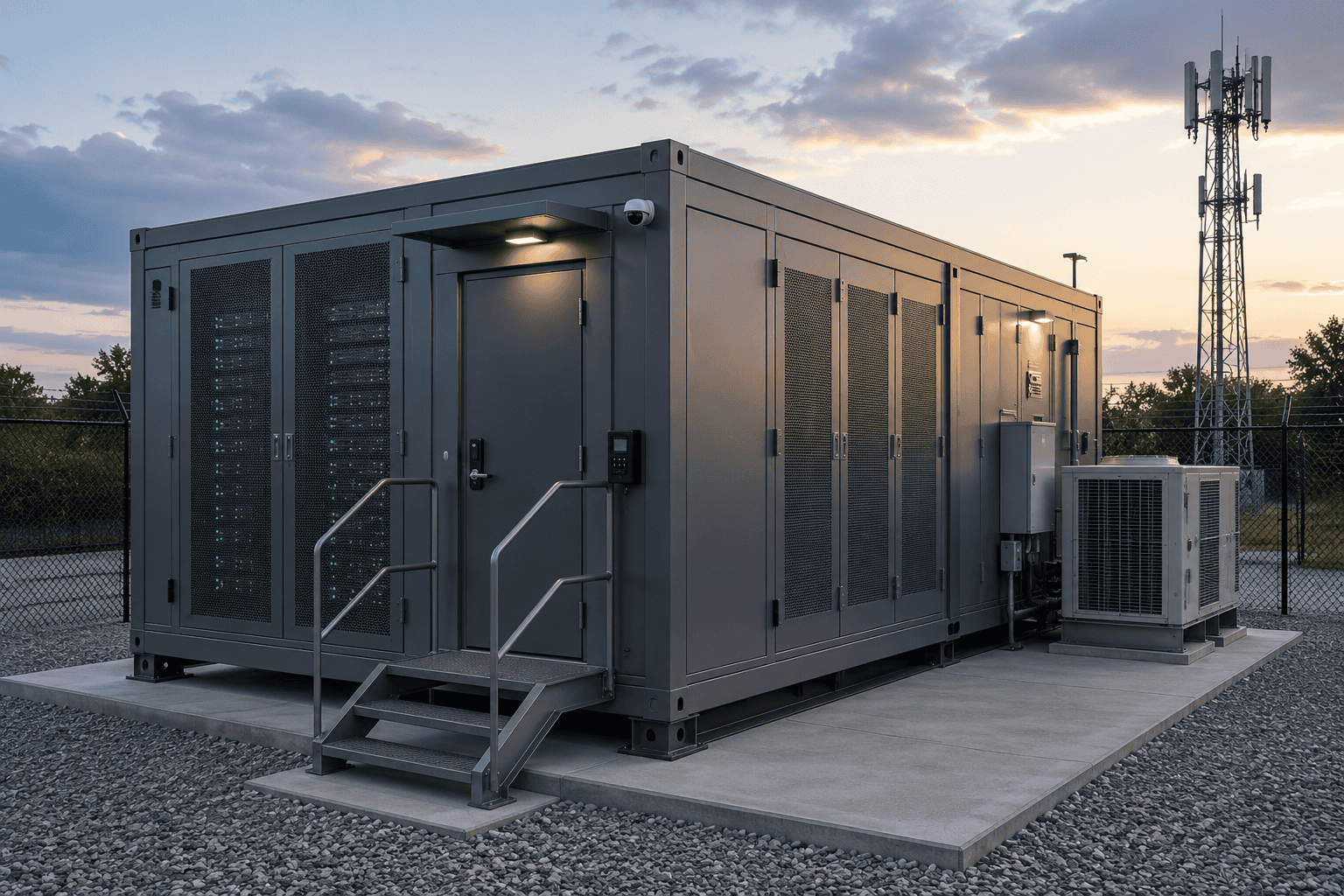
Telecommunications Facilities
Network, switching, communications, and equipment facilities requiring dependable environmental control.
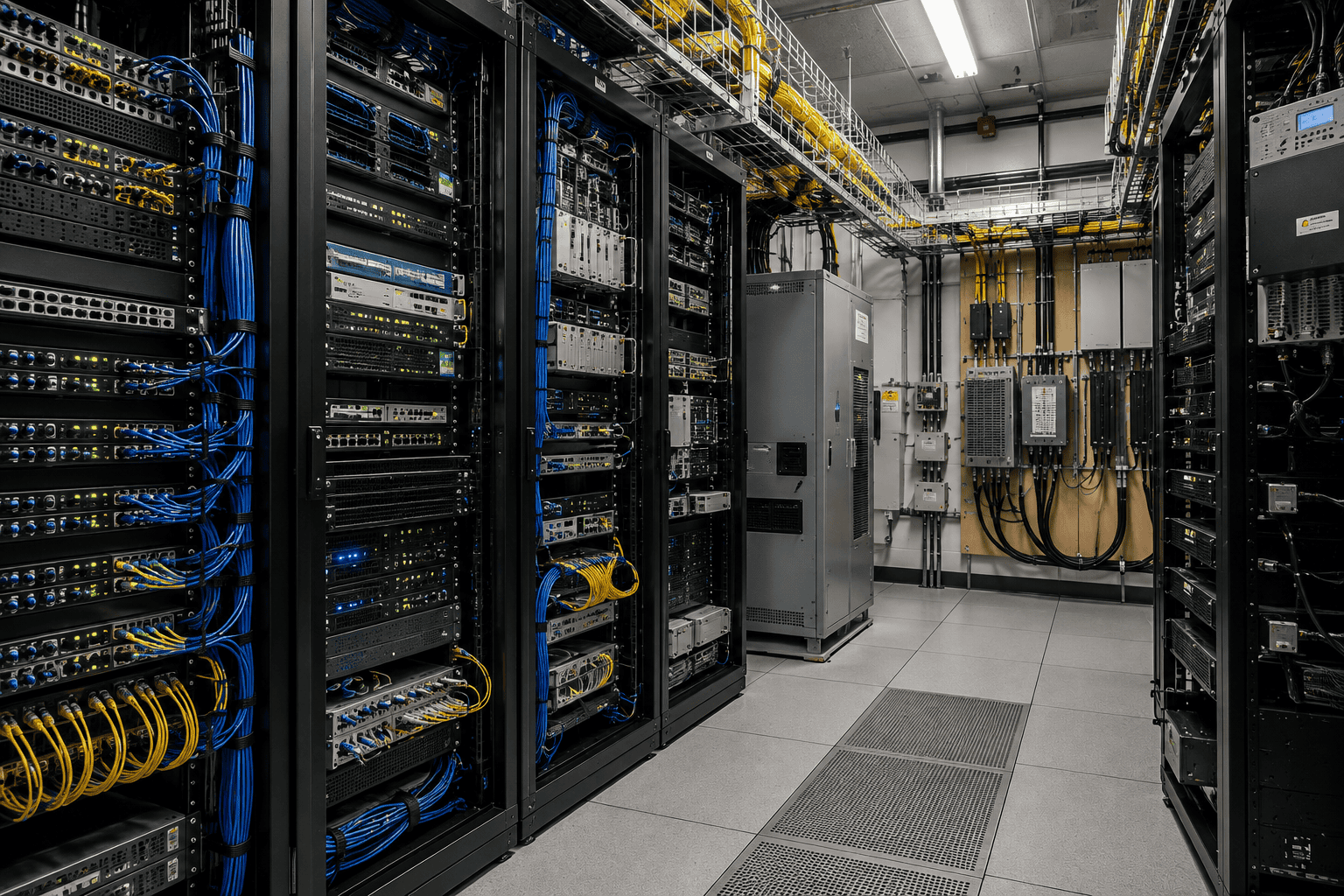
Common Data Center Applications
Energy Shield reflective insulation can be incorporated into data center construction and retrofit projects where additional radiant heat control and thermal separation are needed.
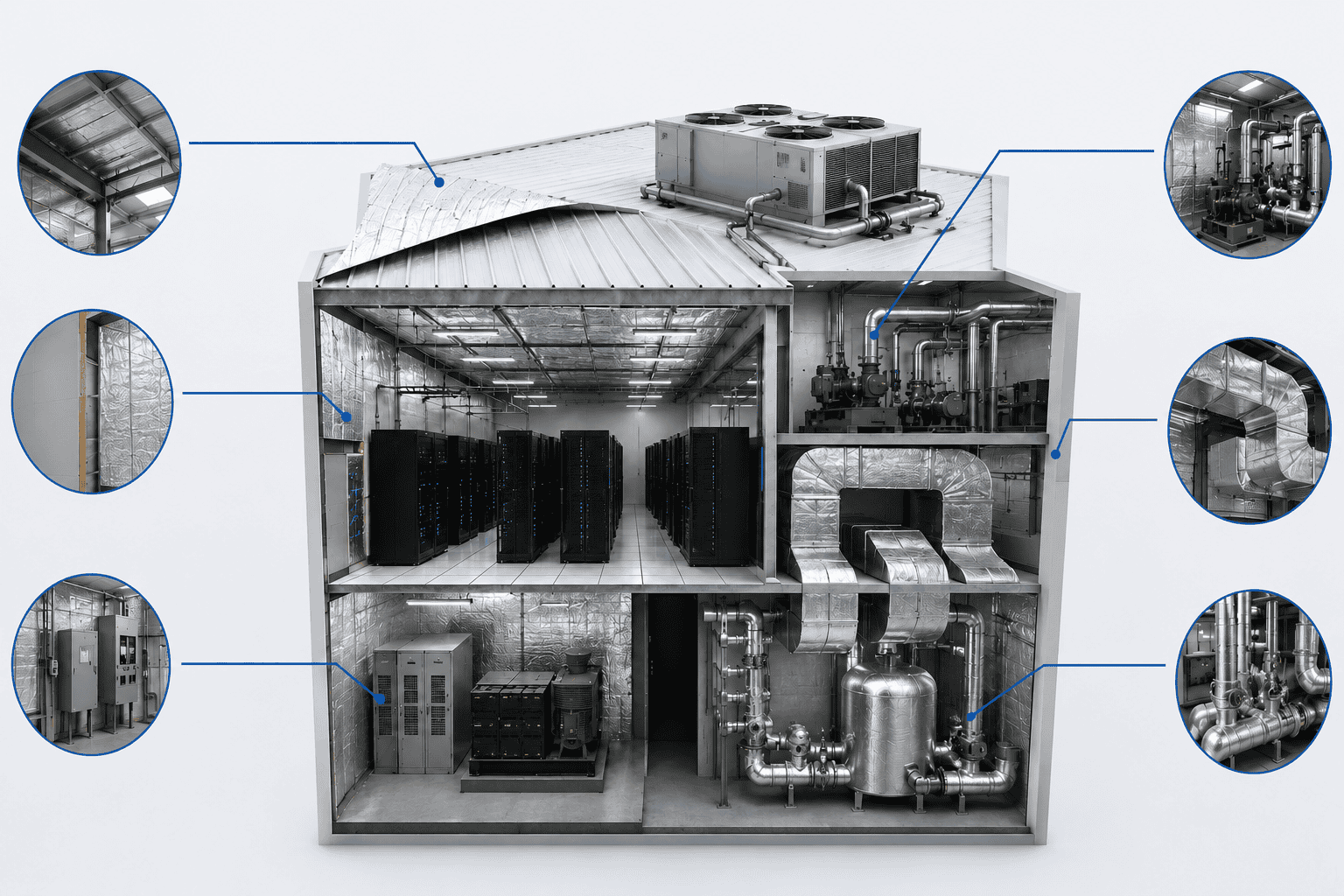
Reflective Insulation Applications Within Data Center Facilities
Reflective insulation can be incorporated into multiple areas of a data center facility depending on the building design, thermal requirements, and installation method.
- Roof & Ceiling Assemblies
- Exterior Wall Assemblies
- Mechanical Areas
- Ductwork
- Equipment & Utility Areas
- Specialty Fabrication

Why Choose Energy Shield USA® for Data Center Insulation?
Data Center Insulation FAQs
What type of insulation is used in data centers?
Data center insulation requirements vary based on building construction, climate, equipment loads, mechanical systems, and applicable codes. Reflective insulation can complement other building-envelope materials by helping reduce radiant heat transfer through appropriate roof, wall, ceiling, and specialty assemblies.
Is reflective foam suitable for data centers?
Reflective foam can be used in appropriate data center applications requiring radiant heat reflection, a flexible thermal break, moisture resistance, or an easily fabricated insulation material.
How does reflective insulation help a data center?
Reflective insulation reduces radiant heat transfer across an adjacent air space. Within an appropriate building assembly, this can help reduce unwanted radiant heat entering through roofs, walls, ceilings, and other surfaces.
Does reflective insulation reduce data center cooling costs?
Yes. Reflective insulation can help reduce data center cooling costs by limiting radiant heat gain through the building envelope. By reflecting up to 97% of radiant heat, Energy Shield reflective insulation reduces the amount of exterior radiant heat transferred through properly designed roof, wall, and ceiling assemblies. This helps reduce the additional thermal load that cooling systems must manage, supporting greater cooling efficiency and lower energy consumption.
Where can reflective insulation be installed in a data center?
Reflective insulation can be incorporated into a variety of data center building and mechanical assemblies, including roofs and ceilings, exterior walls, mechanical areas, ductwork, equipment and utility areas, and specialty-fabricated applications. When properly installed with an adjacent air space, reflective insulation helps reduce radiant heat transfer and can provide additional thermal protection as part of the facility’s overall thermal-management strategy.
Can Energy Shield insulation provide RF shielding?
Selected Energy Shield reflective materials can provide significant RF attenuation. Performance depends on material construction, frequency, seams, penetrations, installation, and overall enclosure continuity. For dedicated RF applications, see our RF & RFID Solutions.