

Cathedral Ceiling Insulation
Stop Energy Loss at the Roof– Where It Starts
Reduce energy loss and improve indoor comfort with Energy Shield® cathedral ceiling insulation, including advanced radiant barriers and reflective insulation for cathedral ceilings. Designed for both vaulted and sloped roof assemblies, this system controls heat, minimizes moisture risk, and lowers energy costs in new construction and retrofit projects.
ES® reflective cathedral ceiling insulation blocks radiant heat, controls moisture, and reduces energy costs in vaulted or sloped roof assemblies—perfect for new builds or retrofits.
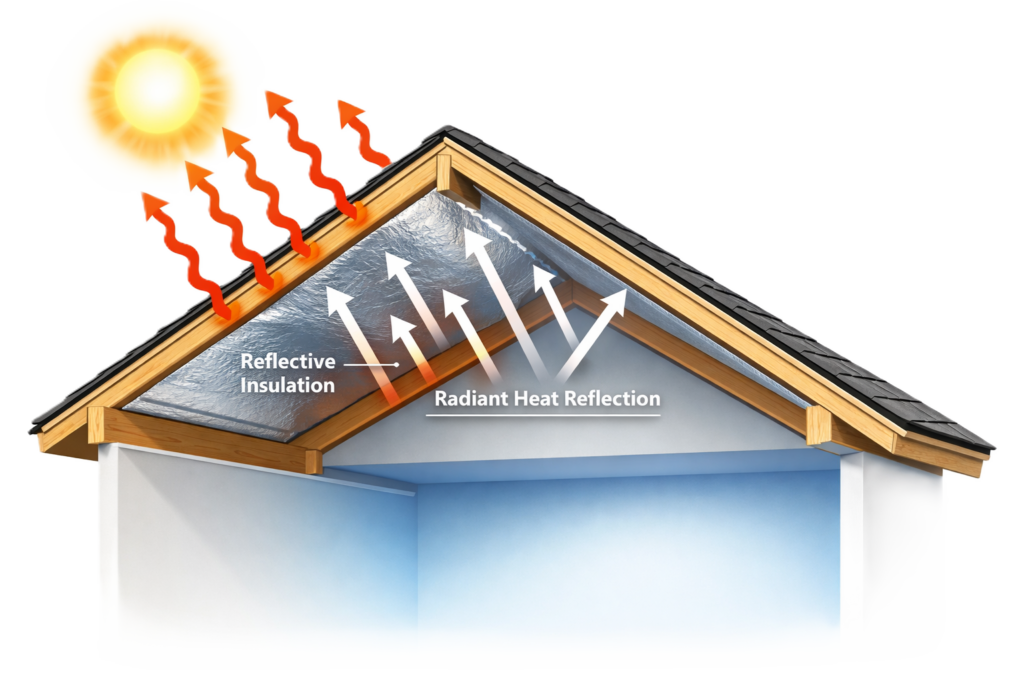
Block Radiant Heat Out
Reflective insulation for cathedral ceilings prevents radiant heat from penetrating vaulted ceilings, helping maintain comfortable indoor temperatures and lower cooling demand.
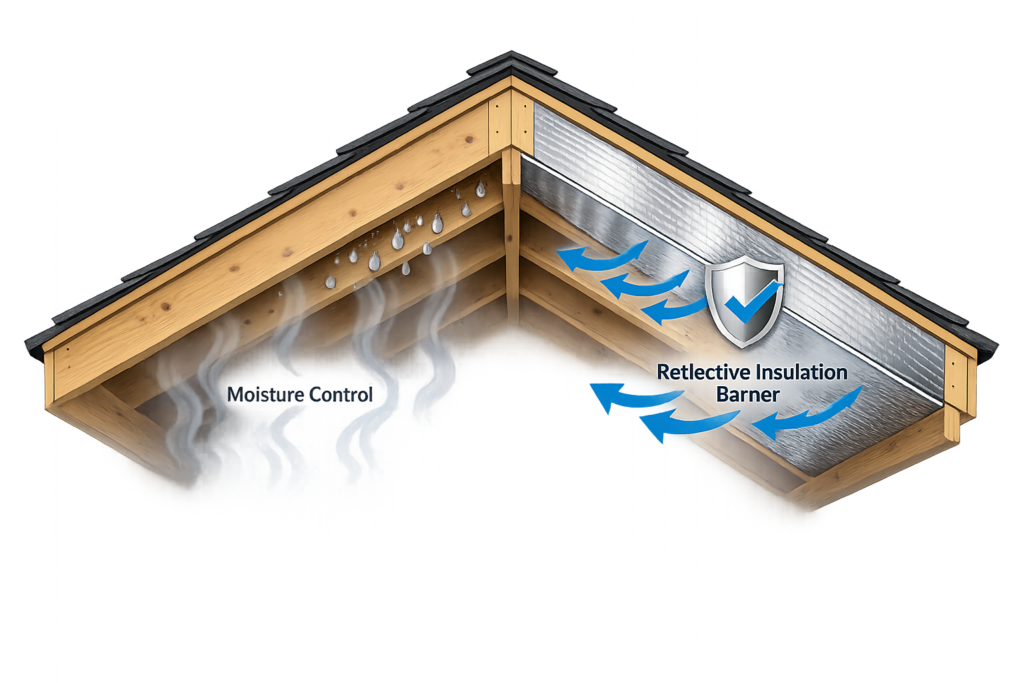
Stop Moisture & Condensation
Cathedral ceiling insulation controls moisture, protecting your ceiling structure and mass insulation from condensation, dampness, and long-term damage.
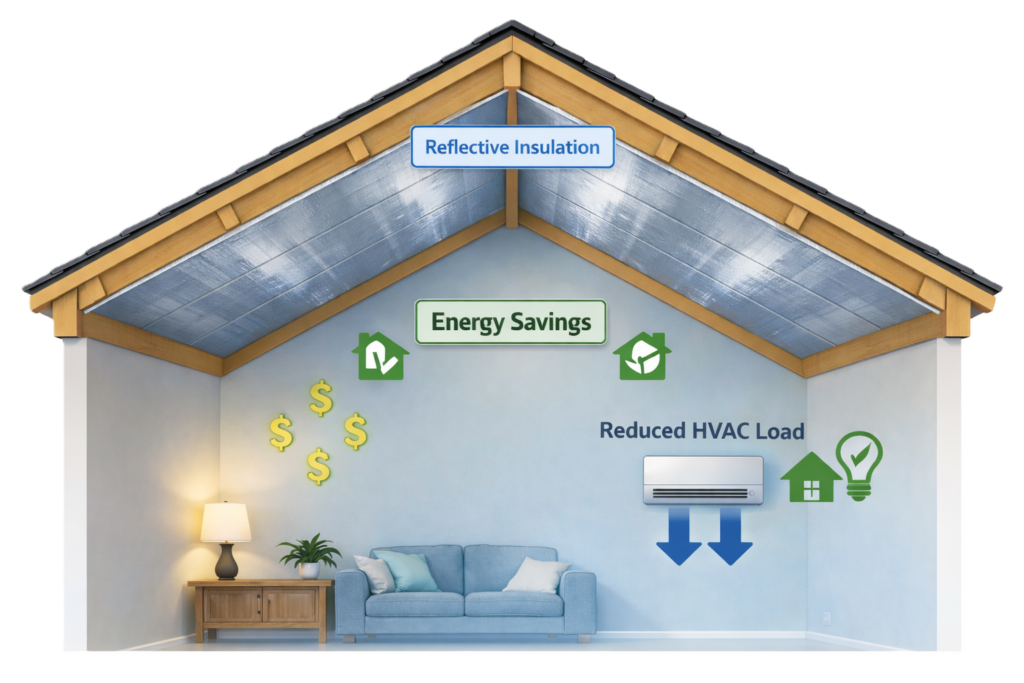
Save Energy & Money
By reducing heat gain and loss, reflective insulation lowers HVAC demand and energy bills while improving overall comfort in homes with vaulted ceilings.
Vaulted Ceiling Insulation and Heat Loss Challenges
Vaulted ceilings are especially vulnerable to energy loss because warm air rises directly to the roof deck. Without proper insulation:
- Winter heat escapes easily
- Summer solar gain overheats interiors
- HVAC systems work harder, increasing energy costs
Energy Shield vaulted ceiling insulation solves this at the source by controlling radiant heat before it reaches living spaces.
Homes with traditional attic spaces may benefit from attic foil insulation, which reflects radiant heat at the attic level to improve overall energy efficiency.
ES® Cathedral Ceiling Insulation Products
ES® Cathedral Ceiling Insulation Products

Key Features
- Rigid foam core with dual reflective foil
- Reduces summer heat gain and winter heat loss
- Durable and long-lasting for vaulted ceilings
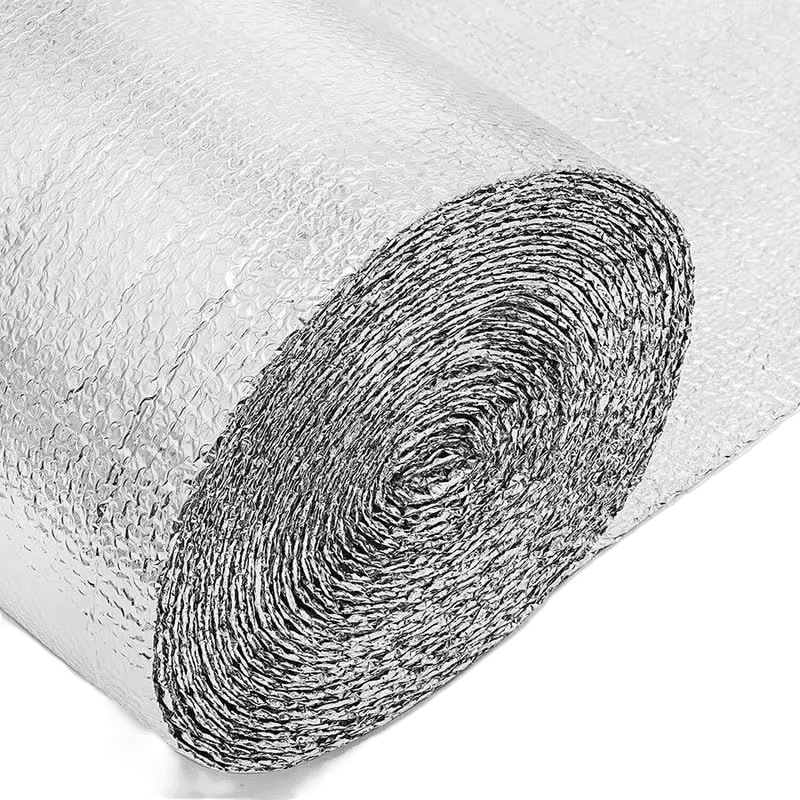
Key Features
- Dual foil with bubble core
- Flexible and easy to cut and install
- Reduces radiant heat transfer year-round
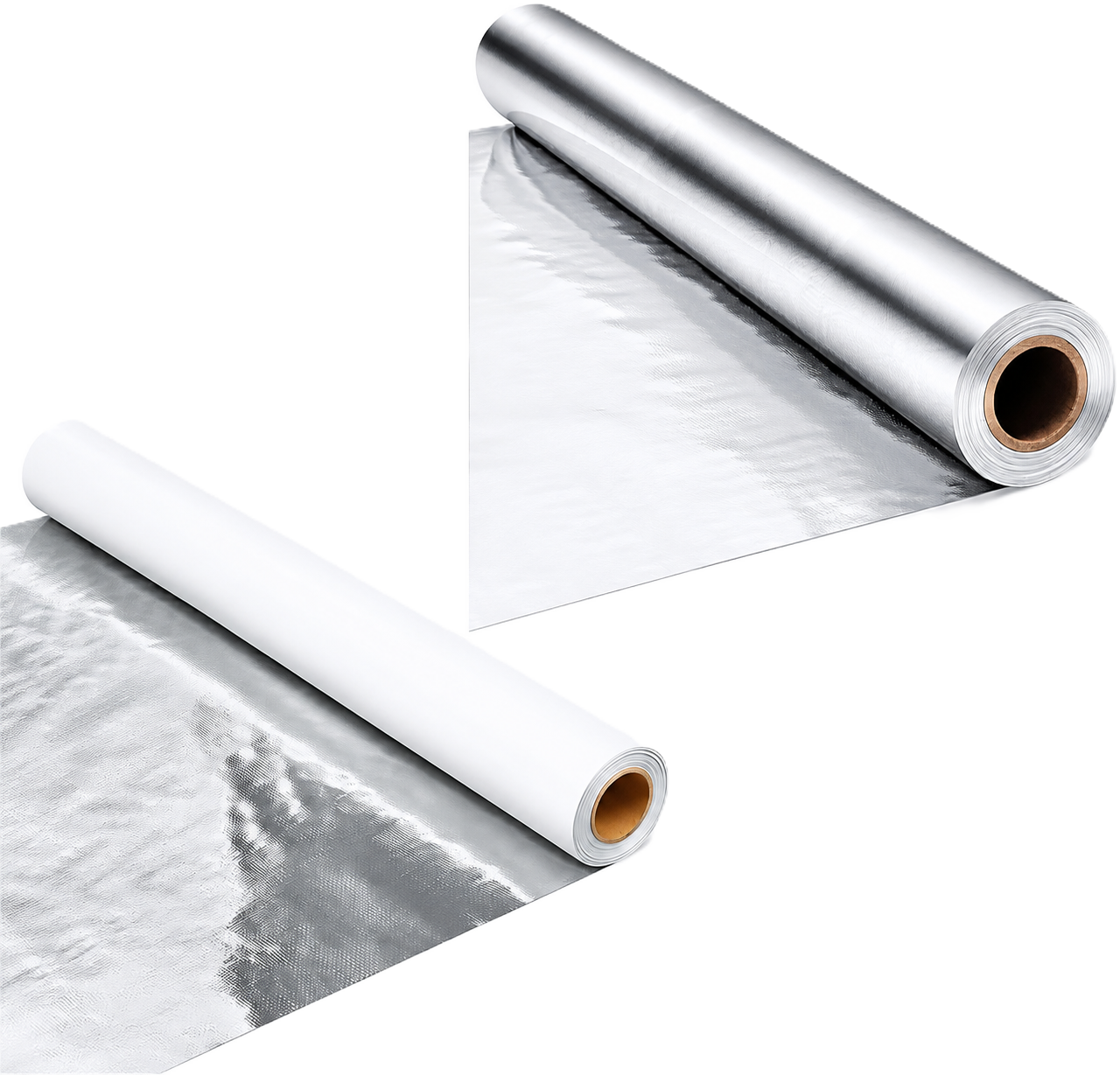
Key Features
- High-reflectivity foil surface
- Blocks solar radiant heat efficiently
- Works with existing insulation systems
- Ideal for tight cathedral ceiling assemblies
Improve Comfort Without Sacrificing Design
Enjoy vaulted ceilings without the energy penalty. Reflective insulation maintains consistent indoor temperatures while preserving the architectural style that makes cathedral ceilings so desirable.
INSTALLATION OPTIONS
Reflective insulation can be installed above or below mass insulation, depending on your climate and roof assembly, to optimize performance.
HOT CLIMATE
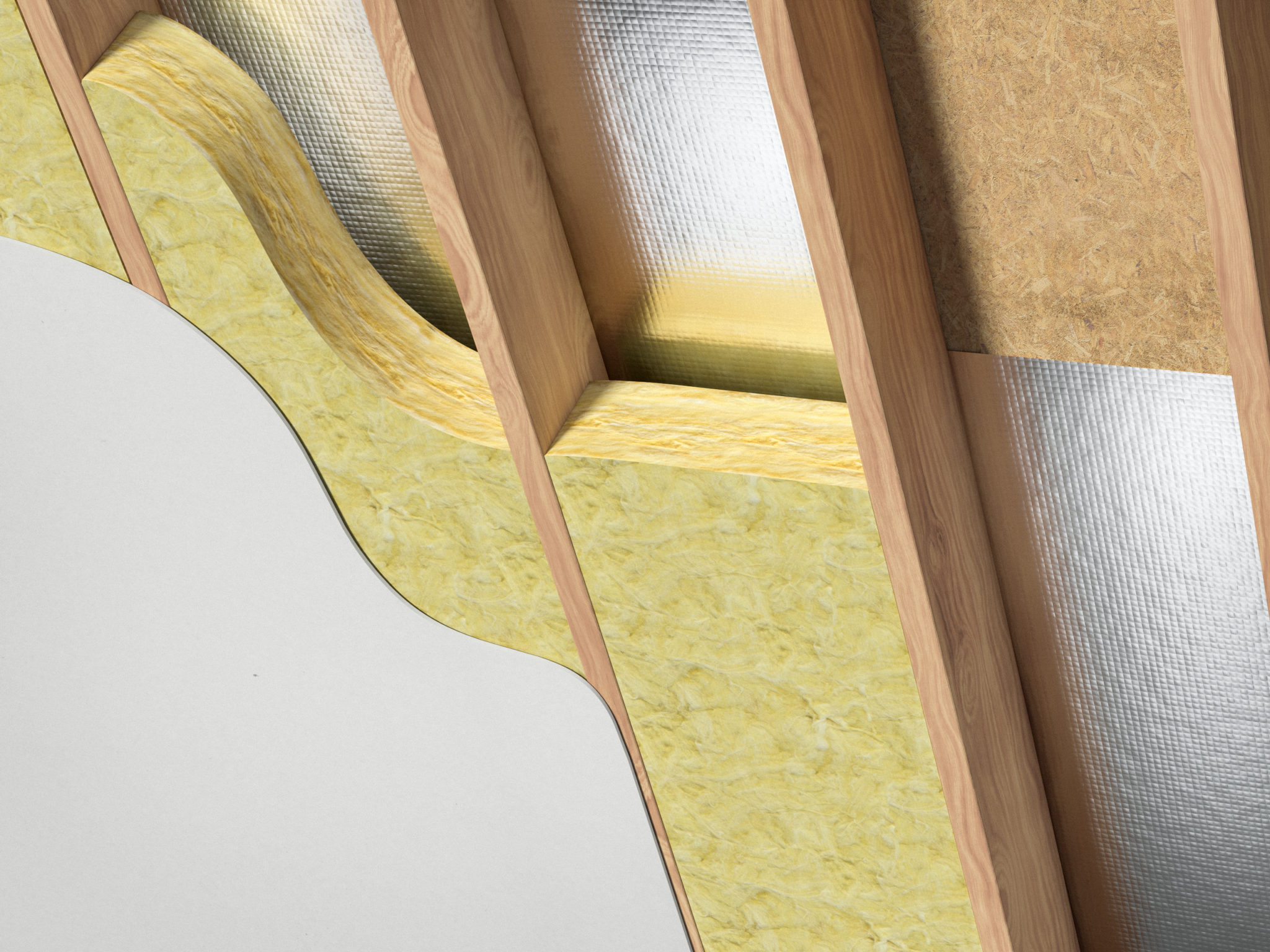
ABOVE MASS INSULATION
- Installed above existing insulation to block radiant heat before it enters your living space
- Ideal for southern climates with high solar gain
COLD CLIMATE
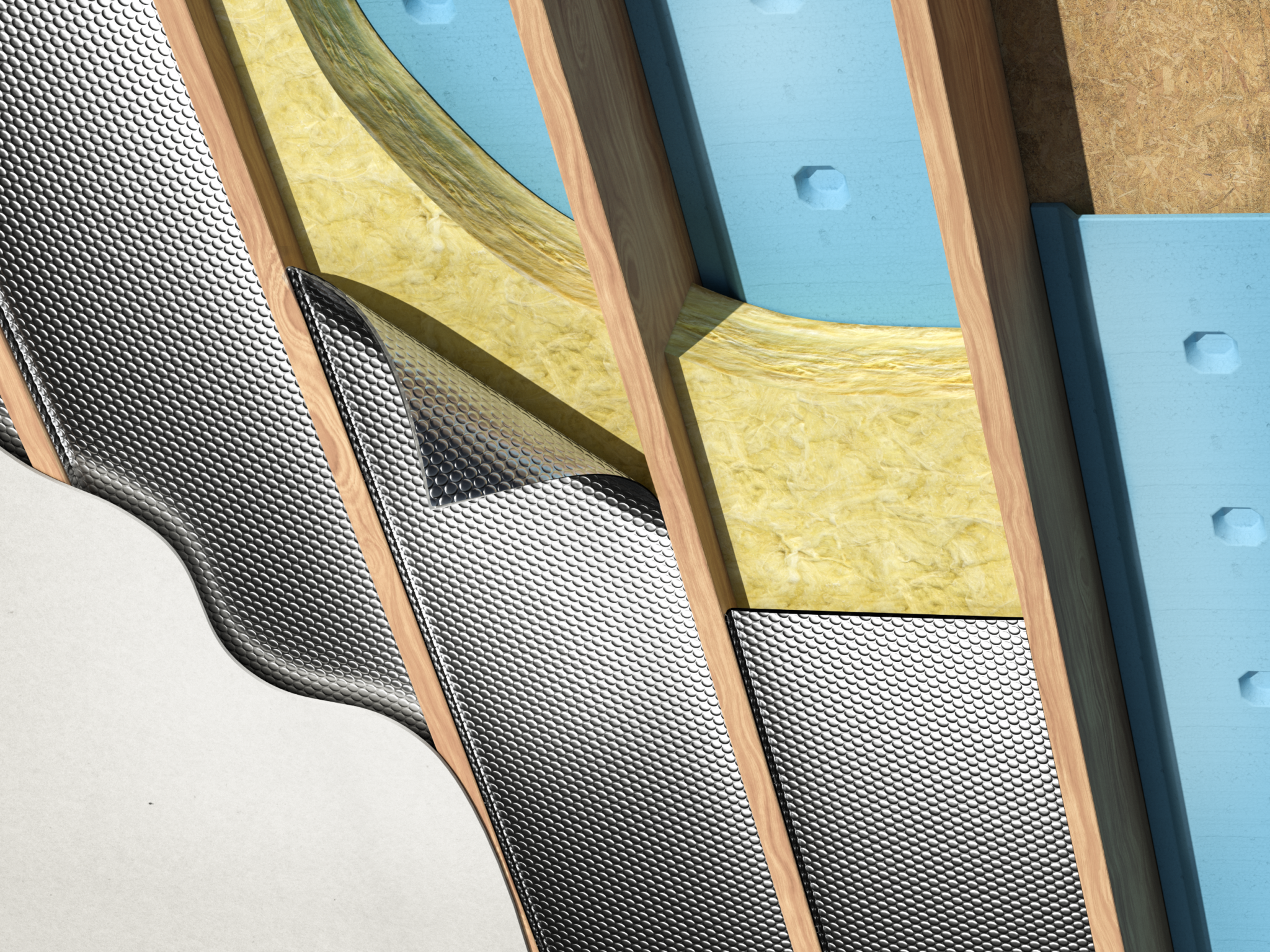
BELOW MASS INSULATION
- Installed beneath mass insulation to reduce heat loss
- Retains warmth in northern climates for maximum winter comfort
Proper Ventilation for Insulating a Cathedral Ceiling
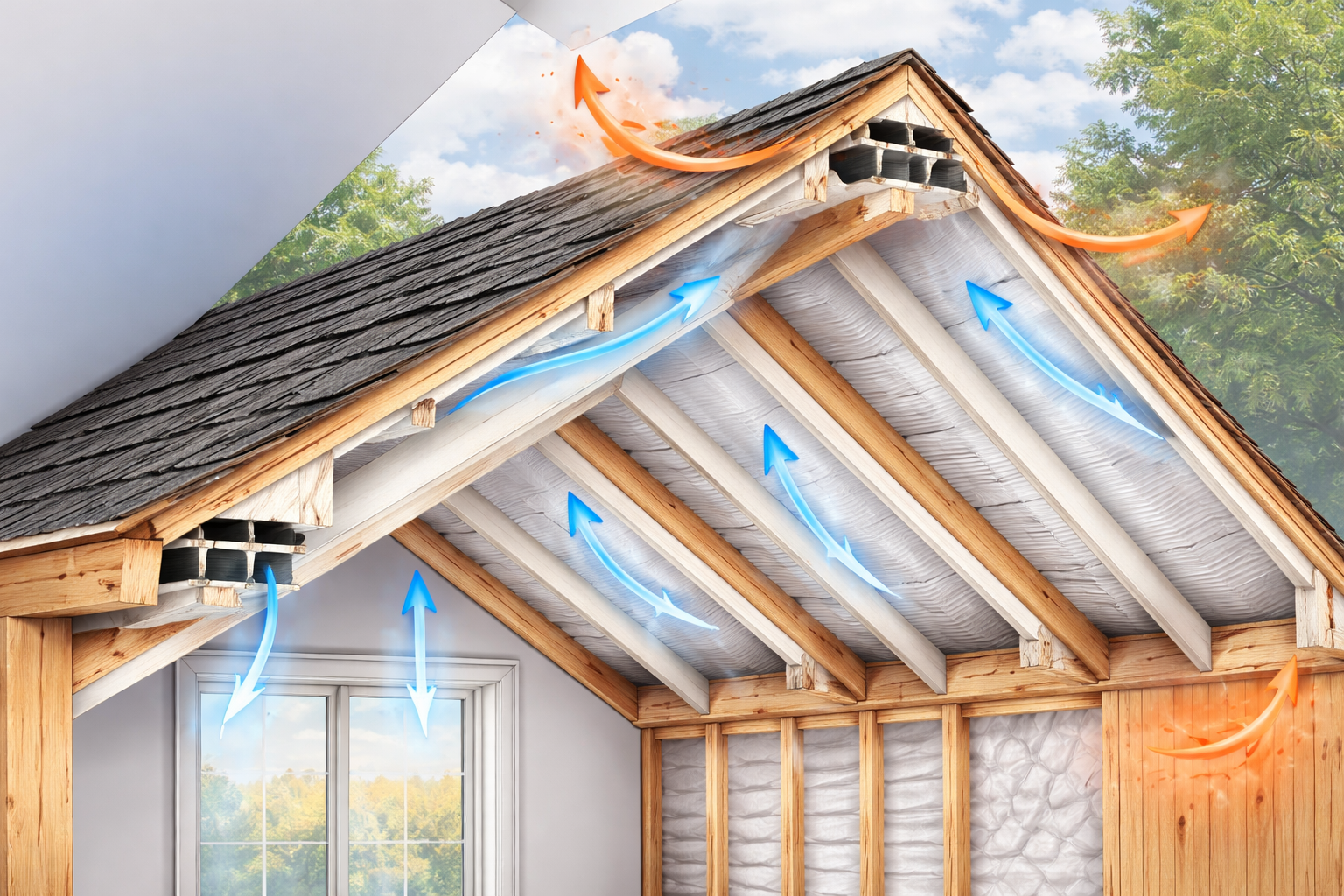
- Continuous airflow from eave to ridge prevents moisture buildup
- Protects roof materials and insulation performance
- Extends roof lifespan
- Ventilation baffles in each rafter bay are recommended
Block Radiant Heat at the Source
During summer, roofs absorb extreme solar heat, which radiates downward. Reflective insulation interrupts this process, reflecting energy before it enters your home. In roof systems with attic space, radiant barrier roofing insulation can help stop solar heat at the roof deck before it reaches the attic.
Cathedral Ceiling Radiant Barrier Protection
Reflective insulation and radiant barriers prevent radiant heat from entering vaulted ceilings, helping maintain stable indoor temperatures. By blocking heat before it reaches living spaces, cathedral ceiling radiant barriers keep your home cooler in summer and warmer in winter.
For complete building envelope performance, vaulted ceiling insulation should work alongside reflective house wrap insulation to control heat transfer through exterior walls.
How to Insulate a Cathedral Ceiling
Insulating a cathedral ceiling requires careful control of heat, airflow, and moisture within the roof assembly. Reflective insulation systems are designed to reduce radiant heat transfer while allowing proper ventilation to prevent condensation.
A typical cathedral ceiling insulation system includes:
- Ventilation baffles installed between rafters to maintain airflow from the eave to the ridge
- Mass insulation such as fiberglass or foam for thermal resistance
- Reflective insulation or a radiant barrier to reduce radiant heat transfer
- Proper sealing and vapor control to prevent moisture buildup
When properly installed, cathedral ceiling insulation improves energy efficiency, stabilizes indoor temperatures, and protects the roof structure from moisture damage.

Is Insulating a Cathedral Ceiling Right for Your Home?
Reflective cathedral ceiling insulation is ideal for:

Why Choose Energy Shield USA® Cathedral Ceiling Insulation?
Cathedral Ceiling Insulation FAQs
How do I insulate a cathedral ceiling?
Install like ES® reflective insulation or radiant barriers above or below mass insulation. Include ventilation baffles in each rafter bay to control heat, moisture, and condensation.
Do vaulted ceilings need a radiant barrier?
Yes. Radiant barriers reflect heat before it enters the living space, keeping vaulted ceilings cooler in summer and warmer in winter.
Can reflective insulation prevent moisture buildup in cathedral ceilings?
Yes. Properly installed reflective insulation prevents condensation, protects the roof structure, and improves long-term durability.
Should I insulate above or below mass insulation?
In hot climates, install above mass insulation to block summer heat. In cold climates, install below mass insulation to retain winter warmth.
Is cathedral ceiling insulation right for my home?
Reflective cathedral ceiling insulation is ideal for vaulted or sloped ceilings, new or retrofit projects, and homes seeking improved energy efficiency and moisture control.
How do I ensure proper ventilation with cathedral ceiling insulation?
Use ventilation baffles in each rafter bay to maintain airflow from eave to ridge. Proper ventilation prevents moisture buildup and prolongs roof lifespan.