

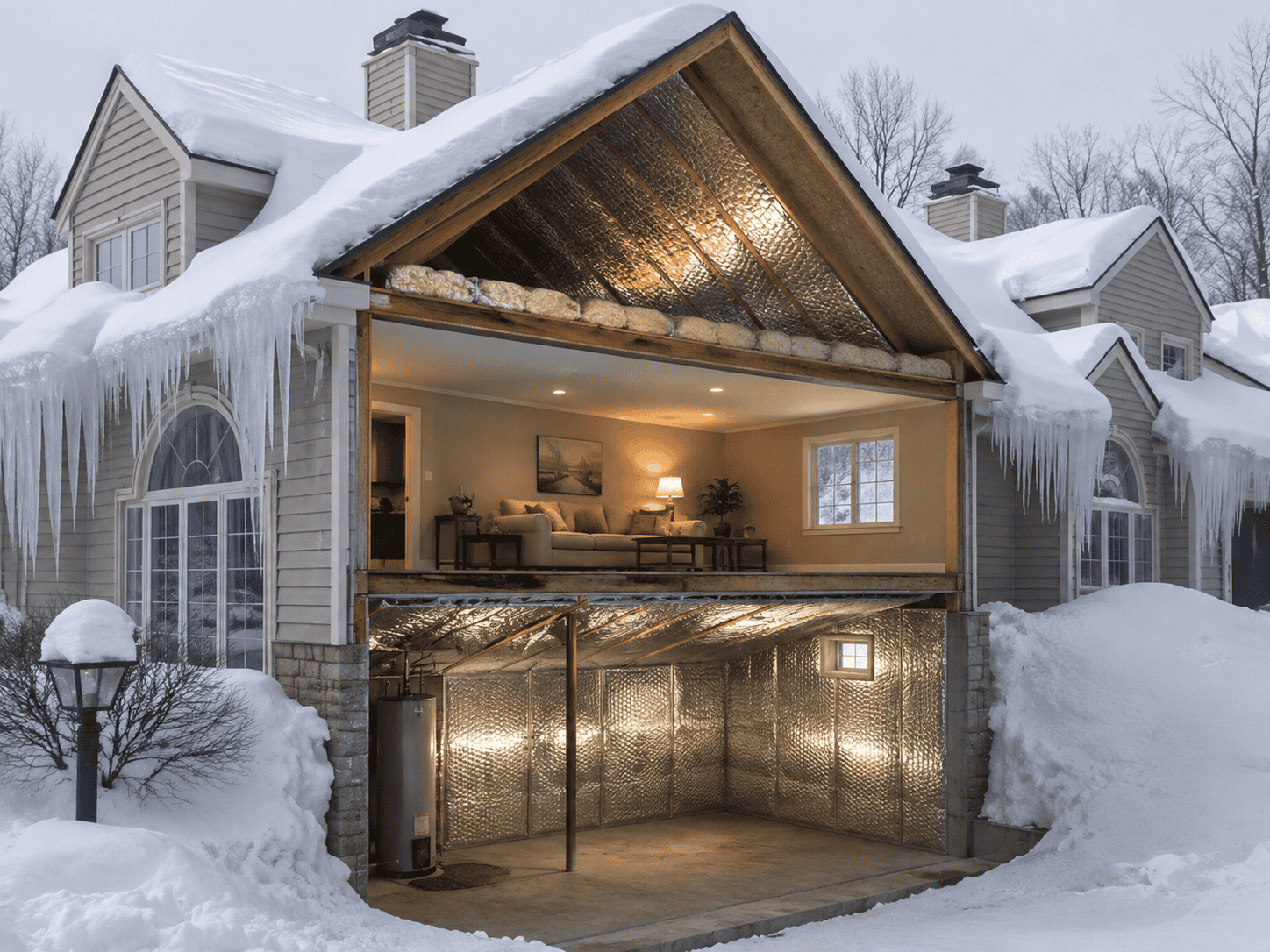
Radiant barriers are best known for reducing summer heat gain, but can they also help during winter? A properly installed radiant barrier can reduce radiant heat transfer from warmer surfaces toward colder surfaces. However, its effect on winter comfort and heating costs depends on the home’s insulation levels, climate, and installation. Understanding those limits helps you decide where reflective products belong in your cold-climate insulation plan.
How Basement Radiant Barrier Works During Winter:
In severely cold climates, people often overlook insulating the basement, which is a crucial area. Since warm air rises naturally, it can easily escape into the floors above, leaving your basement cold and damp. In fact, poorly insulated basements can easily be 5-15 degrees cooler than the living space above. By installing reflective bubble insulation in your walls and ceilings, you can maintain a more comfortable temperature without relying too heavily on your HVAC system.
Builders construct homes with either an unconditioned or a conditioned basement. Unconditioned basements lack air ducts for heating and cooling. To ensure proper heating, insulate the ceiling of the unconditioned basement with radiant barrier. Doing so will retain heat in the living space, similar to insulating an unheated garage with living space above. In contrast, conditioned basements have ducting for heating and cooling. A conditioned basement demands radiant barrier insulation for its walls and any frame walls within, with the ceiling exempt.
The Main Benefits of Basement Radiant Barrier in Cold Climate Insulation
- Prevents Heat From Escaping: reflect interior heat back into the living space
- Save money on energy bills: achieve better HVAC efficiency by reducing heat gains/losses year-round
- Minimizes Buildup of Condensation: tape the seams to create a vapor barrier
How Attic Radiant Barrier Works During Winter:
During winter, heat moves from the warmer living space toward the colder outdoors through conduction, convection, and radiation. Attic insulation slows heat flow through the ceiling assembly, while air sealing limits the movement of warm indoor air into the attic. A radiant barrier serves a different purpose: its reflective, low-emittance surface reduces radiant heat exchange across an adjacent air space.
This can help reduce one component of winter heat loss, but it does not replace adequate attic insulation or air sealing. Virginia Tech‘s Cooperative Extension notes that radiant barriers may help retain heat in cold-climate homes while also reducing beneficial winter solar heat gain. The net effect depends on the home and its attic assembly.
For installation, the reflective surface must face an air space. Follow the manufacturer’s instructions, preserve required attic ventilation, and avoid laying foil directly over attic floor insulation, where it can collect dust and interfere with moisture drying.
| Season | Direction of radiant heat transfer | What the barrier does | Potential benefit and considerations |
|---|---|---|---|
| Summer | Sun-heated roof surfaces radiate heat toward cooler attic surfaces. | Reduces radiant heat transfer from the roof toward the attic interior. | Reduces cooling demand, with the strongest benefits generally occurring in hot, sunny climates. |
| Winter | Warmer attic surfaces radiate heat toward colder roof surfaces. | A low-emittance surface reduces radiant heat exchange across an adjacent air space. | Reduces radiant heat loss; heating savings vary by climate and attic assembly. |
What Determines Winter Performance?
Two things affect the performance of a radiant barrier system: the level of insulation in the attic and the geographic location of the home. Those two factors decide how much radiant energy ever reaches the barrier in the first place, and they explain most of the variation homeowners report after installation.
Existing Insulation Levels
A well-insulated attic floor already keeps most heat inside the living space, so there is less radiant energy left for a barrier to reflect. A thinly insulated attic sends more heat upward, which gives the barrier more to work with, but it also means the home is losing energy in ways a radiant barrier cannot fix.
Homes with attic air leaks and insufficient insulation let a lot of conditioned air escape into the attic and out through the roof. Sealing those leaks and improving insulation levels is the foundation. Combined with standard insulation, a radiant barrier significantly reduces both summer cooling costs and winter heating losses.
Air Leakage
Gaps around attic hatches, wiring, plumbing, and ceiling penetrations allow warm air to escape. Addressing these leaks is a separate part of improving the building envelope.
Climate and Solar Exposure
Location matters because the balance between solar gain and heat loss changes with latitude, sun angle, and how long winter lasts. A cold-climate home spends months with a large indoor-to-outdoor temperature difference, which keeps radiant loss moving in a consistent direction. A milder climate may swing between heating and cooling in the same week. Radiant barrier results reflect those differences, which is why climate zone belongs in the decision.
Installation
Because ASTM defines a radiant barrier as a surface on or near a building component, placement is part of the performance story. Manufacturer literature emphasizes that the product is built for vented cavities such as attics, where it can intercept radiant energy and still allow the roof assembly to breathe. Radiant barriers and reflective insulation all deliver the same reflectivity principle in different forms, and the right form depends on the assembly you are working with.
Considerations for Cold Climate Insulation:
In extremely cold climates, the use of a vapor retarder between the sheetrock and thermal insulation, along with proper attic ventilation, helps control humidity levels. Dehumidifiers can also be helpful. Additionally, insulating slabs with a radiant barrier at grade foundation edges is vital to prevent significant heat loss and maintain warmer interior floors during winter. Lastly, thorough air sealing is fundamental to the effectiveness of cold climate insulation strategies. This would involve sealing leaks in or around doors, windows, chimneys, electrical and plumbing penetrations, and baseboards.
Radiant barriers, when strategically incorporated into existing insulation systems, can contribute to a warmer and more energy-efficient home during winter. By understanding their role in preventing heat loss and minimizing convective looping, homeowners in cold climates can harness the benefits of radiant barriers to create a comfortable living space in the colder months. Ready to add a radiant barrier before winter? Browse our perforated attic barrier or reflective bubble for basements here.
Frequently Asked Questions
Does a radiant barrier help in winter?
In many homes, yes, with conditions. Industry writeups state that during winter the reflective properties retain warmth inside, reducing the workload on HVAC systems and lowering heating costs. That benefit shows up best when the barrier is paired with adequate attic insulation. Results still vary by insulation level and geographic location, and in some cases barriers have been linked to higher heating costs.
Does a radiant barrier replace attic insulation?
No. A radiant barrier is a reflective, low-emittance surface, not an insulation material, and it is designed for vented cavities like attics. It manages radiant heat transfer, not air leakage. Combined with standard insulation, it significantly reduces both summer cooling costs and winter heating losses. Homes with attic air leaks and thin insulation lose conditioned air no matter what reflective product is installed.
What affects radiant barrier performance the most?
Two factors dominate: the level of insulation in the attic and the geographic location of the home. Insulation level determines how much heat reaches the barrier in the first place, while climate zone shapes the temperature differences the barrier works against. A well-sealed, well-insulated attic in a cold climate gives a radiant barrier the best chance to perform.
Does a radiant barrier stop all radiant heat transfer?
Industry sources describe radiant barriers stopping as much as 97 percent of radiant heat transfer, which is a strong result but not a complete one. The material also does nothing about conduction or air leakage. That is why pairing a barrier with insulation and air sealing matters, and why you should confirm emittance ratings before purchasing.