

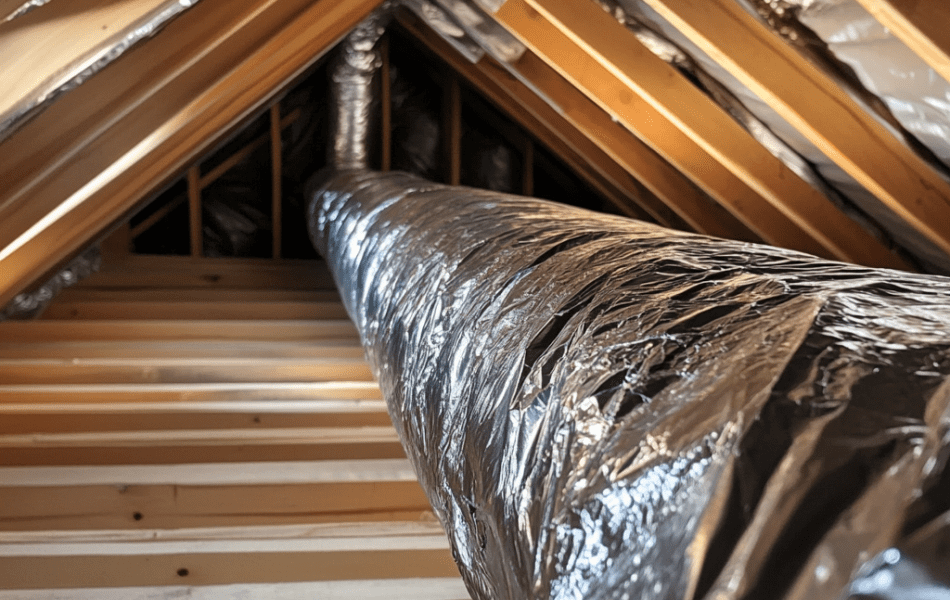
Ductwork Insulation
Cool in Summer. Warm in Winter. Savings All Year.
Energy Shield USA offers premium radiant barrier foil insulation for duct systems. Proper insulation for ductwork reduces heat transfer through duct surfaces, helping conditioned air remain cooler during summer and warmer during winter while supporting more efficient HVAC performance.
Request a QuoteEnergy Shield offers premium radiant barrier foil insulation for duct systems. Insulation for ductwork prevents heat transfer and improves airflow—keeping chilled air crisp during summer and warm air trapped during winter.
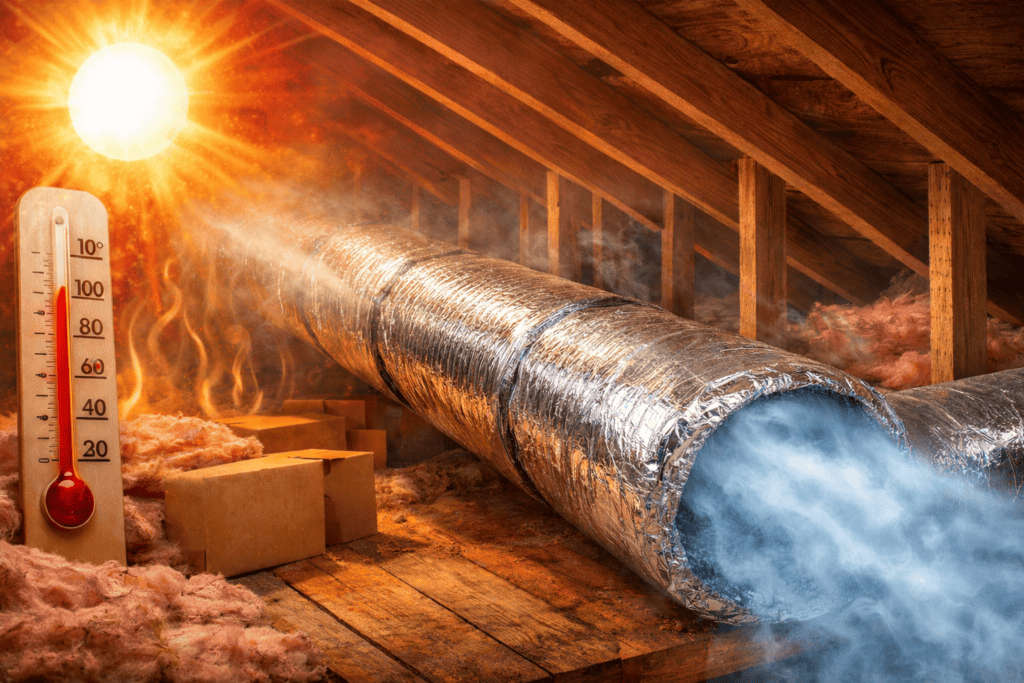
Block Radiant Heat in Summer
Your AC’s chilled air glides through insulated ducts untouched, staying frosty even when the attic reaches extreme temperatures.
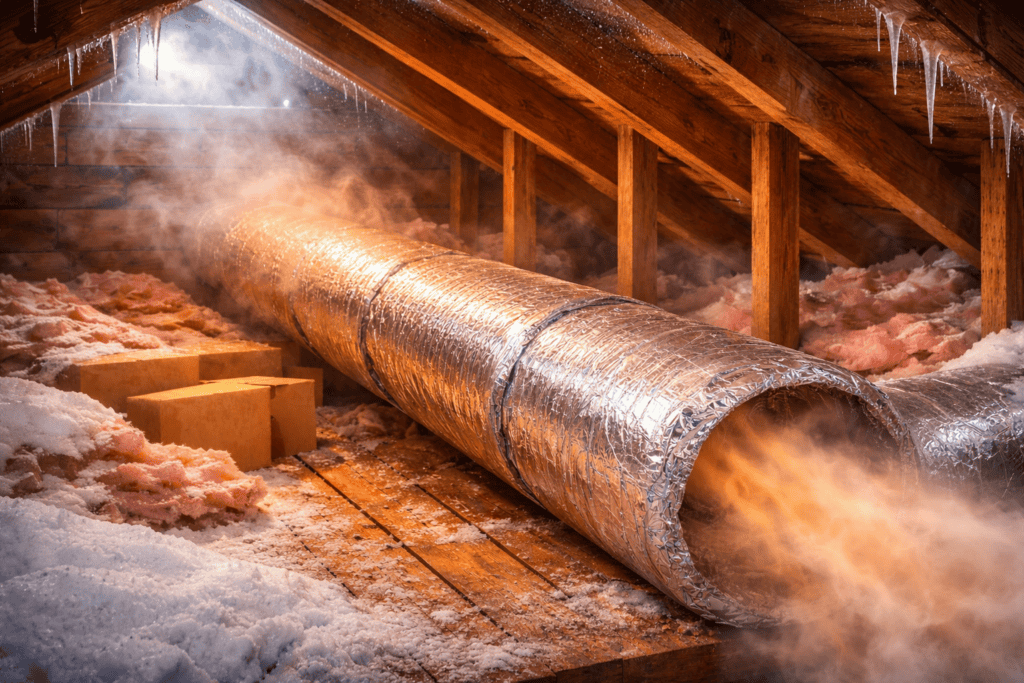
Retain Warm Air in Winter
During winter, insulated ducts prevent warm air from escaping and stop cold attic air from entering the system, keeping your home comfortable and energy-efficient.

Enhance HVAC System Performance
By improving thermal efficiency, Energy Shield duct insulation reduces HVAC run times 17–23%, quiets your system, extends its lifespan, and lowers energy costs. Stable duct temperatures mean improved airflow, reduced workload, and long-term savings.
Why Insulate Your Ducts with Energy Shield Products?
Using Energy Shield ductwork insulation wrap improves comfort and energy efficiency by:
- Reducing heat loss and gain through duct walls
- Maintaining consistent air temperatures
- Lowering utility costs
- Reducing system strain
- Minimizing noise, condensation, and mold growth
ES® Ductwork Insulation Products
ES® Ductwork Insulation Products
Combines foam insulation with reflective aluminum foil for superior thermal protection. Helps reduce heat loss and gain, boosting efficiency year-round.
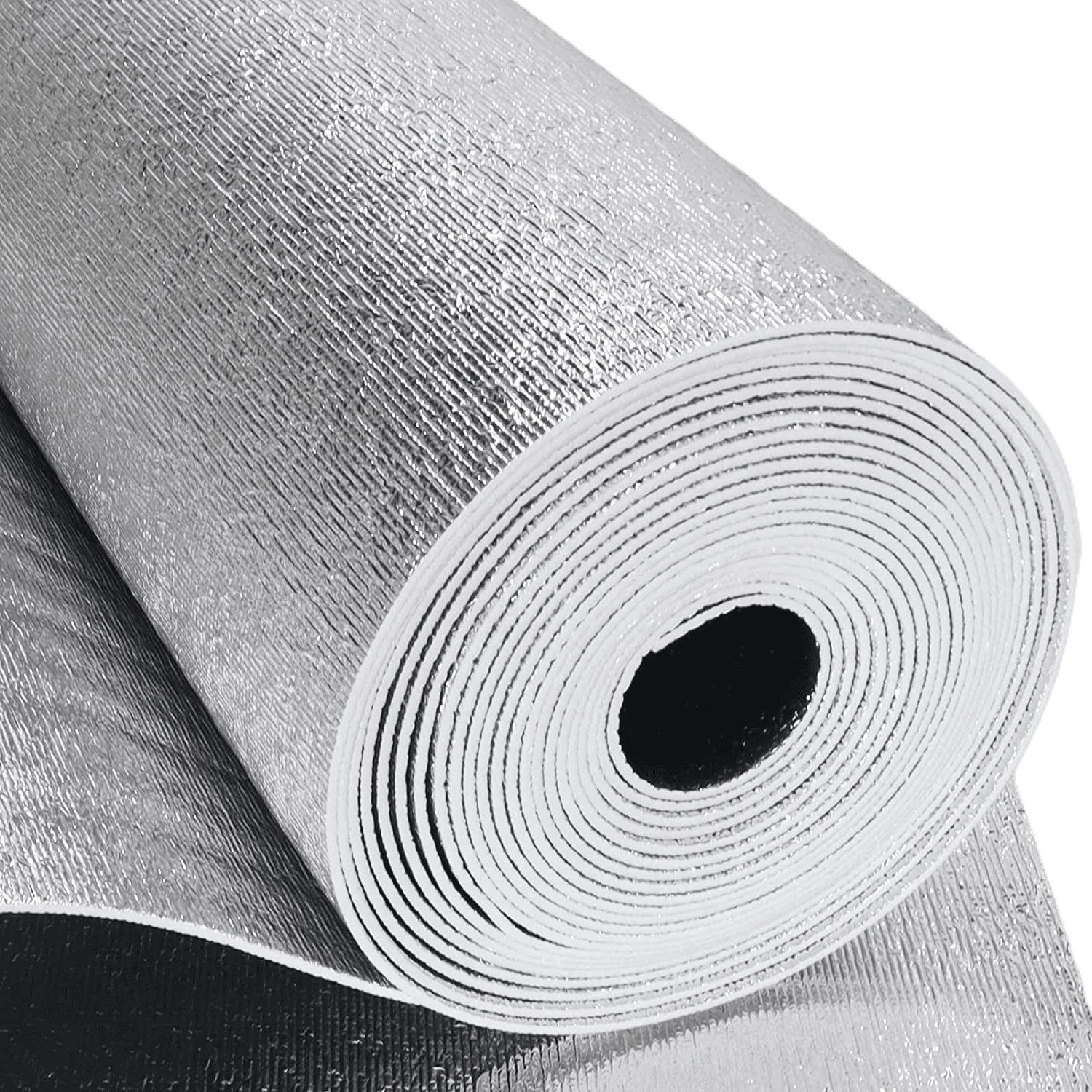
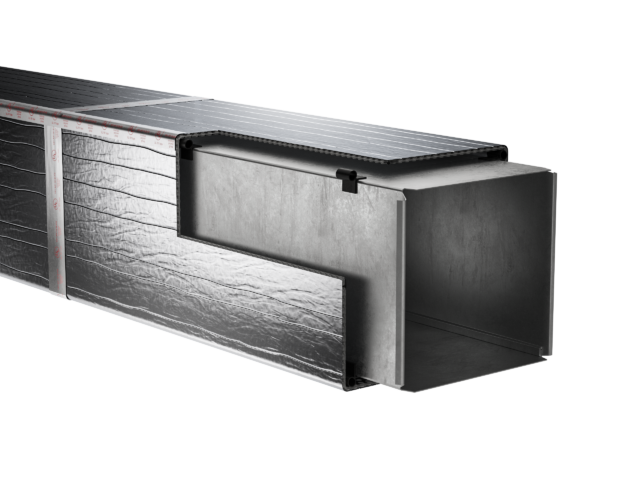
Key Features:
- Enhances HVAC performance and duct lifespan
- Reflective surface deflects heat in summer and retains warmth in winter
- Minimizes condensation and thermal transfer
- Lightweight and easy to cut for fast installation
Dual layers of reflective aluminum with air-bubble core create a powerful thermal barrier, maintaining consistent air temperatures.
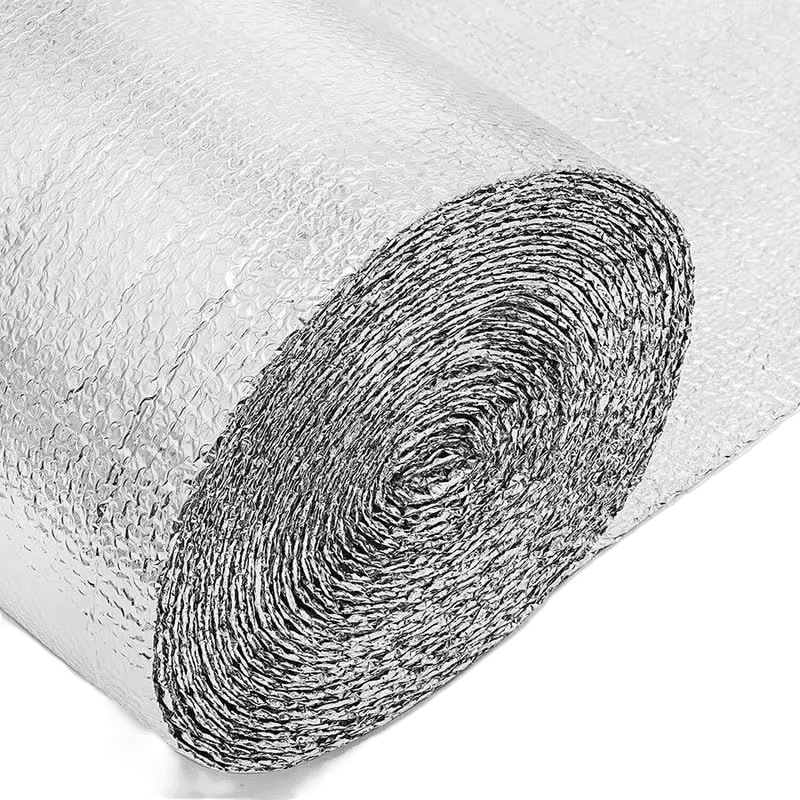
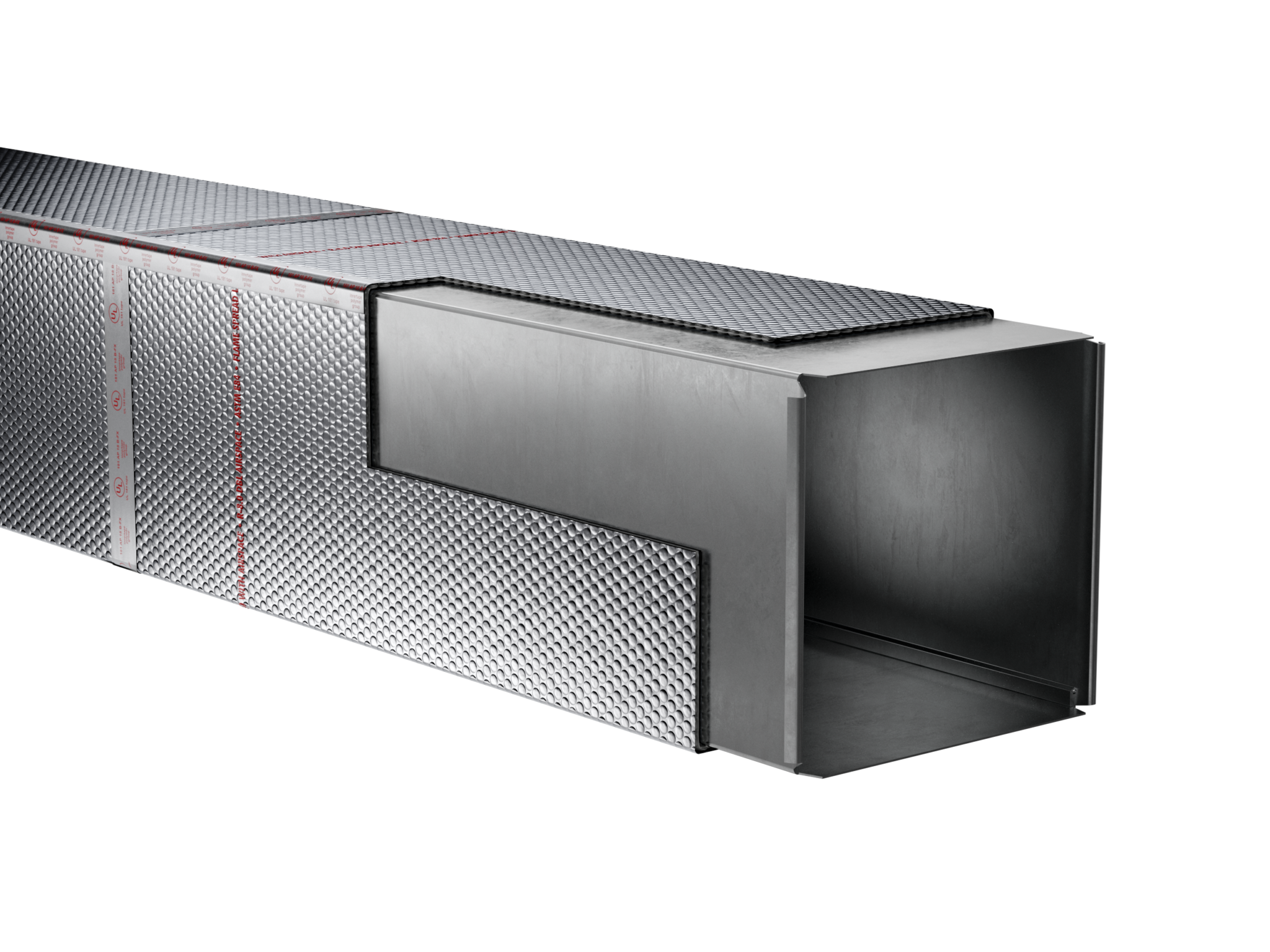
Key Features:
- Blocks radiant heat in summer, retains warmth in winter
- Reduces HVAC energy loss and run-time
- Flexible, easy to cut and install
- Moisture-resistant and tear-resistant
Advanced reflective fabric provides thermal protection inside ducting, ideal for commercial or industrial applications.
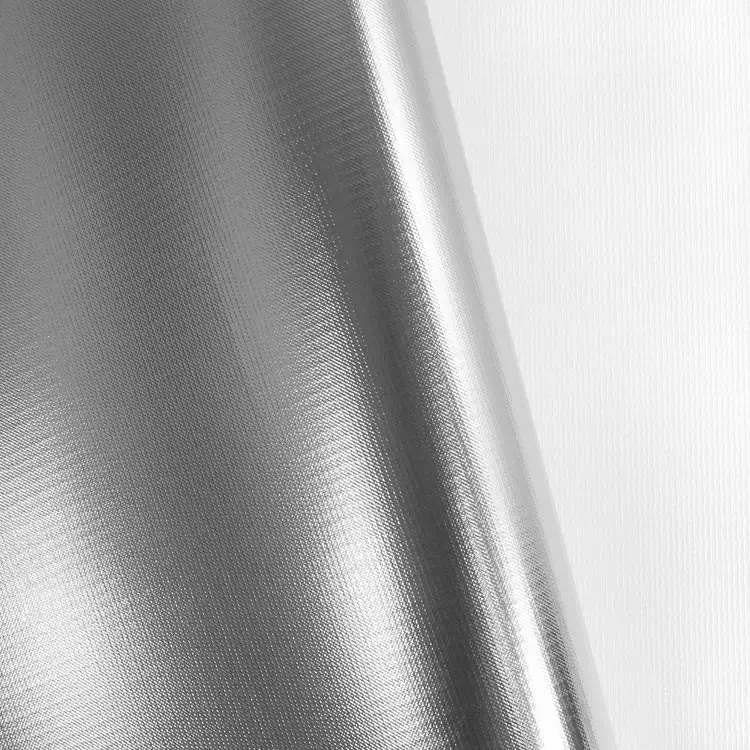
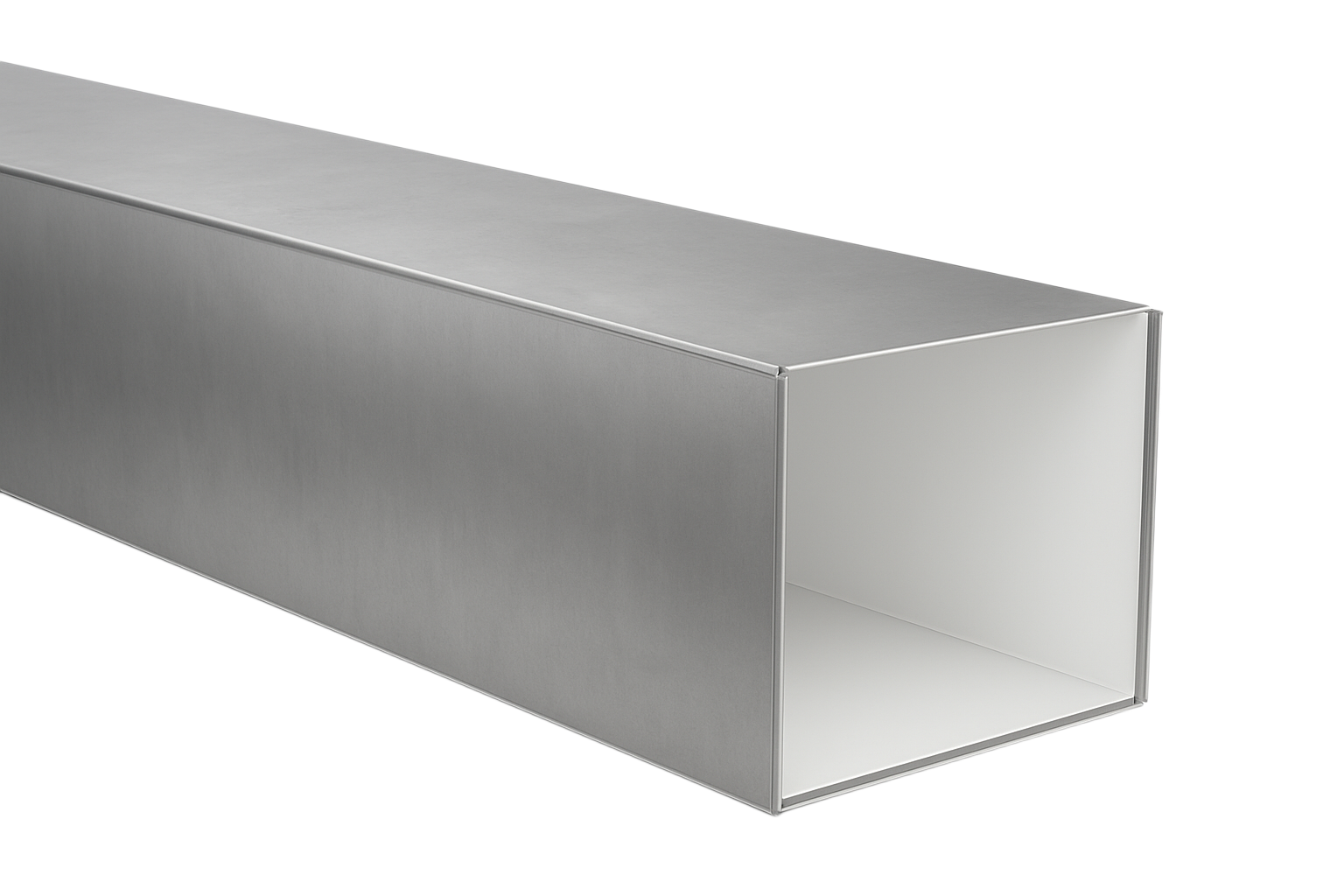
Key Features:
- Retains heat in winter, repels heat in summer
- Ideal for new ducts or retrofits
- Easy maintenance and durable
- Improves airflow efficiency and system performance
Radiant Barrier Protection for Unconditioned Spaces
Uninsulated ducts in attics, basements, or crawl spaces waste energy and accumulate moisture. Energy Shield reflective insulation acts as a radiant barrier and vapor shield, reflecting up to 97% of radiant heat while preventing condensation and mold.
Installing basement insulation or crawl space insulation complements ductwork insulation, creating a fully insulated envelope that improves comfort and reduces energy bills.
Applications / Where Ductwork Insulation Is Used
Energy Shield duct insulation is ideal for:
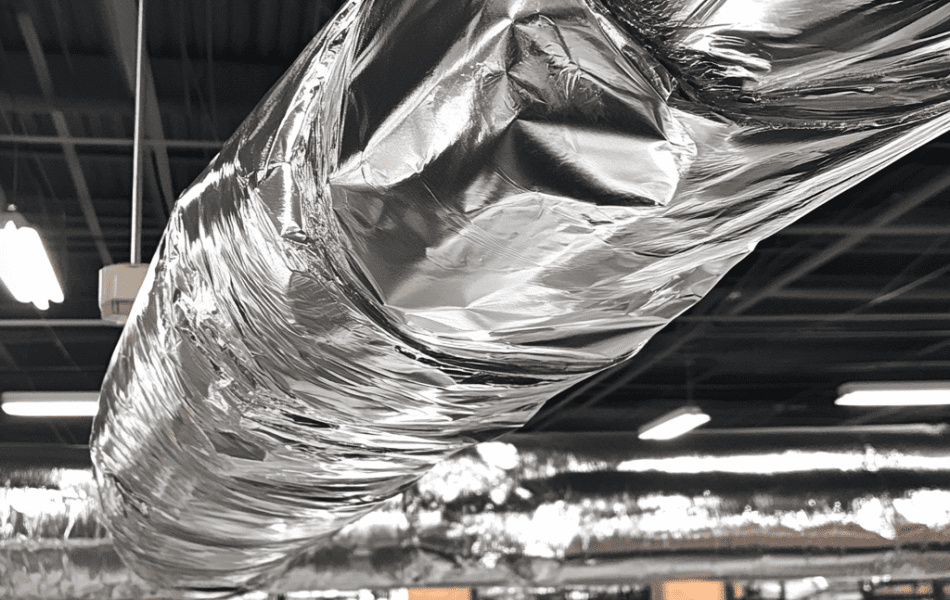
Durable, Easy-to-Install Insulation Options
- Lightweight, flexible wraps that conform to bends and irregular duct shapes
- Tear-resistant, moisture-blocking, long-lasting protection
- Quick installation—no bulky or complicated steps

Why Choose Energy Shield USA® Ductwork Insulation?
Ductwork Insulation FAQs
How does ductwork insulation work?
Reflective insulation blocks radiant heat while the core reduces conductive heat transfer, keeping conditioned air at its intended temperature.
Is ductwork insulation worth it?
Yes. It reduces energy loss, improves comfort, and protects your HVAC investment
Can I install duct insulation myself?
Yes. Our products are lightweight and flexible, perfect for DIY installation.
Does it reduce HVAC energy bills?
Yes. Reflective insulation maintains temperatures inside ducts, lowering energy costs. Energy savings are further enhanced when ductwork insulation is paired with radiant floor insulation.
Does it help with noise, condensation, or mold?
Yes. It reduces condensation, minor noise, and prevents mold in unconditioned spaces.