

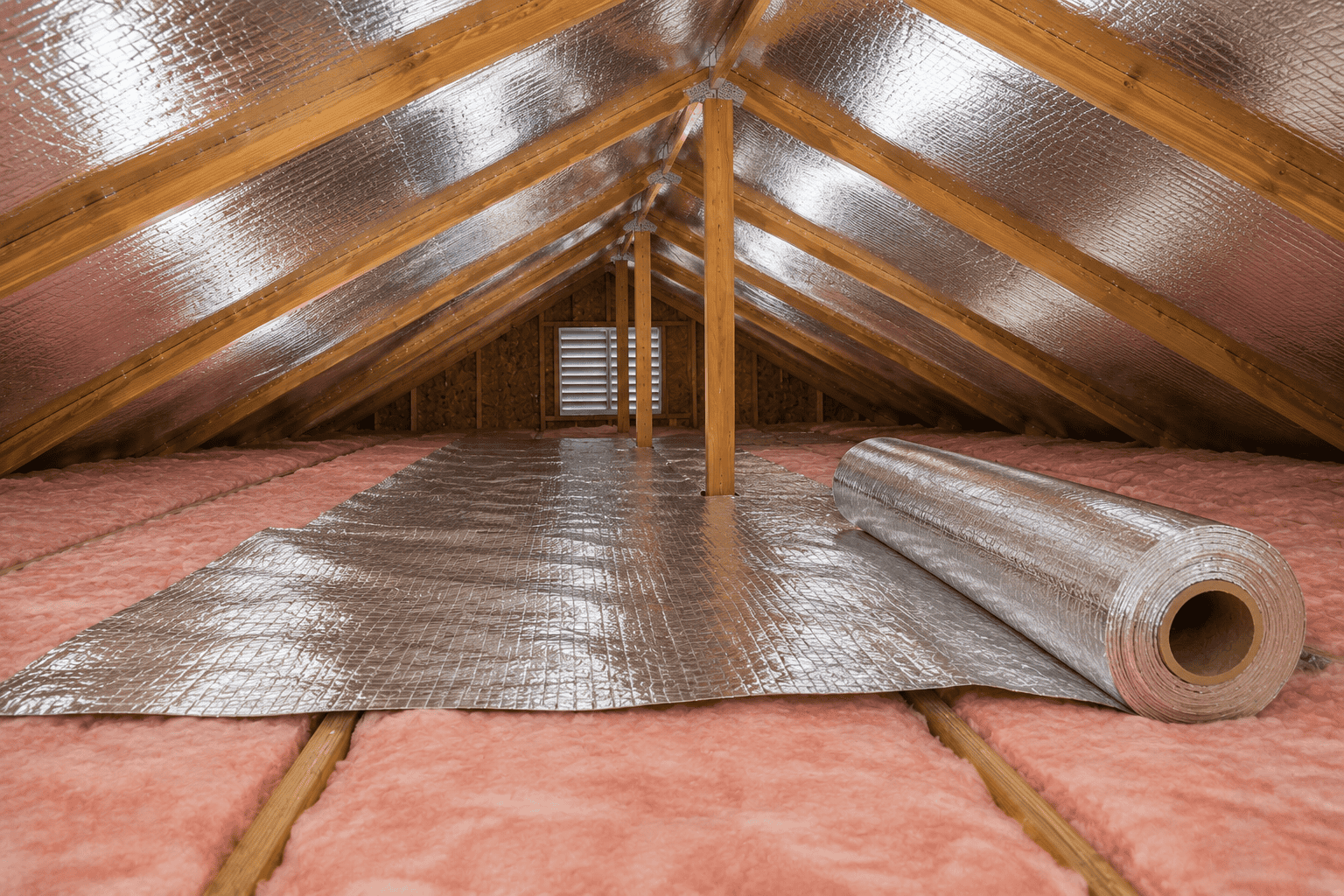
Homeowners looking to cut energy costs often wonder whether insulation and radiant barrier work together, or whether they have to choose one. The short answer: yes, you can put a radiant barrier over insulation, and doing so is actually one of the most effective combinations available.
Understanding Insulation
Insulation keeps indoor temperatures steady by slowing the flow of heat between inside and outside. The common materials — fiberglass, foam, cellulose, and mineral wool — each work a little differently, but they all do the same basic job: they resist conductive and convective heat transfer.
Introducing Radiant Barrier
A radiant barrier does a different job. Made of a highly reflective material, usually aluminum foil, it reflects radiant heat rather than slowing it. It is installed in attics, walls, and roofs, and it is especially effective in hot climates where the sun’s radiant energy is the main driver of indoor heat. A radiant barrier reflects up to 97% of radiant heat.
Can You Put Radiant Barrier Over Insulation?
Yes — and it is a good idea. The two materials address different kinds of heat, so they complement each other instead of competing.
Why the Combination Works
- Comprehensive Heat Protection: Insulation slows conductive and convective heat transfer. A radiant barrier handles radiant heat. Together they cover all three modes of heat movement, which neither does alone.
- Better Summer Performance: A radiant barrier reflects the sun’s heat away before it reaches your living space, cutting the cooling load during the months it matters most.
- Better Winter Retention: In cold weather, the same barrier reflects your heating system’s warmth back into the home instead of letting it escape through the roof.
- Easy to Add: Installing a radiant barrier over existing insulation is straightforward — staple or secure it to the rafters or attic floor, directly above the insulation already in place.
- Cost-Effective: The energy savings from the two working together add up, making the combination a sound investment.
Conclusion
Insulation and radiant barrier are not either-or choices — they are a pair. Insulation slows heat flow, the barrier reflects radiant heat away, and together they give your home a complete defense against temperature extremes. Contact us to learn more, or to order the DIY radiant barrier products that will make your home more comfortable and efficient.