

What Is Insulation?
Insulation reduces the transfer of heat, sound, or electricity through a building’s walls, floors, and ceilings. Whether you are building new or renovating, the type you choose affects your energy bills, comfort, and indoor air quality for years. Here is a rundown of the most common options and what each one is good at.
Types of Insulation
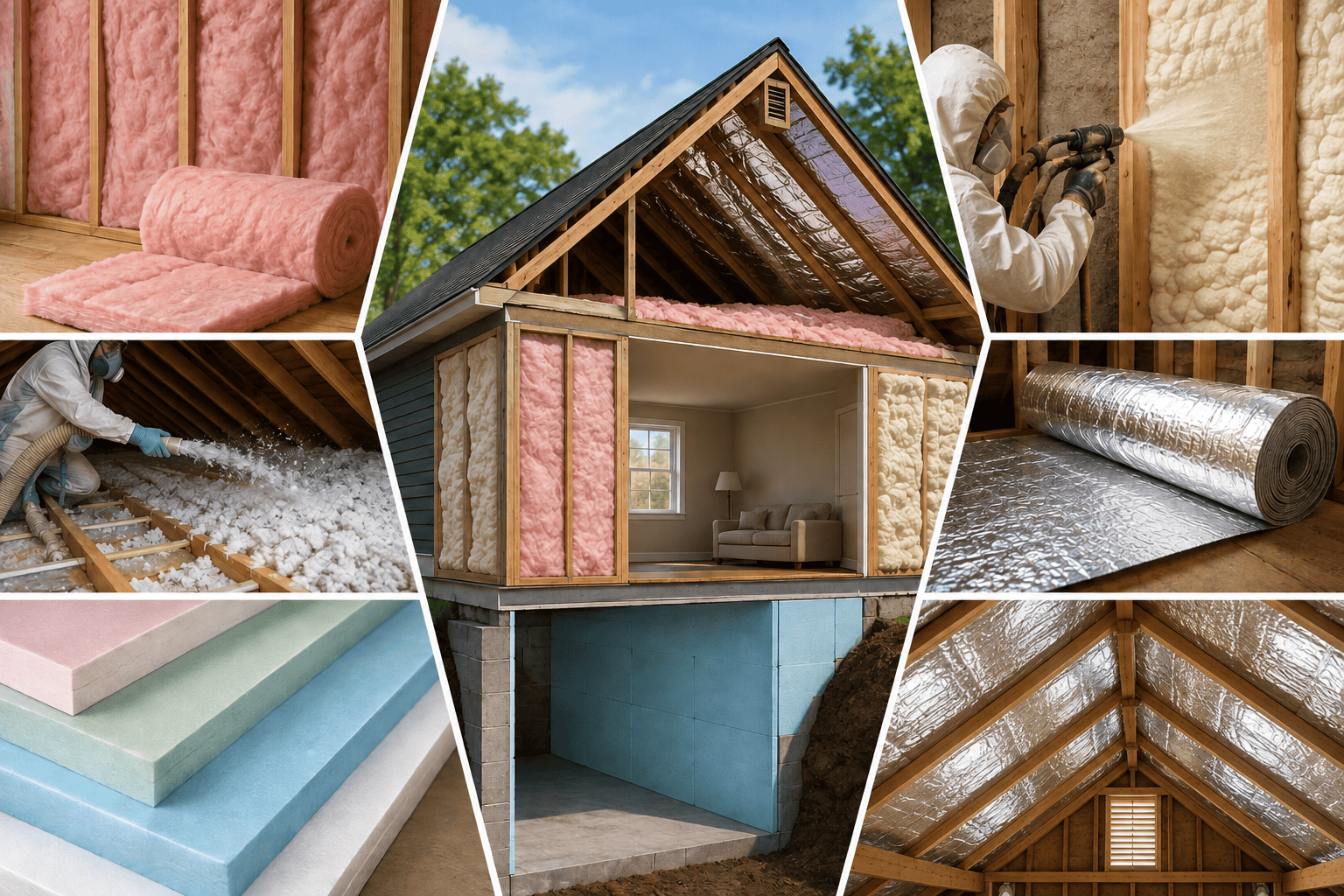
- BLANKET INSULATION comes in rolls or batts, usually made from fiberglass or mineral wool.
- APPLICATIONS
- Unfinished walls, floors, and ceilings, fitted between studs, beams, and joists.
- BENEFITS
- Cheap and widely available.
- Easy for a DIYer to install without special tools
- Easy to cut around pipes and wires.
- PROBLEMS
- Less effective in extreme heat and cold than some alternatives.
- Fiberglass sags and settles over time, which reduces its R-value.
- Does not stop air movement, so it loses effectiveness in a ventilated attic — like wearing a jacket with nothing to block the wind.
- APPLICATIONS
- BLOWN-IN INSULATION is loose fiberglass or cellulose blown into cavities with special equipment.
- APPLICATIONS
- Enclosed existing walls.
- Hard to reach attic floors.
- BENEFITS
- Reaches tight spaces and around pipes without major renovation.
- Inexpensive.
- PROBLEMS
- Needs professional equipment.
- The depth is hard to control, and — like blanket insulation — it settles over time and loses effectiveness.
- Cellulose can hold moisture, which hurts performance and invites mold.
- APPLICATIONS
- FOAM BOARD INSULATION, or rigid foam, is made from polystyrene or polyurethane. It comes in solid sheets you cut to size.
- APPLICATIONS
- Foundation walls, unfinished walls and new construciton.
- BENEFITS
- High thermal resistance for its thickness
- Resists moisture.
- Lightweight and easy to handle.
- PROBLEMS
- Polyurethane foam can release VOCs after installation, causing odors and respiratory irritation in some people.
- It can burn under intense heat if not installed to spec.
- Costs more than fiberglass or cellulose.
- APPLICATIONS
- SPRAY FOAM INSULATION is polyurethane applied as a liquid that expands to fill gaps.
- APPLICATIONS
- Enclosed existing walls, new open wall cavities and unfinished attic floors.
- BENEFITS
- The best air seal available.
- It expands into every crack and stops drafts and air leaks that other insulation misses.
- PROBLEMS
- The highest upfront cost of the common options.
- It releases VOCs during installation and requires professional application.
- Closed-cell foam does not breathe, so moisture trapped inside a cavity has no path to dry — a known cause of condensation and rot. It is also difficult and costly to remove later.
- APPLICATIONS
- RADIANT BARRIERS and REFLECTIVE INSUALTION use reflective foil — sometimes laminated to foam, bubble, or fabric — to reflect radiant heat rather than absorb it.
- APPLICATIONS
- Attics, walls, floors, and any surface facing a hot roof or wall cavity.
- BENEFITS
- Reflects up to 97% of radiant heat, far more than mass insulation slows it.
- It is a true DIY install with just a staple gun.
- It works alongside conventional insulation instead of replacing it
- it never loses R-value to settling the way fiberglass and cellulose do.
- PROBLEMS
- May need an air space to increase effectiveness.
- It requires more care in tight spaces.
- APPLICATIONS
Which Insulation is Right for You?
Most insulation slows conductive heat. A radiant barrier stops radiant heat — the type a hot roof sends into your attic in summer. The two do not compete; they solve different problems. The best setup usually combines them: conventional insulation for conduction, and a radiant barrier for the heat your insulation cannot stop.
The right choice depends on your budget, your climate, and your building’s structure. If you want help matching an insulation strategy to your home, contact us — we will tell you what works and what you do not need to spend money on.