

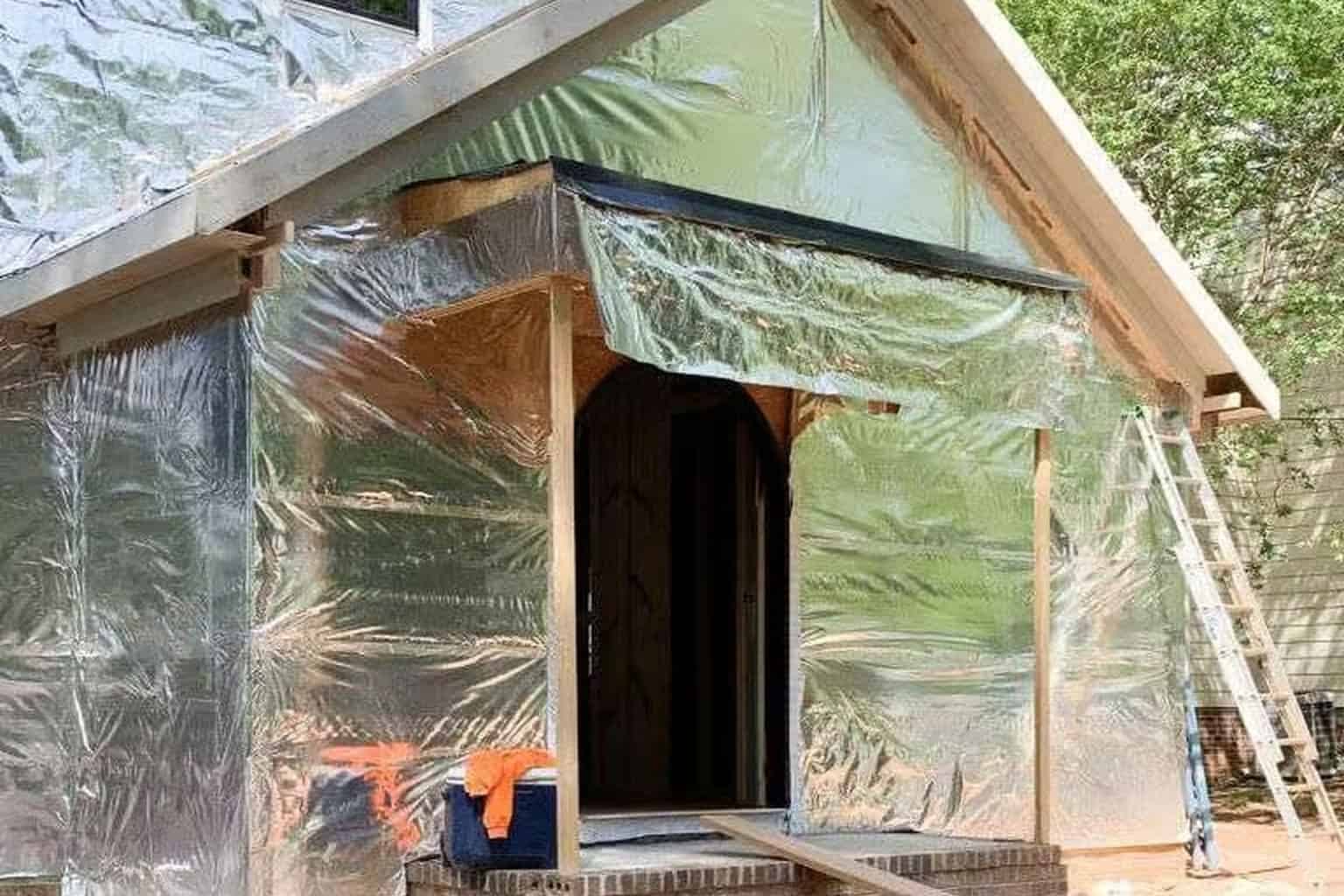
A house wrap is one of the control layers in a wall. As a water-resistive barrier, or WRB, it keeps liquid water from outside from getting into the wall cavity. Understanding what it can and cannot do is the first step to building a wall that stays dry.
What Does a House Wrap Do?
House wrap insulation is a building material that covers a home’s exterior framing before the siding or cladding goes on. Its job is to shield the structure from wind and rain while still letting moisture vapor escape. There are five main functions:
- Water resistance: A house wrap sheds liquid water and keeps it out of the building envelope, preventing damage to the structure and finishes.
- Wind resistance: It blocks wind and, just as important, wind-driven rain from being forced through gaps in the wall.
- Energy efficiency: By cutting drafts and air movement through the wall, it reduces the heat and cold that reaches the living space, lowering energy bills.
- Durability: A quality house wrap withstands weather and stays intact for the life of the wall.
- Easy installation: It installs quickly and works alongside insulation and other building materials.
Can You Use a Radiant Barrier as a House Wrap?
Yes. Our ES® Radiant Barrier performed as a reflective house wrap on Hillary Farr’s home in the HGTV series, “Love It or List It” (Season 19, Episode 2).
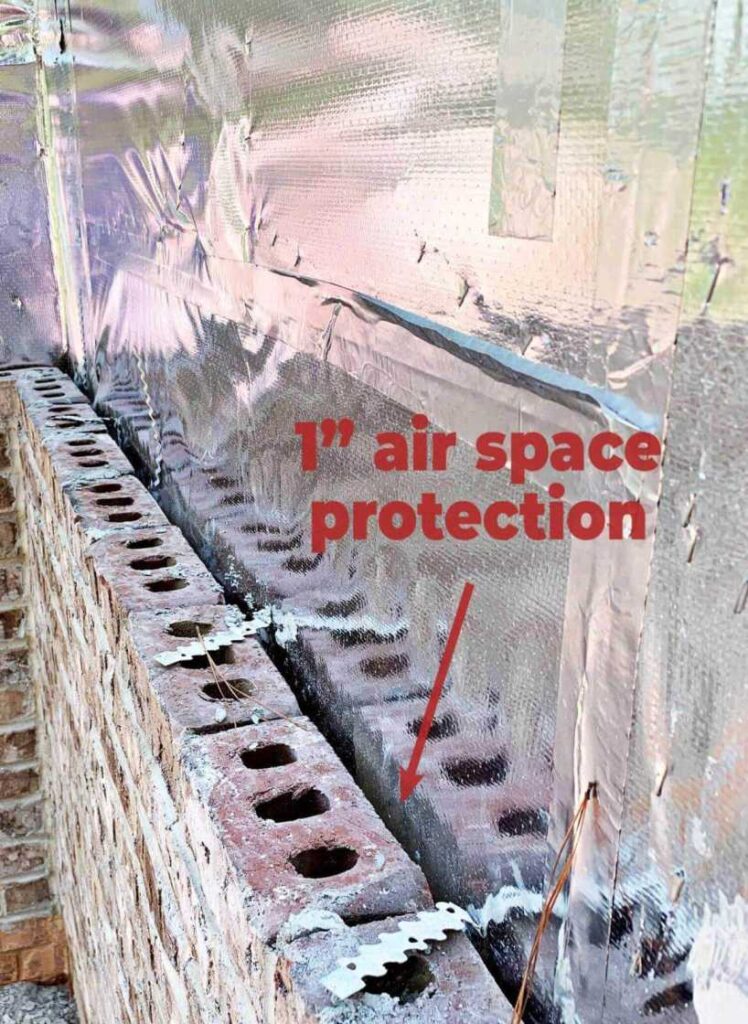
In that install, a one-inch air space separated the radiant barrier from the brick exterior. That gap lets air circulate, which is what lets the reflective surface do its job. Without the air space, the reflective side cannot reflect radiant heat — the same rule that applies in an attic.
We recommend installing a perforated reflective house wrap as an air barrier and a secondary drainage plane, with an air space between the barrier and the cladding.
An air barrier controls air flow through the building envelope, improving energy efficiency. A secondary drainage plane manages any water vapor and moisture that get into the wall, preventing condensation and water damage.
Installed directly behind the cladding with that air space, a radiant barrier does double duty: it reflects heat and it sheds moisture. That combination improves both the energy efficiency and the durability of the wall.
One caution: follow the manufacturer’s instructions and your local building codes. Depending on your climate and local requirements, you may still need additional insulation or moisture-control measures to meet code. Contact us for help with your house wrap project.