

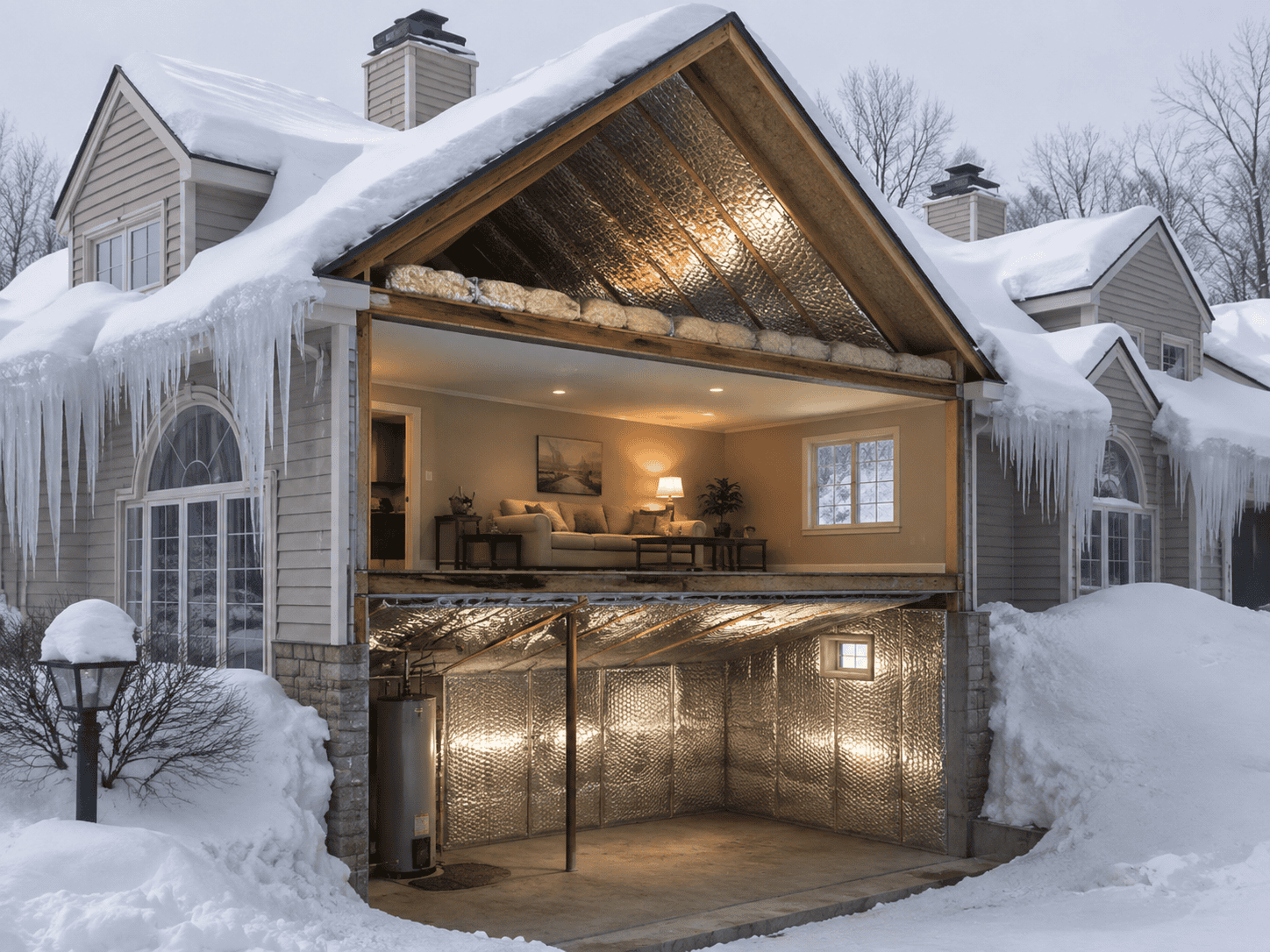
Radiant barriers are famous for cutting summer cooling costs. Fewer people realize they help in winter too. Here is how a radiant barrier keeps your home warmer when the temperature drops.
The Role of Basement Radiant Barrier in Cold Climate Insulation:
In severely cold climates, people often overlook insulating the basement, which is a crucial area. Since warm air rises naturally, it can easily escape into the floors above, leaving your basement cold and damp. In fact, poorly insulated basements can easily be 5-15 degrees cooler than the living space above. By installing reflective bubble insulation in your walls and ceilings, you can maintain a more comfortable temperature without relying too heavily on your HVAC system.
Builders construct homes with either an unconditioned or a conditioned basement. Unconditioned basements lack air ducts for heating and cooling. To ensure proper heating, insulate the ceiling of the unconditioned basement with radiant barrier. Doing so will retain heat in the living space, similar to insulating an unheated garage with living space above. In contrast, conditioned basements have ducting for heating and cooling. A conditioned basement demands radiant barrier insulation for its walls and any frame walls within, with the ceiling exempt.
The Main Benefits of Basement Radiant Barrier in Cold Climate Insulation
- Prevents Heat From Escaping: reflect interior heat back into the living space
- Save money on energy bills: achieve better HVAC efficiency by reducing heat gains/losses year-round
- Minimizes Buildup of Condensation: tape the seams to craete a vapor barrier
The Role of Attic Radiant Barrier in Cold Climate Insulation:
Contrary to misconceptions, radiant barriers can enhance winter insulation efficiency in your attic. Introducing a radiant barrier, placed over attic insulation, minimizes air movement (convective looping) and enhances energy efficiency.
In a ventilated attic setup, air circulates through soffits and exits through vents. This helps maintain a cold roof to prevent issues like ice damming. The problem with this setup is the lack of barrier it creates. There is only sheetrock and a layer of blanket traditional insulation between the warm living space and the cold attic air. Traditional insulation, often fiberglass, allows unrestricted airflow, rendering the R-value ineffective in windy conditions. It is similar to wearing a jacket on a cold, windy day without wind protection. Standing in the open air will make you much colder than standing behind a wind-blocking wall.
Without a top barrier, traditional insulation is less effective in a ventilated attic assembly, susceptible to convective looping. Convective looping is the pumping of air through the attic insulation. It involves cold air displacing warm air in the thermal layer near the sheetrock. When a radiant barrier is used, it becomes a “wind blocking wall” and reflects heat back into the living area and provides a more comfortable living space. Please note: it’s crucial to use perforated radiant barriers in to prevent moisture buildup within the attic insulation. Sealing all holes from lights and fixtures in the ceiling sheetrock is also essential to avoid condensation issues.
Considerations for Cold Climate Insulation:
In extremely cold climates, the use of a vapor retarder between the sheetrock and thermal insulation, along with proper attic ventilation, helps control humidity levels. Dehumidifiers can also be helpful. Additionally, insulating slabs with a radiant barrier at grade foundation edges is vital to prevent significant heat loss and maintain warmer interior floors during winter. Lastly, thorough air sealing is fundamental to the effectiveness of cold climate insulation strategies. This would involve sealing leaks in our around doors, windows, chimneys, electrical and plumbing penetrations, and baseboards.
Radiant barriers, when strategically incorporated into existing insulation systems, can contribute to a warmer and more energy-efficient home during winter. By understanding their role in preventing heat loss and minimizing convective looping, homeowners in cold climates can harness the benefits of radiant barriers to create a comfortable living space in the colder months. Ready to add a radiant barrier before winter? Browse our perforated attic barrier or reflective bubble for basements here.