
Higher electric bills are hitting homes across the country, and the cause is not just rising energy rates. Part of the problem is sitting in your own attic. Traditional insulation can carry a high R-value — and a high emissivity rating to go with it.
Understanding Emissivity
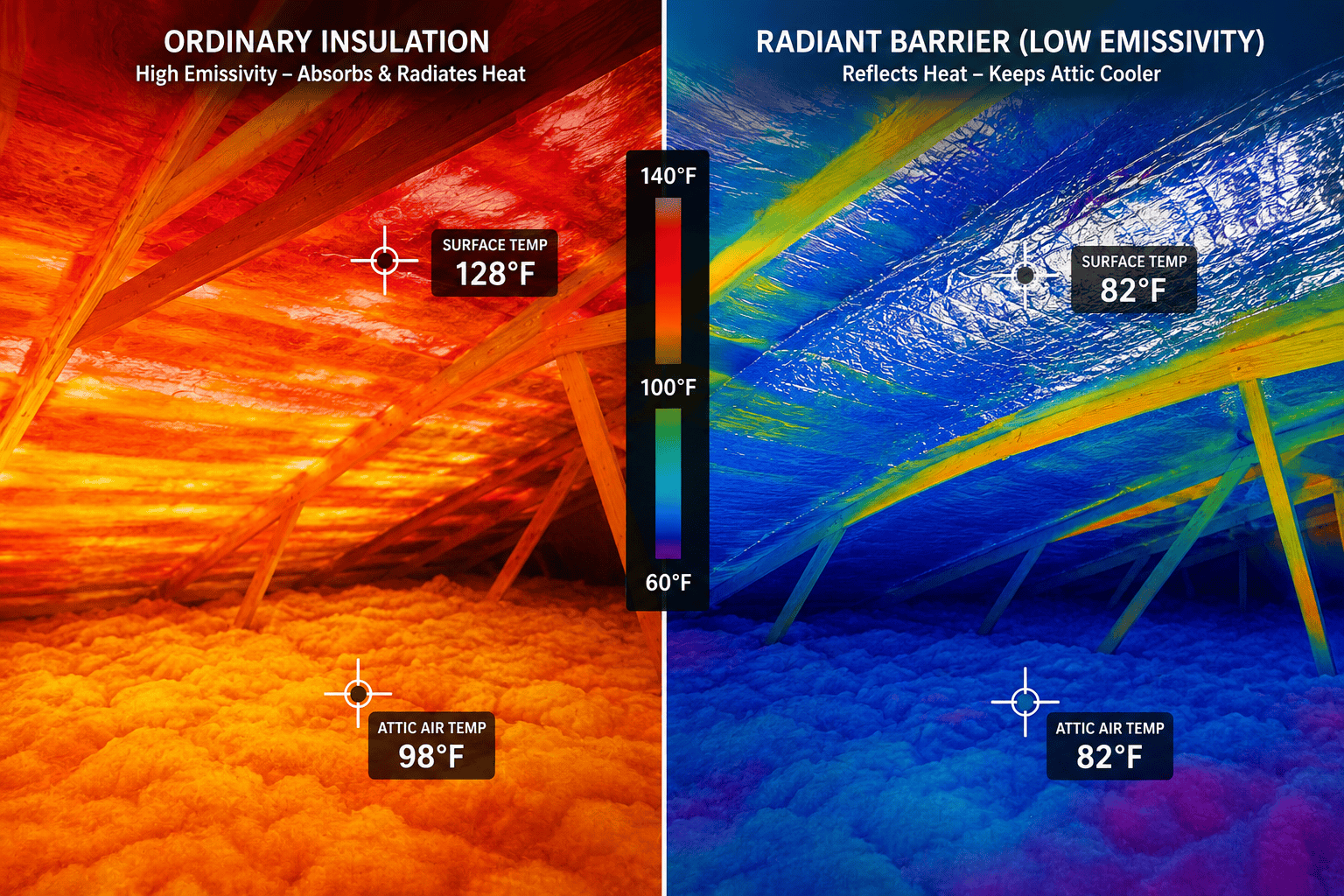
Emissivity is how readily a material absorbs and re-emits radiant heat. The higher the emissivity, the more heat a surface absorbs and then radiates back out.
Mass insulation has a high emissivity. It soaks up radiant heat and transfers it into your attic, which then radiates down into your living space. That is extra heat your air conditioner has to fight, and extra energy on your bill. The R-value did not fail you — it was never designed to stop radiant heat. It only slows conductive heat flowing through the material.
The Solution: Lower Emissivity with a Radiant Barrier
A radiant barrier flips the equation. It has a low emissivity surface, which means it reflects radiant heat instead of absorbing it. Installed near the underside of the roof, it sends that heat back the way it came, before it can reach your living space. Less radiant heat getting in means less energy spent pulling it back out.
The Result: Real Energy Savings
Research from the US Department of Energy has found that installing a radiant barrier in the attic can cut energy bills by up to 50%. This impressive outcome not only offers a cost-effective solution but also significantly enhances the comfort of your home. By minimizing the impact of radiant heat, your living environment becomes more enjoyable and conducive to relaxation.
Beyond the Bill
The financial and comfort benefits are the headline, but there is a broader one too. Every degree of heat you keep out is energy you do not have to spend cooling away, which means the upgrade pays for itself while also reducing your home’s overall energy use.
How to Install a Radiant Barrier
Installing a radiant barrier is straightforward enough for a homeowner to do themselves, or to hand to a professional. The typical method is placing a reflective material like ES® Radiant Barrier near the underside of the roof deck, so it reflects radiant heat away from the living space below.
Take Control of Your Energy Costs
If your bills keep climbing, the fix might not be more insulation — it might be the right kind. A radiant barrier is a small upgrade that addresses the heat your current insulation is letting through, and the result is lower bills and a cooler, more comfortable home.