

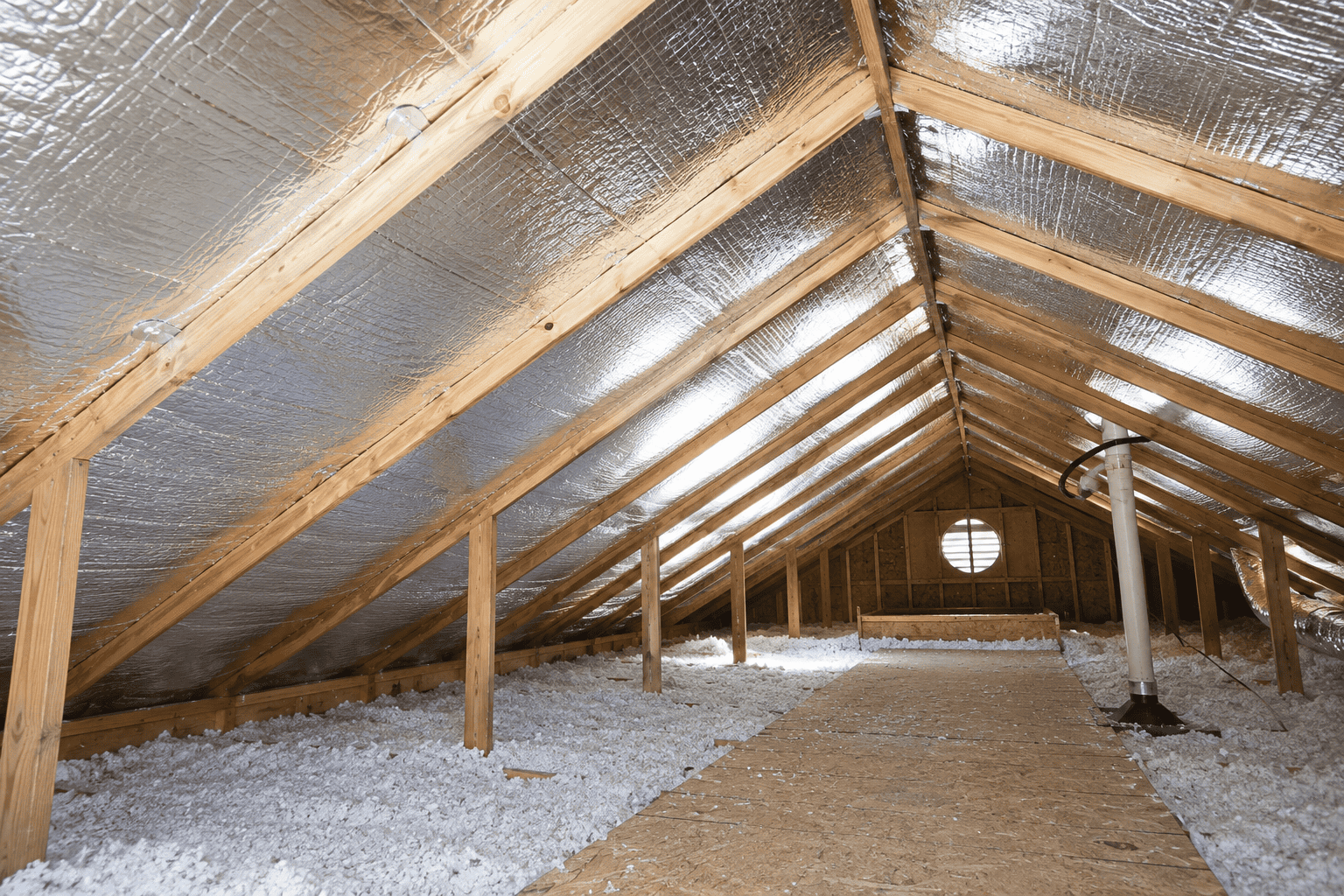
Most homeowners focus on walls and windows when they think about efficiency, and overlook the attic — the place where heat problems usually start. Insulating and ventilating the attic helps, but a radiant barrier takes it further. It reflects heat away before it ever enters your home.
Here is what a radiant barrier in the attic actually delivers.
Improved Energy Efficiency
A Radiant barrier is a reflective material that reduces the transfer of radiant heat from the sun into the attic. Less heat gets in, your cooling system works less, and your bills drop. Estimates suggest homeowners can reduce monthly energy costs by 10 to 15 percent.
Decreased Cooling Load
The first thing a radiant barrier does is lower the attic temperature. In summer, an attic bakes — often hotter than the air outside. A radiant barrier reflects that solar heat away before it heats the air and surfaces inside the attic, which reduces the load on your air conditioner. That means lower energy use and less wear on your cooling equipment, so it lasts longer.
The numbers back this up. A study by the Florida Solar Energy Center found that properly installed radiant barriers reduced attic temperatures by up to 30 to 40 degrees Fahrenheit during peak summer conditions. A separate study published in the Journal of Solar Energy Engineering found radiant barriers can lower attic temperature by about 28 percent in a properly vented attic.
Enhanced Indoor Comfort
A cooler attic means less heat radiating down through the ceiling into your rooms, which makes indoor temperatures steadier. Your air conditioner maintains its set point without fighting a hot attic above it, so you get consistent comfort instead of rooms that warm up the moment the system cycles off.
Conclusion
A radiant barrier in the attic cuts energy use, lowers your cooling load, and keeps the home more comfortable — and by keeping extreme heat out of the attic it also reduces stress on your roof. It is a straightforward upgrade that pays you back in a cooler home and a smaller bill.