

If you are securing a Sensitive Compartmented Information Facility, or SCIF, you already know the requirements are unforgiving. But the same principle applies to any organization that wants to keep radio frequency signals out — and its own signals in. What is less understood is that a material designed for energy efficiency can double as one of the most cost-effective RF-shielding tools available.
What Is RF Shielding?
RF shielding blocks radio frequency interference. It is the construction of a barrier that reduces the electromagnetic transmission between one space and another, protecting electronic and computer equipment from interference that can degrade their performance. The goal is simple: control which frequencies leave or enter a space, and block the ones you do not want.
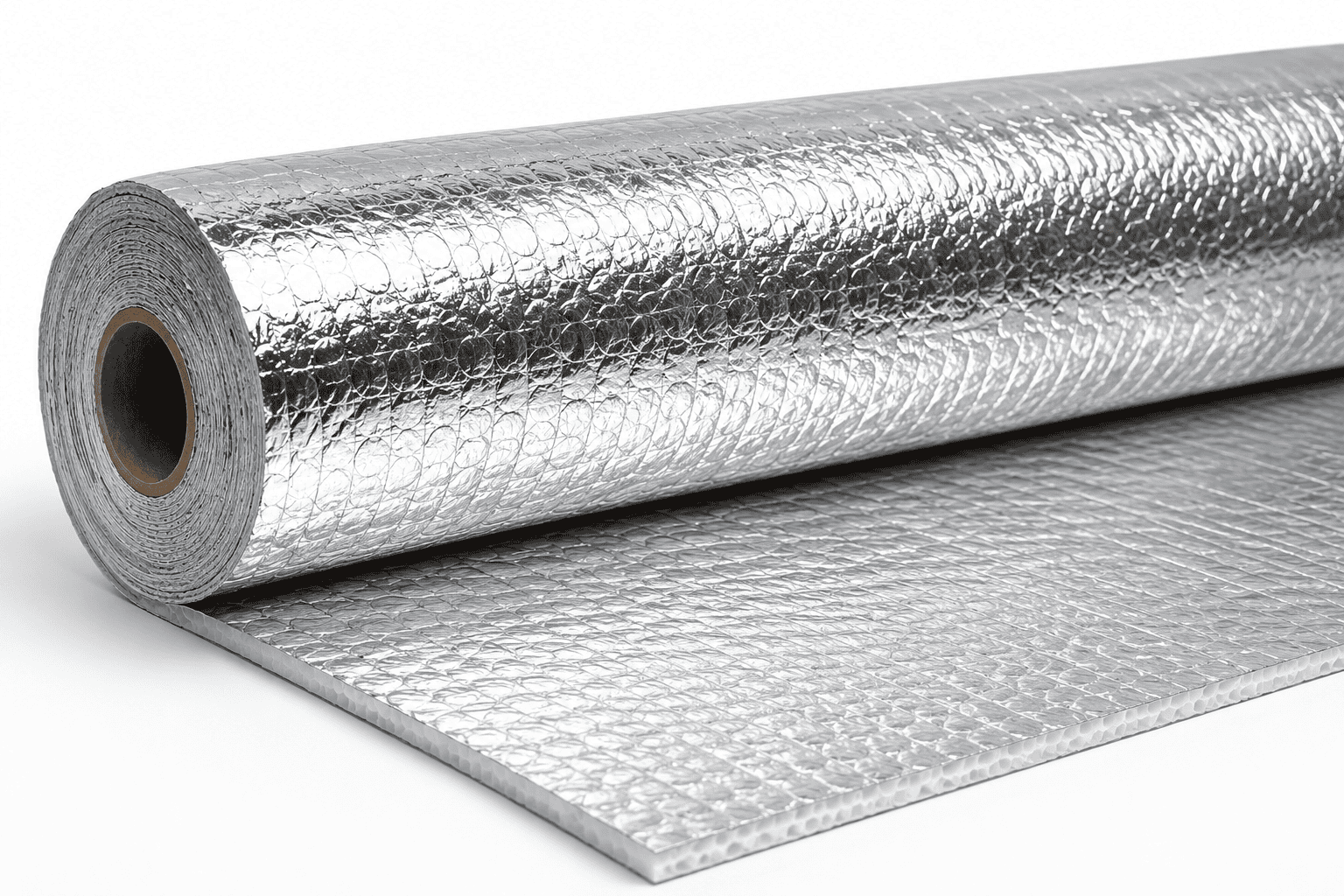
A properly designed RF shield filters a specific range of frequencies under controlled conditions, and it can be extremely effective. Our ES® reflective insulation blocks up to 99% of electromagnetic and radio frequency waves in the 10kHz to 10,000MHz range.
This matters for government facilities and corporate buildings alike. Where classified information, health data, financial systems, or trade secrets are handled, an unshielded wall is a potential leak — and RF shielding is the fix.
Radiant Barriers Do Double Duty in a SCIF
Most people reach for a radiant barrier because it reflects heat. But that same reflective surface, properly installed, also blocks RF and EM waves. For a SCIF, that means a single material can handle two of the facility’s hardest requirements at once: temperature control and signal containment.
There is a practical advantage too. Traditional RF shielding can mean extensive remodeling and specialized construction. A reflective barrier installs where conventional building techniques struggle — concrete, masonry, existing walls — without tearing the room apart. It is a lower-cost path to RF protection for anyone who needs it.
The catch: installation has to be continuous. RF shielding only works as well as its weakest seam. To shield a SCIF effectively, the barrier goes on all sides — walls, ceiling, floor, around windows and doors — with no gaps. A partial install defeats the purpose, because a signal finds any opening. Done right, it reflects radiant heat and blocks RF in one pass, and it keeps energy costs down while it is at it.
Not every reflective product meets the standard. If you are spec’ing for a SCIF, you need a product tested for RF shielding specifically — not just any reflective insulation off the shelf. Check the test data before you commit.
The Bottom Line
Security is a non-negotiable requirement for the buildings that handle sensitive information. Understanding what a material can do — block RF signals and reflect heat at the same time — lets you meet both needs for less than traditional SCIF construction. Have questions about which ES® RF Shielding product fits your facility? Contact us and we will help you spec it.