

Radiant barriers have been improving building efficiency for years, yet misconceptions still linger about how they work, how hard they are to install, and what they actually deliver. In part one, we clear up the most common myths so you can separate fact from fiction.
MYTH: Radiant barriers only work in hot climates
FACTS: They reduce heat transfer in every climate.
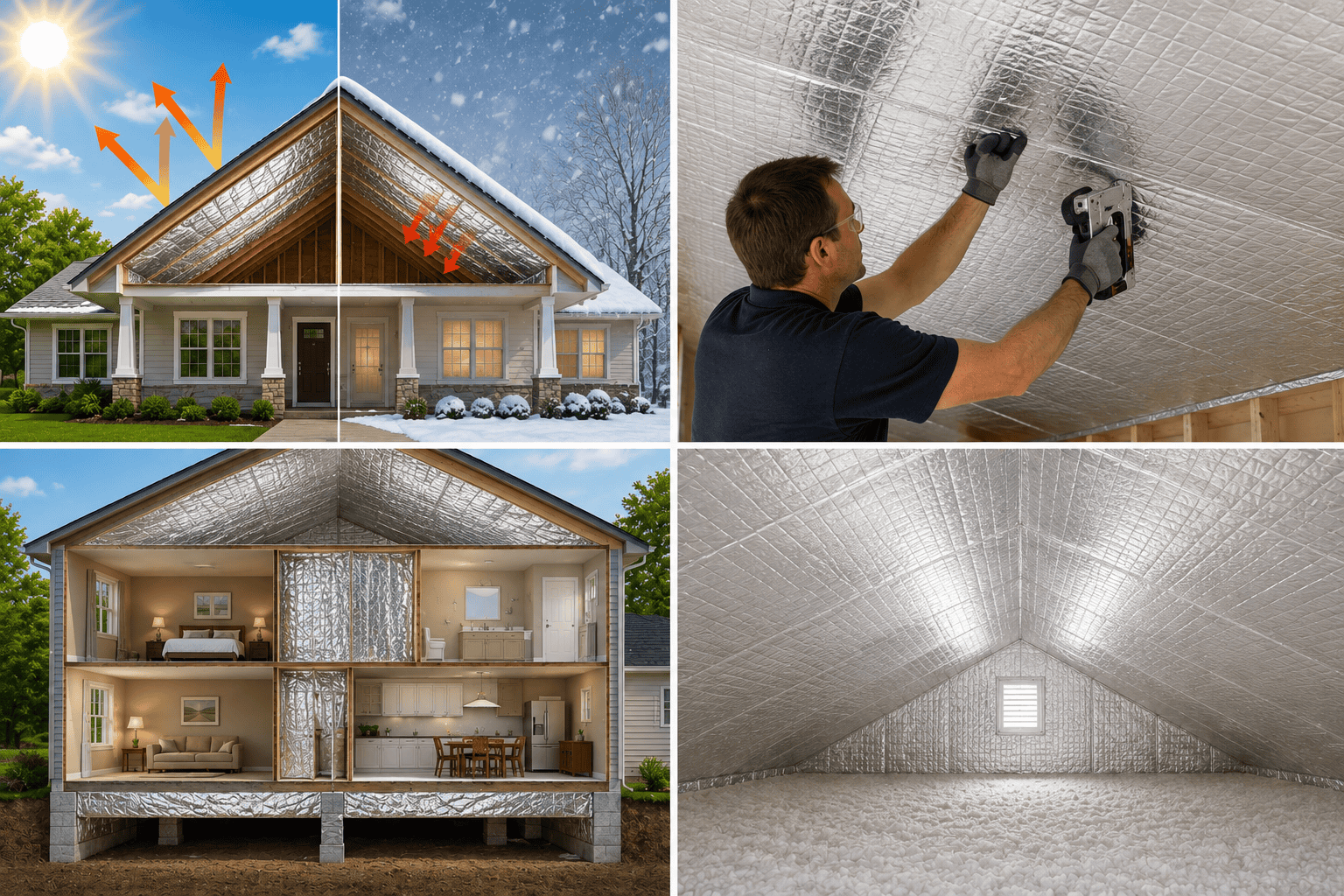
In summer, a radiant barrier reflects the sun’s heat away from the roof and attic, so the building absorbs less heat and stays cooler with less air conditioning. In winter, it reflects the heat your heating system produces back into the building instead of letting it escape through the roof, so the space stays warmer with less energy. The mechanism is the same year-round — reflecting thermal radiation — it just works in opposite directions depending on the season.
MYTH: Radiant barriers are difficult to install
FACTS: They are easy to install and well-suited to DIY.
The most common method is attaching the barrier directly to the underside of a roof or the walls of an attic with adhesives or staples. You can also leave an air space or add an insulating layer between the barrier and the surface by mounting it on furring strips or spacers. Radiant barriers work in both new construction and existing buildings, across roofs, walls, and floors — and they combine with fiberglass or foam for even better performance.
MYTH: Radiant barriers only work on the roof
FACTS: They work on walls, floors, and other surfaces too.
Walls are a smart place to install a radiant barrier in buildings with large windows or glass facades that let direct sunlight pour heat inside. Floors matter in structures with crawl spaces or basements, where heat escapes downward and can add up to significant energy loss. Installing a barrier on those surfaces cuts that heat transfer, which lowers the load on your heating and cooling system.
MYTH: Radiant barriers lose effectiveness quickly
FACTS: They are built to last for the life of the building.
Radiant barriers are made from durable materials that resist wear and stand up to the elements. They are also usually installed in protected spaces like roofs and attics, away from damage and disturbance, so they keep delivering savings year after year without maintenance or replacement.