

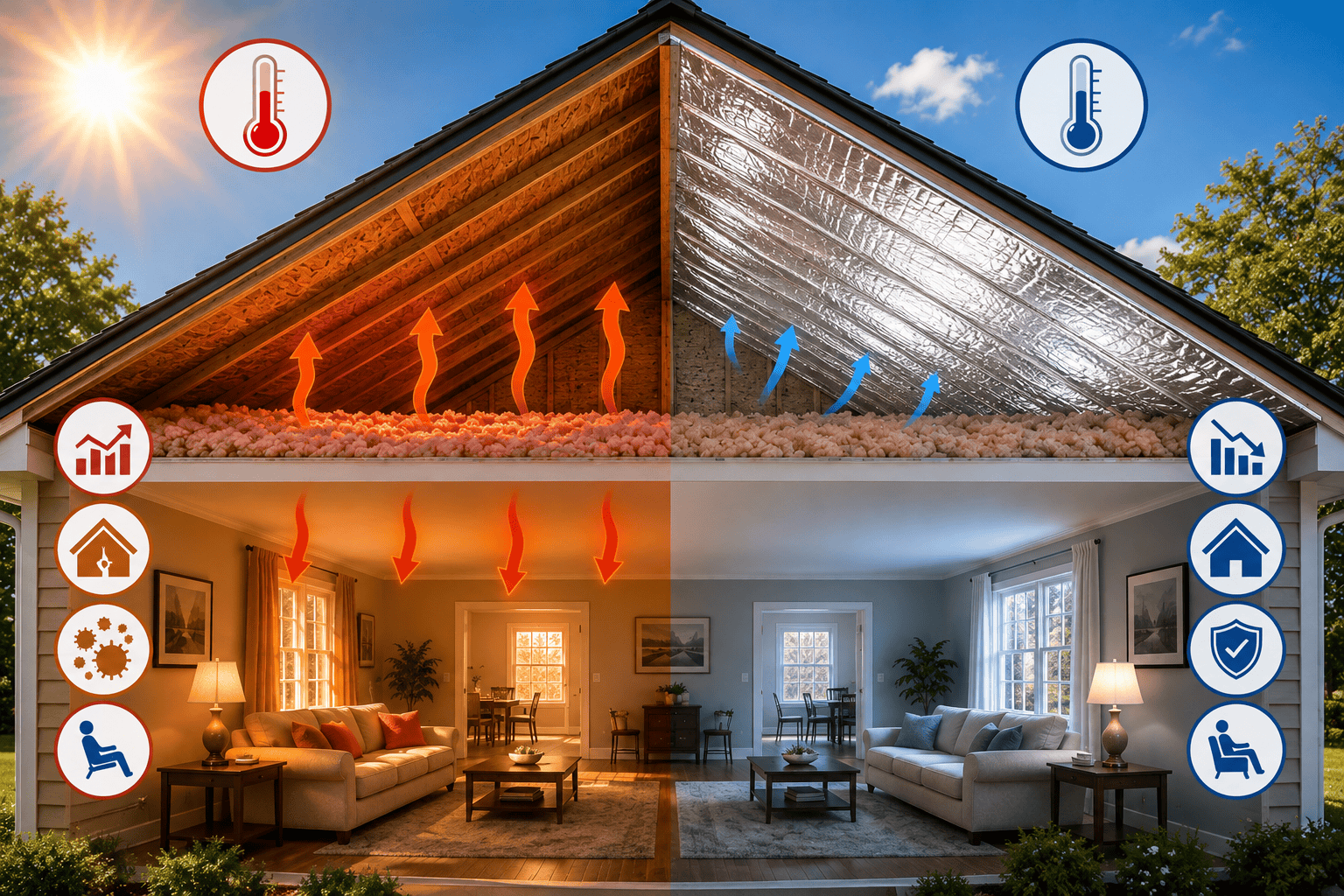
Your attic can be 40 degrees hotter than the rest of your house. That heat does not stay in the attic — it radiates down into every room below. The temperature of an attic is an important factor to consider when it comes to the overall energy efficiency and comfort of a home. An attic that is too hot or too cold can have a significant impact on the rest of the house, causing discomfort and increasing energy costs.
There are several reasons why attic temperature is so vital to a home:
Energy Efficiency
An uninsulated attic can hit 120°F or more in summer. A radiant barrier drops that to within 5 to 10°F of outside air — and that cooler attic means your air conditioner does not have to work as hard. When your attic stays hot, the heat radiates down into the rooms below and your HVAC runs longer to hold a comfortable temperature. That means higher energy bills and more wear on the system. By cutting that heat transfer at the source, a radiant barrier lightens the load on your air conditioner and keeps your home cooler without cranking the thermostat.
Prevent Roof Damage
Roof shingles are only rated to handle a certain temperature range. When an attic overheats, it accelerates asphalt shingle aging. The heat makes shingles expand and contract repeatedly, which leads to cracks, splitting, and curling — and eventually costly repairs or a full roof replacement. Keeping your attic at a consistent temperature helps prolong your roof’s life. On the other end, an attic that runs too cold can cause ice dams to form along the eaves, which freeze, back up, and force water under the shingles.
Health
Attic temperature also affects your home’s air quality. A hot attic can drive moisture into the conditioned space below, and that moisture is what feeds mold and mildew. Once it takes hold, it spreads through the house and into the air you breathe. Mold and mildew are linked to respiratory issues, allergies, and other health problems. Keeping your attic at a consistent temperature helps keep that moisture out, which prevents mold growth before it starts and protects the air quality in your home.
Comfort
Attic temperature affects how your home feels. A hot attic radiates heat down into the rooms below, leaving the living space stuffy and uncomfortable even when the thermostat says otherwise. On the flip side, an attic that runs too cold can make upper rooms feel drafty and chilly. A radiant barrier keeps the attic temperature steadier, so the rooms below hold their comfort instead of swinging with the weather outside.
A consistent attic temperature does four things: it lightens the load on your HVAC system, extends the life of your roof, keeps mold and moisture out of your air, and holds your living space comfortable year-round. Installing an ES® Radiant Barrier is the simplest way to get there. Browse our radiant barrier products to find the right construction for your attic and climate.
Overall, it is important to maintain a consistent and comfortable temperature in the attic to ensure the energy efficiency, prolong the life of your roof, improve air quality and maintain comfort in your home. This can be achieved by installing one of our different types of ES® Radiant Barriers in your attic. Call or email us today!