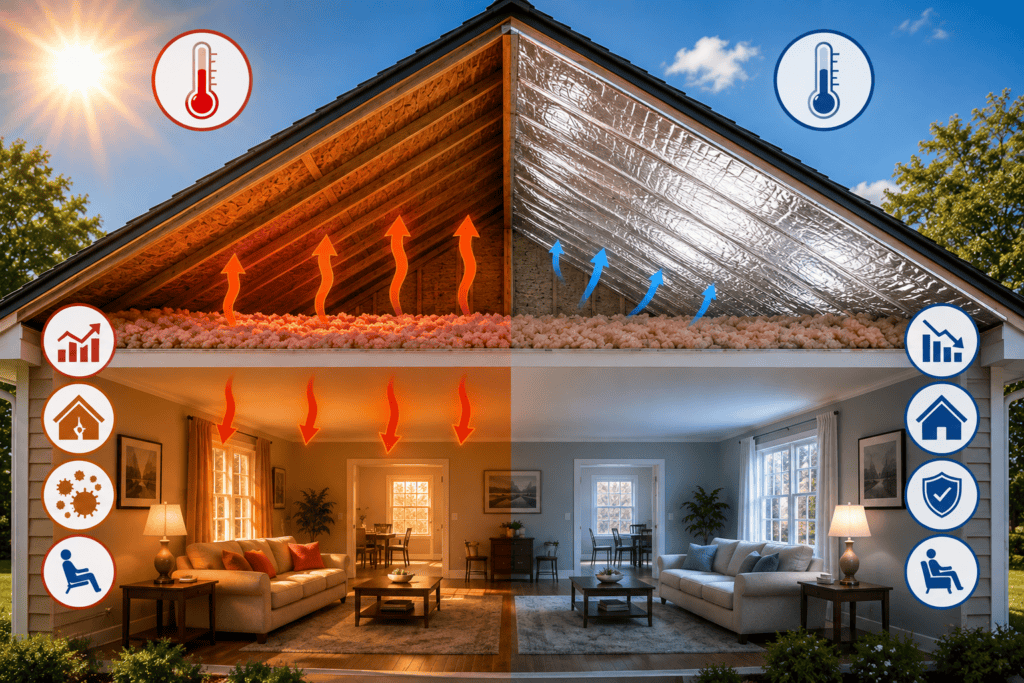

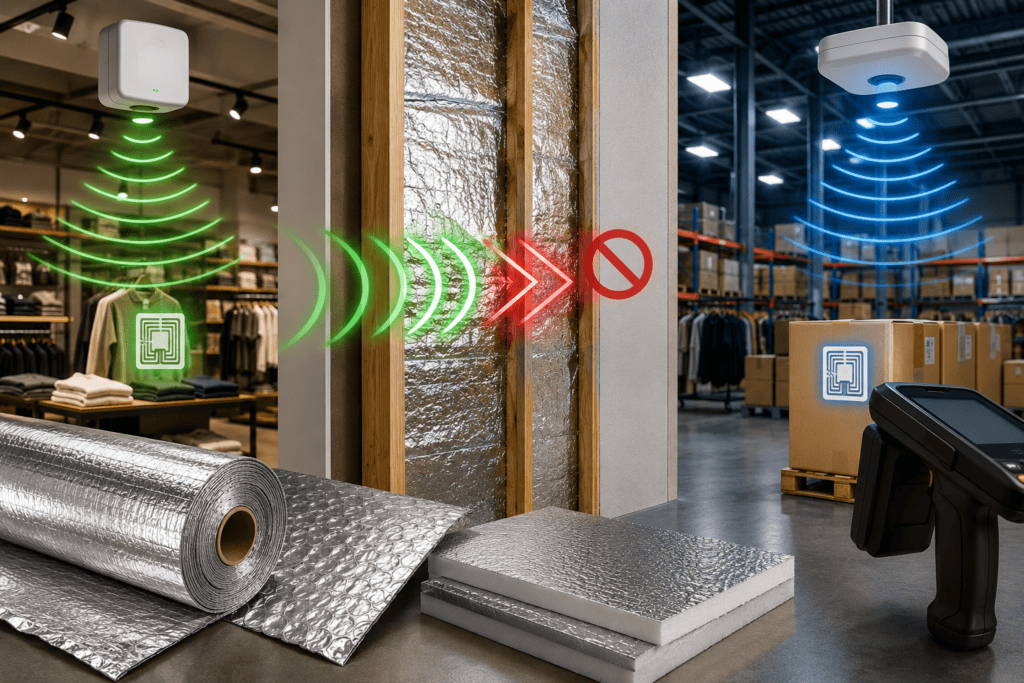
Reflective insulation installed inside a partition wall blocks RFID signals between a retail store and warehouse, improving RFID inventory tracking accuracy and reducing signal interference.

RFID Inventory Tracking: Secure System with Reflective Insulation

RFID inventory tracking is fast, automated, and widely adopted across retail, warehousing, and logistics. But it has one persistent headache: signal bleed-through. RFID signals pass through walls — especially in malls, shared commercial spaces, and dense warehouses — and when a reader in Store A picks up tags from Store B, inventory counts turn unreliable […]

RFID Inventory Tracking: Secure System with Reflective Insulation Read More »
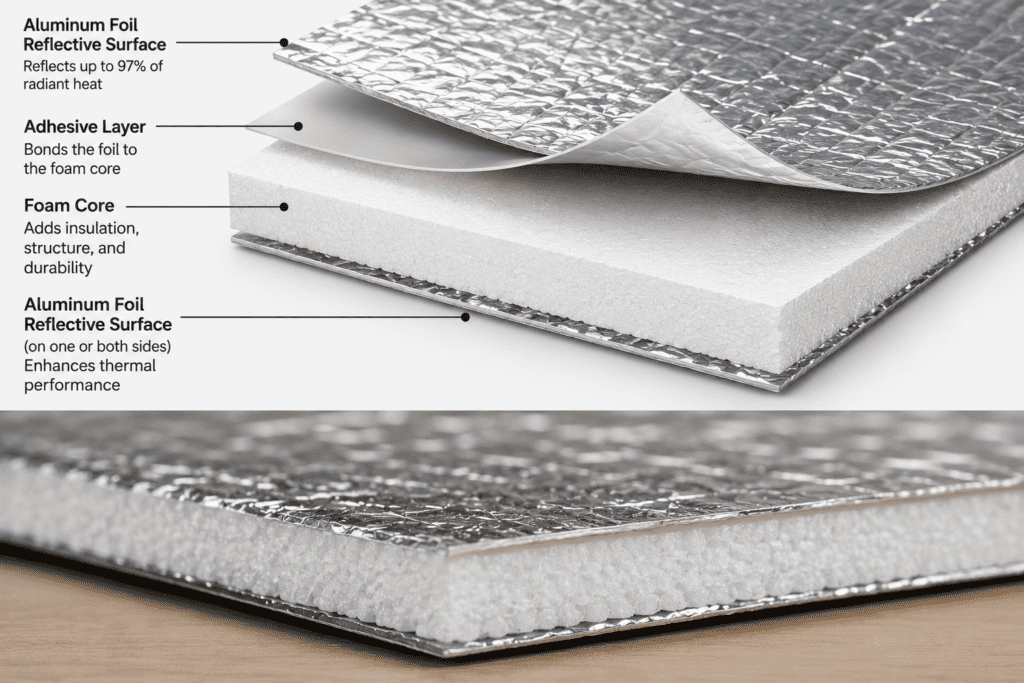
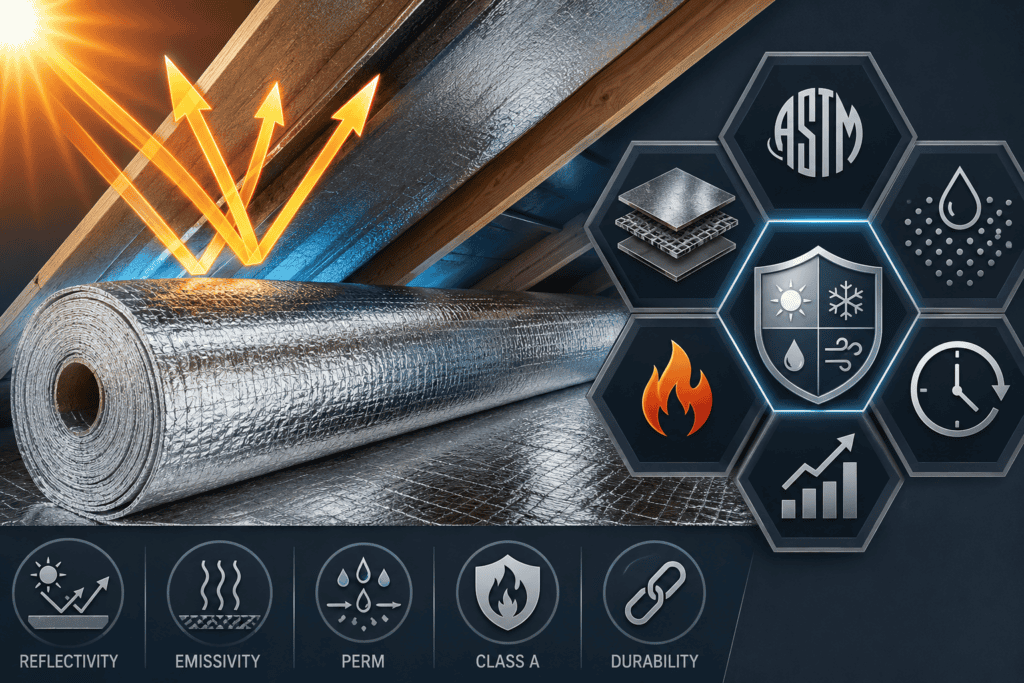
Cutaway diagram of reflective foam insulation showing aluminum foil reflective surfaces, adhesive layer, and foam core

What Is Reflective Foam?

Reflective foam, also called reflective foam core, combines a foam core with a reflective surface, usually aluminum foil. The reflective layer blocks radiant heat while the foam core adds insulation and structure. The result is a material that is strong, durable, and effective at reducing heat transfer in a way mass insulation alone cannot. What

What Is Reflective Foam? Read More »

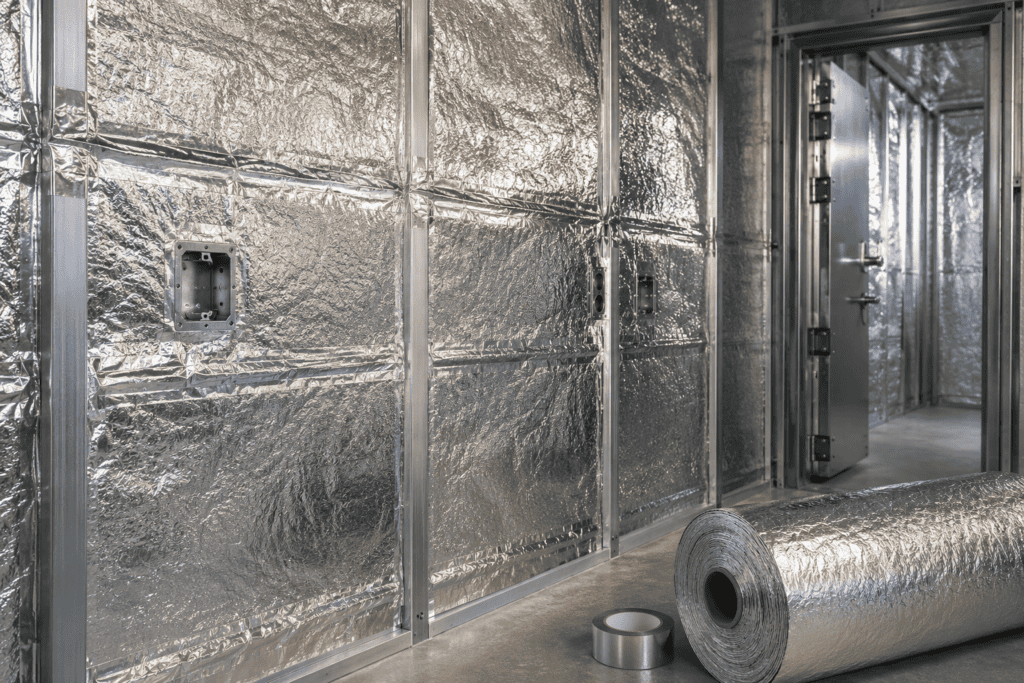
Aluminum foil radiant barrier installed on metal wall framing for RF shielding in a SCIF construction project.

Radiant Barriers for SCIF RF Shielding: Standards, Materials, and Installation

Sensitive Compartmented Information Facilities (SCIFs) require rigorous protection against electronic eavesdropping. Radio frequency (RF) shielding is a critical component of that protection, and radiant barriers have emerged as a practical, code-compliant solution. These multilayer foil assemblies not only block heat transfer but also provide verified RF attenuation, making them a dual-purpose material for government, military,

Radiant Barriers for SCIF RF Shielding: Standards, Materials, and Installation Read More »

Scroll to Top